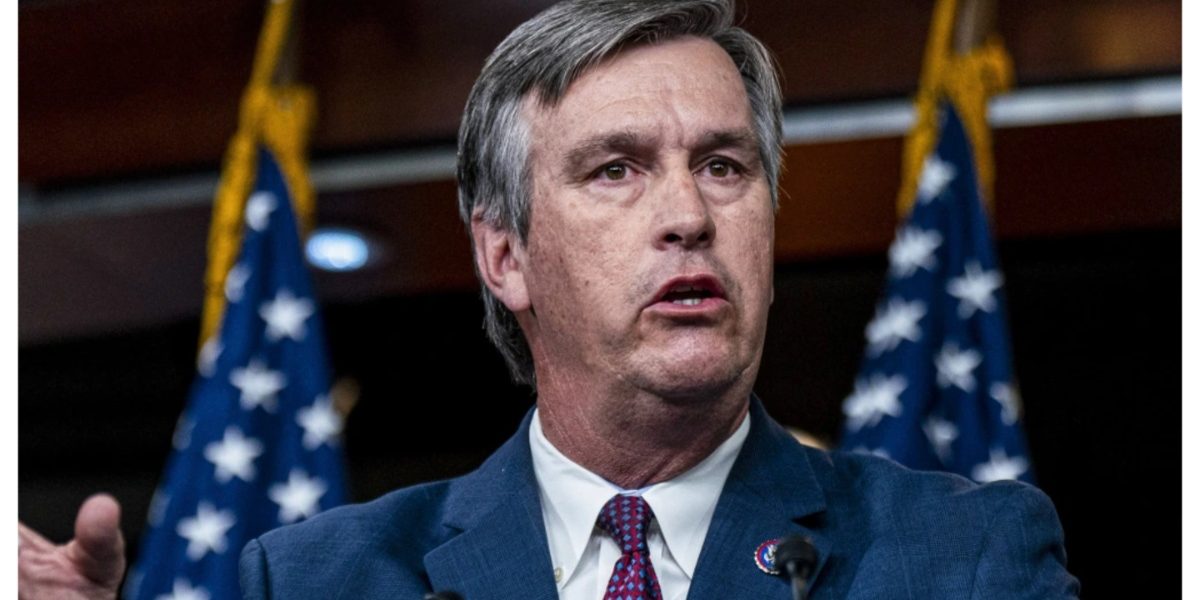
United States Congressman Barry Moore has introduced a bill seeking to prevent the Nigerian government from paying American lobbying firms to represent its interests in Washington amid concerns over alleged persecution of Christians in Nigeria.
The proposed legislation, identified as H.R. 10939, would prohibit individuals and lobbying companies in the United States from accepting payments to lobby on behalf of the Nigerian government for as long as Nigeria remains designated as a Country of Particular Concern (CPC).
The move comes amid continued international concern over religious violence, insecurity and attacks on communities in parts of Nigeria.
According to Moore, the Nigerian government has allegedly spent millions of dollars hiring influential lobbying firms in Washington to challenge criticism surrounding attacks on Christians instead of taking sufficient action to address the violence.
“This bill will end that” – Congressman Barry Moore
Speaking about the proposed legislation, Moore accused the Nigerian government of prioritising its international image over efforts to protect vulnerable communities.
“For too long, the Nigerian government has paid high-priced lobbyists in Washington to cover up the persecution of Christians while doing little to stop it. This bill will end that,” he said.
The congressman’s remarks reflect his concerns about the Nigerian government’s response to attacks on Christian communities and the use of American lobbying firms to influence discussions about the country’s human rights record.
The allegations have also raised questions about foreign governments’ use of lobbying services in Washington to shape public opinion and engage US policymakers.
Lobbying firms could face sanctions
Under the proposed legislation, American individuals and firms would be prohibited from receiving payments for lobbying activities on behalf of the Nigerian government while the relevant CPC designation remains in effect.
Lobbying firms found to have violated the proposed restrictions could face sanctions if the legislation becomes law.
The bill is intended to discourage lobbying arrangements that Moore believes are being used to counter criticism of Nigeria’s handling of religious persecution.
Bill referred to US House Committee on Foreign Affairs
The proposed legislation has been referred to the United States House Committee on Foreign Affairs for consideration.
It must undergo the required legislative process, including approval by both chambers of Congress and presidential assent, before it can become law.
For now, the proposal remains a bill and does not itself impose an immediate ban on lobbying payments.
The development comes as Nigeria continues to face scrutiny over insecurity and attacks affecting communities across the country.
Although Moore’s proposal focuses on alleged persecution of Christians, violence in Nigeria has affected people from different religious and ethnic backgrounds, with insecurity linked to multiple factors, including insurgency, banditry and communal conflicts.
The bill could add a new dimension to diplomatic discussions between Nigeria and the United States if it advances through Congress.