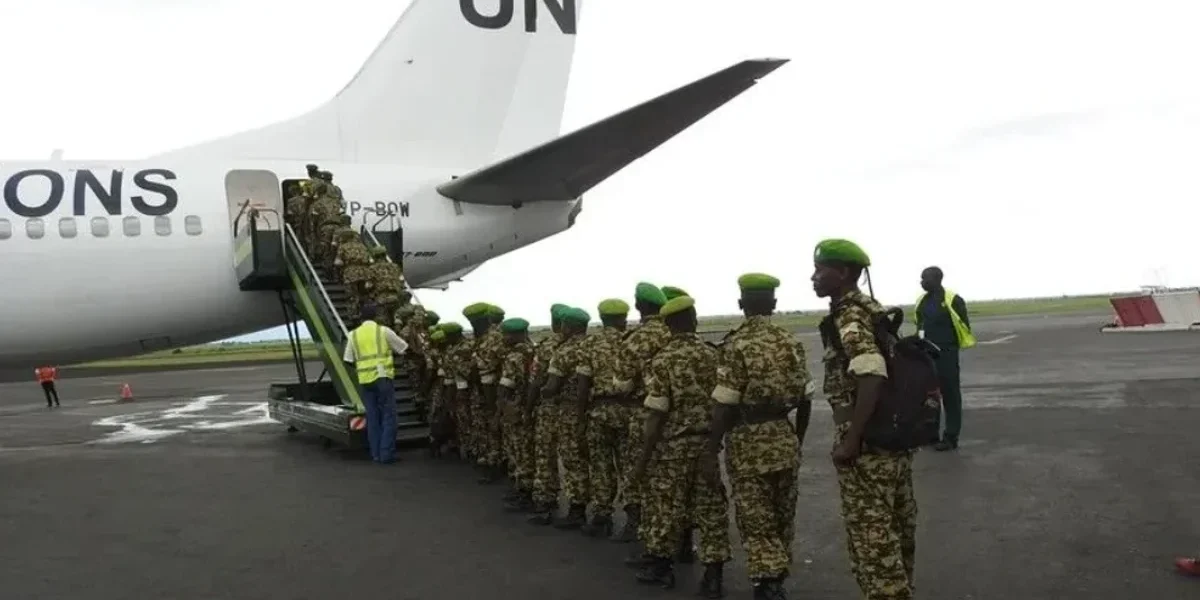
The United Nations has officially closed its political mission in Somalia, bringing an end to more than three decades of UN-led political and peacebuilding operations in the East African country.
The closure, announced on Saturday, October 31, 2026, follows a two-year transition process aimed at transferring responsibilities to Somali institutions and the United Nations country team.
The UN Transitional Assistance Mission in Somalia (UNTMIS) completed its mandate after overseeing the gradual handover of its functions, marking a significant milestone in Somalia’s efforts to strengthen its national institutions.
Despite the closure, the United Nations has emphasised that its broader partnership with Somalia will continue.
Somalia requested the withdrawal of the UN political mission
The decision follows a request made by Somali President Hassan Sheikh Mohamud in May 2024, when he called for the UN political mission to conclude its operations ahead of the expiration of its mandate in October that year.
The Somali government subsequently proposed a two-year transition period to ensure that responsibilities could be transferred without disrupting ongoing governance and peacebuilding activities.
As part of the process, the United Nations Assistance Mission in Somalia (UNSOM) was renamed the United Nations Transitional Assistance Mission in Somalia (UNTMIS).
The transition was designed to give Somali authorities greater responsibility for political coordination, institutional development and other functions previously supported by the UN mission.
More than three decades of UN involvement
The United Nations has maintained political and peacebuilding missions in Somalia since the 1990s, supporting efforts to restore stability following years of conflict and political upheaval.
The UN Political Office for Somalia began operating in 1995, while UNSOM was established by the UN Security Council in 2013.
UNSOM was tasked with assisting Somali authorities in strengthening democratic governance, promoting the rule of law and supporting political reconciliation.
Its establishment followed more than two decades of instability involving armed militias, Islamist insurgent groups and criminal organisations.
Over the years, the UN mission worked alongside Somali institutions and international partners to support the country’s recovery and political development.
UN says partnership with Somalia will continue
Speaking on the mission’s closure, Raisedon Zenenga, UNTMIS officer-in-charge and the UN Secretary-General’s Deputy Special Representative for Somalia, described the development as the beginning of a new phase of cooperation.
“Today is not an end to the partnership between the United Nations and Somalia—rather, it marks the conclusion of one chapter and the beginning of another,” Zenenga said.
He acknowledged that Somalia continued to face serious political, economic and security challenges but highlighted the progress achieved over the years.
“While significant challenges remain, the closure of UNTMIS comes after considerable progress by Somalia since the early years of international efforts to support the country’s recovery,” he added.
The UN official’s remarks reflected confidence in Somalia’s growing institutional capacity while recognising the need for continued international engagement.
Al-Shabaab insurgency remains a major security challenge
The mission’s closure comes at a time when Somalia continues to confront threats from Al-Shabaab, the Al-Qaeda-affiliated militant organisation that has waged an insurgency against the Somali government for approximately two decades.
Despite years of military operations involving Somali forces and international partners, the group continues to control territory in parts of central Somalia.
The insurgency remains one of the country’s most significant security challenges, affecting civilian safety, government operations and efforts to strengthen national institutions.
Concerns have also emerged over the sustainability of international military support.
According to the report, the United States has withdrawn funding for a key UN logistics mission, creating uncertainty over the resources available to support ongoing security operations.
Upcoming elections raise further concerns
Somalia is also preparing for parliamentary and presidential elections scheduled for May 2027.
However, continuing insecurity and political disagreements involving opposition groups could complicate preparations for the polls.
The country’s ability to manage these challenges will be closely watched as Somali authorities assume greater responsibility following the departure of the UN political mission.
Although the closure of UNTMIS marks the end of a longstanding international political presence, the United Nations is expected to maintain its involvement in Somalia through other programmes and agencies.
The transition represents an important moment for Somalia as it seeks to consolidate progress in governance, security and national development.