
The political landscape in Rivers State has shifted once more, with former Governor and current FCT Minister, Nyesom Wike, reasserting his influence over the state’s political base—an authority he had temporarily lost to his estranged political protégé, Governor Siminalayi Fubara.
The turning point came after the Rivers State Independent Electoral Commission (RSIEC) declared results of the August 30 local government
elections. The All Progressives Congress (APC), now dominant in the state, secured victories in 20 out of 23 LGAs, while the ruling Peoples Democratic Party (PDP) managed just three. Both APC and PDP winners are loyal to Wike.
Notably, the APC won Obio/Akpor (Wike’s LGA), Port Harcourt City, and Ogba/Egbema/Ndoni, while Fubara lost his own LGA, Opobo-Nkoro, to the opposition.
Full List of Winning Chairmanship Candidates:
APC winners include Ofori Owolabi (Abua/Odual), Solomon Achoma (Ahoada East), Eugene Cheta (Ahoada West), Bob Fubarab (Akuku Toru), Otua Promise (Andoni), and several others across Eleme, Gokana, Ikwerre, Khana, Oyigbo, and other LGAs.
PDP secured three LGAs: Chukwu Ogbodo (Ogba/Egbema/Ndoni), Vincent Nimieboka (Ogu/Bolo), and Sir Allwell Ihunda (Port Harcourt).
All 23 LGA chairmen-elect are male, while all vice-chairmen-elect are female, following Wike’s gender-balancing formula introduced during his tenure as governor.
Atiku Reacts, Condemns Election
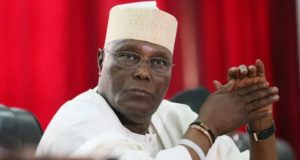
Former Vice President Atiku Abubakar harshly criticized the election process and results, calling it a “travesty of democracy.” In a statement on X (formerly Twitter), Atiku accused the APC of staging a sham election to consolidate political control.
He urged opposition parties in Rivers to reject the results, asserting that the “occupation government” lacked the legal mandate to conduct such elections. He warned that the Tinubu administration is leading Nigeria down a dangerous path.
Wike vs. Fubara: The Unfolding Crisis
The rift between Wike and Fubara escalated in late 2024 when Fubara allegedly moved to unseat Wike loyalist Martin Amaewhule as Speaker of the State Assembly. Wike, who had largely installed loyalists in Fubara’s cabinet, grew increasingly alienated as the governor asserted more independence.
The feud led to the bombing of the Assembly complex, a failed impeachment attempt against Fubara, the emergence of parallel Speakers, and deepening factionalism. Eventually, Fubara appointed his loyalist Edison Ehie as Chief of Staff after he resigned from the House.
State of Emergency and Federal Intervention
As tensions rose, President Bola Tinubu declared a State of Emergency in Rivers State following an attack on an oil facility. Tinubu suspended the governor, his deputy, and the entire House of Assembly.
Retired Vice Admiral Ibok-Ete Ibas was appointed State Administrator for an initial six-month term ending September 18, 2025. Ibas, widely seen as aligned with Wike, reversed many of Fubara’s appointments, including removing LGA administrators and reconstituting RSIEC.
Controversy Over Legitimacy of the Election
The new RSIEC chairman, Dr. Michael Odey, conducted the August 30 elections. While he praised the peaceful nature of the polls, many critics questioned their legality, citing a recent Supreme Court ruling that invalidated similar polls due to inadequate notice.
High Chief Sunnie Chukumele, convener of the Coalition of Rivers State Leaders of Thought, condemned the elections, citing contempt of court and legal irregularities. “What happened is an aberration. It won’t stand,” he said.
Opposition, Observers Question Turnout
Despite RSIEC’s claims of a successful process, observers noted widespread voter apathy. Former Rep. Ogbonna Nwuke said the low turnout contradicts the result and urged Wike to reflect on the apparent gap between political structure and public support.