
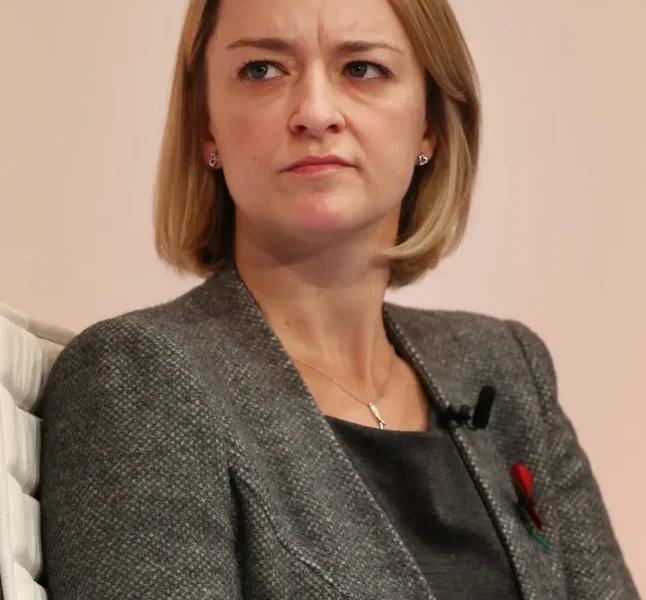
Prominent BBC journalist and television presenter Laura Kuenssberg has opened up about a series of uncomfortable encounters with senior politicians, including a bizarre meeting at a hotel during a political party conference.
The 50-year-old broadcaster revealed that she once arrived at a hotel room expecting to hold a professional discussion with a government minister and his adviser, only to discover the politician lying on a bed alongside his wife.
Kuenssberg shared the experience in her first book, Pay Attention, in which she reflects on her career covering British politics and the challenges she encountered while working in Westminster.
According to the journalist, the unusual meeting left her feeling deeply uncomfortable and uncertain about the couple’s intentions.
When asked whether she believed the minister and his wife had been expecting a sexual encounter involving all three of them, Kuenssberg said she could not be certain.
“Well, maybe they were and maybe they weren’t. As I say, maybe they weren’t and I got it completely wrong. It was very uncomfortable,” she explained.
The BBC presenter did not publicly identify the minister involved in the incident.
Another married minister allegedly suggested intimate contact
Kuenssberg also recalled a separate encounter involving another married government minister whom she had arranged to meet for coffee to discuss professional matters.
However, instead of focusing on the planned conversation, the politician allegedly invited her to the theatre and suggested what he described as “a little grope”.
The journalist said the incident was among several experiences that made her uncomfortable while carrying out her duties as a political reporter.
She also described occasions when politicians greeted her with unexpected kisses on the forehead or sent messages commenting on her appearance and clothing.
According to Kuenssberg, some of these interactions became so inappropriate that she decided to stop communicating with the individuals involved.
BBC presenter raises concerns about behaviour in Westminster
Speaking to The Times, Kuenssberg reflected on the behaviour of some politicians and the difficulties journalists, particularly younger professionals, may face while working around powerful public figures.
“People do things. And human behaviour is a complicated thing, and sometimes people behave badly,” she said.
The broadcaster expressed particular concern about the vulnerability of young people beginning their careers in Westminster, where professional relationships can involve significant differences in power and influence.
“There is still a concern in Westminster that particularly young people starting out are sometimes very vulnerable,” she added.
Her comments have drawn attention to the importance of maintaining professional boundaries and addressing inappropriate behaviour in political workplaces.
Kuenssberg’s career in British political journalism
Laura Kuenssberg is one of Britain’s most recognisable political journalists.
She made history in 2015 when she became the first woman to serve as BBC News political editor, a position she held until 2022.
During her time in the role, she covered major political developments and interviewed some of the country’s most influential political figures.
In 2022, she became the presenter of the BBC’s flagship Sunday political programme, Sunday with Laura Kuenssberg.
Her new book, Pay Attention, offers an account of her experiences reporting on British politics, including the professional pressures and uncomfortable personal encounters she faced.
Although Kuenssberg has chosen not to identify the politicians involved in the incidents, her revelations have renewed discussion about workplace conduct, professional boundaries and the treatment of women in politics and journalism.