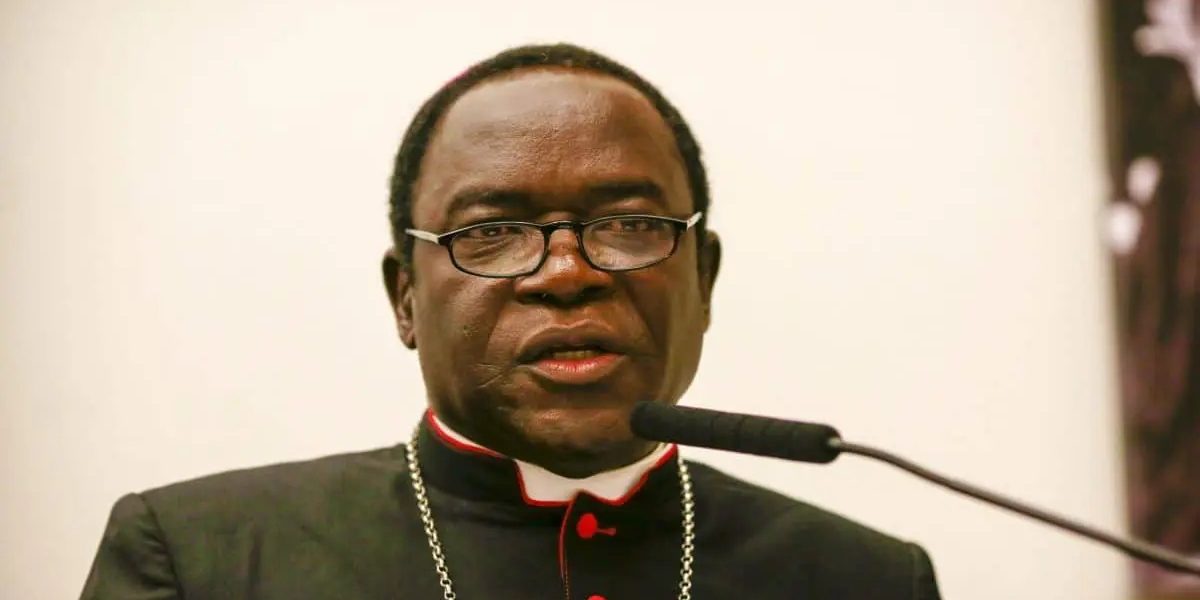
Catholic Bishop of the Sokoto Diocese, Matthew Kukah, has firmly denied reports claiming he said Christians in Nigeria are not facing persecution. The cleric released a detailed statement on Tuesday clarifying his remarks and describing the circulating reports as false and misleading.
Earlier media reports had quoted Kukah as challenging the idea of Christian persecution in Nigeria, allegedly pointing to the high number of educated Christians and the community’s significant role in the economy. According to those reports, he supposedly asked, “If you are a Christian in Nigeria and you say you are persecuted, my question is: how?” and cited statistics suggesting that Christians dominate education and economic sectors.
In his statement, titled “Of the persecution of Christians in Nigeria: My response,” Bishop Kukah said he was surprised that such comments continued to be attributed to him despite clear evidence of misrepresentation. He emphasised that he has never denied the suffering faced by Christians in the country.
“For over a week, I have been in the news based on claims that I said there was no persecution of Christians in Nigeria,” he wrote. “The outpouring of emotions is understandable, especially against the backdrop of the inviolability of life. But I did not say that Christians are not persecuted in Nigeria.”
Kukah explained that his actual message, delivered during an address to the Catholic Knights of St. Mulumba in Kaduna on November 28, focused on unity among Christians and the need for solidarity during difficult times. He said he reflected on historical examples of courageous Christian witnesses in Nigeria and Africa, underscoring that persecution—by whatever name it is called—remains a painful reality.
He clarified that he argued Christians possess “huge human and material resources,” and that if they stood together, they would be better positioned to confront persecution. “Nothing here implied a denial of the fate of Christians,” he stressed.
Kukah reiterated that he has consistently spoken about the killings, kidnappings, and attacks targeting Christian communities, insisting that the bloodshed “must end as soon as yesterday.” He said the failure of government and security agencies to hold perpetrators accountable had contributed to a sense of confusion and division among citizens.
“As a people, we owe ourselves the duty to regain our humanity, not as perpetual victims but as equal citizens,” he added. “Too many innocent souls have been lost; too much blood shed. Amid this pain, reclaiming the soul of our nation must remain our focus.”
He apologised for the “unnecessary distraction” caused by the controversy, urging Nigerians not to lose sight of the broader struggle for peace, justice, and national reconciliation.
“This is a contest we must win,” he said. “The journey may be painful, but we will reach our destination by learning our lessons, standing up when we stumble, and keeping our eyes on the ultimate prize—peace for our country and justice for those injured.”
Kukah reaffirmed his lifelong commitment to advocating for human rights, religious freedom, and national unity as the Christmas season approaches.