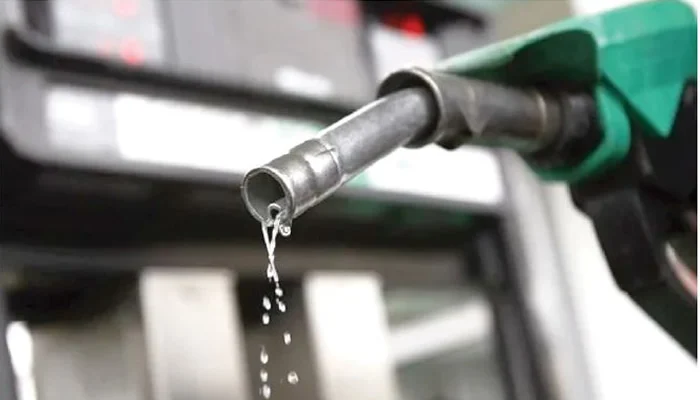
The price war in Nigeria’s downstream petroleum sector has intensified, with several filling stations now selling Premium Motor Spirit (PMS) below the ₦739 per litre price benchmark promoted by the Dangote Petroleum Refinery.
The development follows Dangote Refinery’s decision in December to slash petrol pump prices from about ₦900 to ₦739 per litre, a move that has squeezed importers and depot owners, many of whom say they are selling at a loss to remain competitive.
A survey by The PUNCH over the weekend showed that some retail outlets are now offering petrol at prices even lower than those at MRS Oil, the Dangote-backed marketer spearheading the ₦739 price regime.
As of Sunday, NIPCO sold PMS at ₦738 per litre, SAO outlets at ₦735, Akiavic at ₦737, while an AP filling station beside an MRS outlet in Mowe, Ogun State, reduced its price to ₦736 per litre.
Industry sources said filling stations now closely monitor competitors’ prices in the same locations, as motorists increasingly patronise outlets offering the cheapest fuel. Stations selling at higher prices have struggled to attract customers.
Data from the Major Energies Marketers Association of Nigeria show that the average landing cost of imported petrol stands at ₦762.38 per litre, while Dangote’s ex-gantry price remains ₦699. Despite the cost gap, importers have continued to cut pump prices to compete with Dangote-backed supply.
Both Dangote Refinery and fuel importers have incurred losses running into billions of naira amid the price battle.
Marketers who spoke on condition of anonymity said the aggressive pricing was driven purely by competition rather than cost considerations.
“This has nothing to do with whether imported petrol is cheaper or not. It is a market strategy to retain share. However, we are not at war with any marketer, depot operator, or refinery,” one operator said.
On December 12, Dangote Refinery cut its gantry price by ₦129, from ₦828 to ₦699 per litre. Shortly after, the President of the Dangote Group, Aliko Dangote, accused some marketers of attempting to keep pump prices high and vowed to enforce the new pricing structure.
“We will use every resource available to crash petrol prices. For December and January, nobody should sell above ₦740 nationwide. Anyone trying to sabotage the government by keeping prices high, we will fight it,” Dangote said.
As MRS outlets in Lagos and Ogun states began selling Dangote petrol at ₦739 per litre, motorists initially flocked to those stations, resulting in queues. However, the trend is now shifting as rival marketers undercut MRS prices.
The spokesman for the Independent Petroleum Marketers Association of Nigeria, Chinedu Ukadike, said market forces were driving the price competition.
“Patronage is determined by price. Nobody is regulating you; the market regulates itself. Wherever fuel is cheaper, that is where motorists will go. We are clearly in a price war,” he said, adding that marketers who failed to adjust prices would see bank interest charges erode their capital.
As a result, many filling stations are now selling petrol below ₦800 per litre nationwide.
Meanwhile, Dangote Refinery disclosed that its marketers’ supply programme began in October 2025 with an agreed offtake of 600 million litres of PMS, which rose to 900 million litres in November and 1.5 billion litres in December.
In a statement signed by the Group Chief Branding and Communications Officer, Anthony Chiejina, the refinery said it has consistently loaded between 31 million and 48 million litres of PMS daily since December 16, 2025, depending on market demand.
To widen access and improve distribution efficiency, the refinery said it reduced minimum purchase volumes from two million litres to 250,000 litres and introduced a 10-day credit facility backed by bank guarantees.
According to the refinery, these measures have boosted liquidity, supported smaller operators, increased utilisation of locally refined fuel, and helped drive more competitive retail pricing compared to imported petrol.
Addressing the spike in petrol imports recorded in November, Dangote Refinery said the increase resulted from import licences approved by the previous leadership of the Nigerian Midstream and Downstream Petroleum Regulatory Authority, which authorised volumes exceeding domestic demand. The refinery said the imports were unrelated to its operational capacity or supply commitments.
Dangote Refinery reaffirmed its commitment to stable supply, transparency, and a competitive downstream market, pledging continued collaboration with regulators and industry stakeholders to support domestic refining, conserve foreign exchange, moderate fuel prices, and strengthen Nigeria’s long-term energy security.