
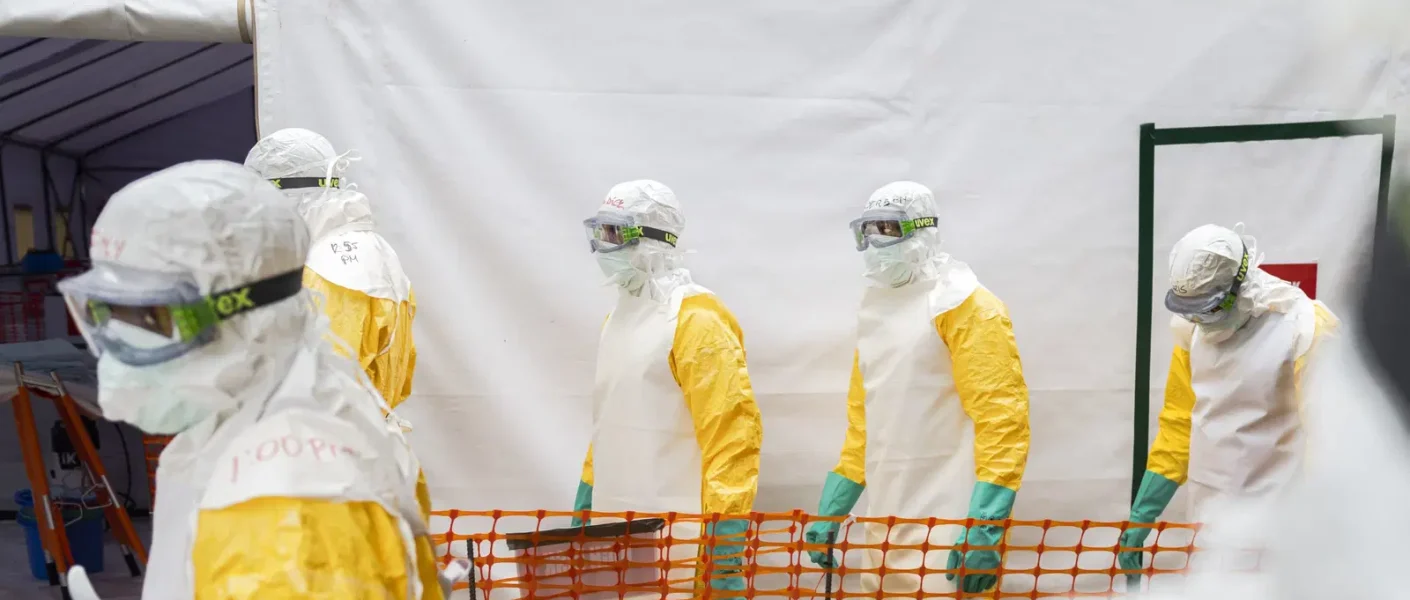
The Democratic Republic of Congo (DRC) has recorded more than 2,000 Ebola cases, including 754 deaths, as health authorities and international aid agencies intensify efforts to contain the rapidly spreading outbreak.
According to the latest figures released by Congolese health authorities, the outbreak has now spread across five provinces, raising concerns about its growing reach.
The World Health Organization (WHO) has warned that the actual number of infections could be two to four times higher than official figures, citing widespread underreporting and undetected chains of transmission.
The current outbreak is caused by the Bundibugyo strain of the Ebola virus, for which there is no approved vaccine or specific treatment. However, hope has emerged with the launch of the first clinical trial of an experimental antiviral drug known as obeldesivir.
The trial, called EBO-PEP, began this week and is evaluating whether the drug, developed by U.S. pharmaceutical company Gilead Sciences, can protect people who have been exposed to confirmed Ebola cases. Early laboratory studies have shown promising results against filoviruses, the family of viruses responsible for Ebola and other haemorrhagic fevers.
Medical charity Doctors Without Borders (MSF) has described the outbreak as spreading at an unprecedented pace and called for an urgent expansion of the emergency response.
The organisation said the number of confirmed infections has tripled in less than five weeks, while deaths have increased more than fivefold. It also noted that the current outbreak has already exceeded half the total number of cases recorded during the country’s major Ebola epidemic between 2018 and 2020, which lasted nearly two years.
WHO emergencies chief Dr Chikwe Ihekweazu said around 80 per cent of newly reported cases are not linked to previously identified contacts, indicating widespread community transmission. He also expressed concern that many infected people are dying without ever reaching a health facility.
The outbreak was officially declared on May 15 after several cases were detected in Ituri Province, a mineral-rich region in northeastern DR Congo that has long been affected by armed conflict and insecurity, making disease control efforts even more challenging.
