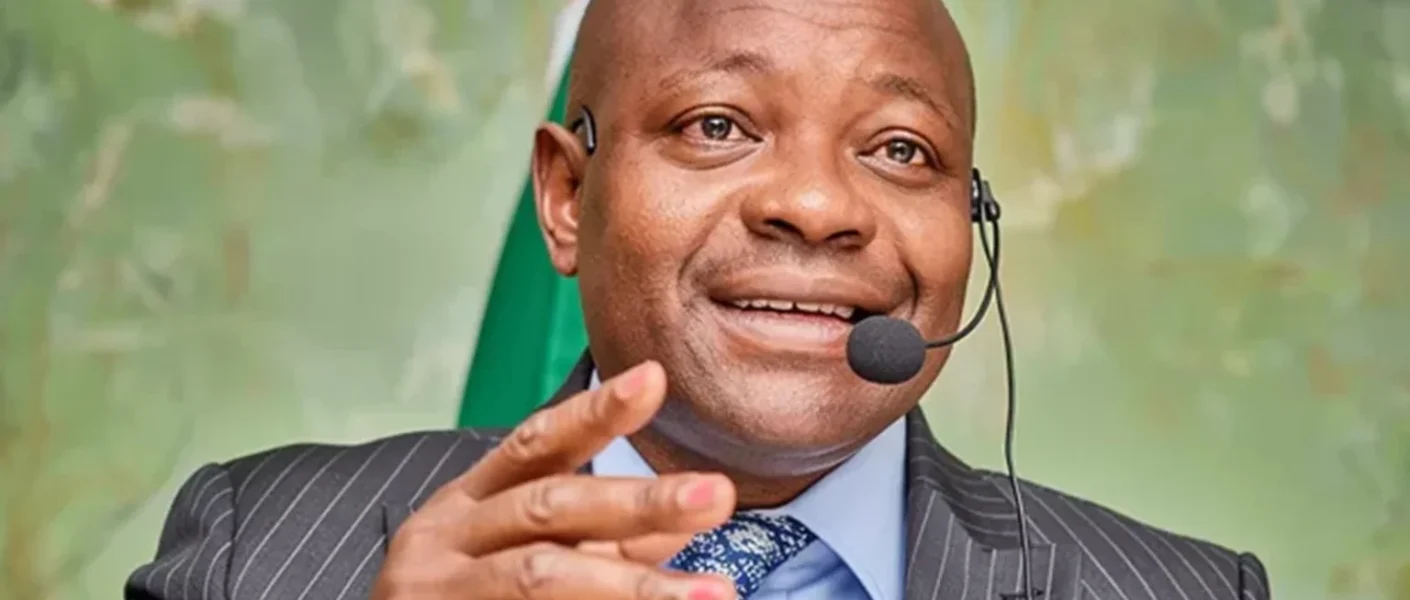
The Director-General of the Department of State Services (DSS), Oluwatosin Ajayi, has directed operatives of the agency not to arrest individuals over civil matters.
Ajayi disclosed this during a recent media parley, according to The Sun, saying the directive was part of efforts to strengthen adherence to the rule of law and improve the agency’s human rights record.
The DSS boss said the agency under his leadership had made a clear distinction between civil and criminal matters, noting that his career experience showed that the two were previously often conflated.
“You cannot apply the use of force in civil matters. Even some criminal matters don’t require force,” Ajayi said.
He cited the case involving an alleged attempt to establish a shadow government by Pat Utomi, saying the DSS opted to seek judicial interpretation rather than arrest him.
“Take, for example, the attempt to establish a shadow government, i.e., the Service versus Pat Utomi. Rather than arrest him, we sought judicial interpretation. And the Court ruled that his adventure was unconstitutional, illegal, and a threat to national security,” he said.
Ajayi also referenced a case involving the Socio-Economic Rights and Accountability Project (SERAP), which had accused two DSS operatives of invading its premises.
“So it was with SERAP, which wrongly accused two (2) DSS operatives of invading their premises. They approached the court, on my approval. Throughout the process, nobody was arrested, and the court awarded over N100 million in their favour,” he said.
On the case involving Omoyele Sowore, the publisher of Sahara Reporters, Ajayi said the DSS similarly avoided making an arrest and allowed the matter to proceed through the courts.
“The case with the owner of Sahara Reporters, Sowore, is the same. Even from day one, when he went to court, the court asked whether we objected to his bail, and we said no because we hadn’t arrested him in the first place,” he said.
Asked whether the agency now resorts to the courts when dealing with civil matters, Ajayi responded in the affirmative.
“Yes. I have told my people that there should be no arrest in any civil case,” he said.
He added that the DSS would continue to approach the courts, particularly in cases involving journalists, whom he described as the agency’s “professional colleagues.”
“I call you guys our professional colleagues. The only difference is that, while you inform the public, we inform the Government. And because we inform the Government, our information is classified until we declassify it,” Ajayi said.