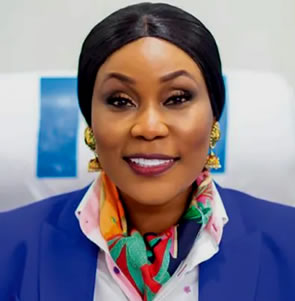
Former Director-General of the National Agency for the Prohibition of Trafficking in Persons (NAPTIP), Julie Okah-Donli, has alleged that some women involved in illegal baby trafficking schemes use steroids to simulate pregnancy before obtaining babies and presenting them as their own.
Speaking during an interview on the Kaa Truths Podcast, a clip of which resurfaced on Tuesday, July 14, Okah-Donli discussed what she described as organised fake pregnancy syndicates operating in parts of Nigeria.
According to her, women participating in the alleged scheme are administered steroids that can cause physical changes resembling pregnancy, including abdominal enlargement and facial swelling.
She further claimed that some women imitate common pregnancy symptoms, such as morning sickness, to convince family members and their spouses that they are expecting a child.
Okah-Donli also alleged that, in some cases, husbands are deliberately kept away when the supposed delivery takes place, only to return home and be presented with a newborn.
She further claimed that some women undergo surgical procedures that leave scars resembling those from a caesarean section in an attempt to make the deception appear more convincing.
Addressing the issue of paternity disputes, the former NAPTIP boss argued that maternity testing should also be considered in cases where DNA tests reveal that a child is not biologically related to the presumed father.
According to her, maternity testing could assist investigators in identifying possible cases of baby trafficking and uncovering the true origin of children involved in such cases.
Okah-Donli also alleged that some individuals falsely claim to have given birth to twins, triplets or quadruplets, suggesting that multiple births are sometimes used to make the alleged deception easier to carry out.
Her comments have renewed discussions about the need to combat baby trafficking, strengthen child protection measures and improve investigations into suspected cases of illegal adoption and child exploitation.
The claims made by Okah-Donli are her allegations and have not been independently verified in relation to specific cases.