
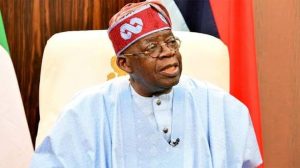
Prince Justice Faloye, President of the ASHE Foundation and National Publicity Secretary of Afenifere, has criticised President Bola Tinubu’s rejection of calls to restore fuel subsidy, arguing that the policy reflects an economic ideology that deepens poverty and inequality in Nigeria.
Faloye made the remarks while reacting to Tinubu’s comparison of calls for subsidy restoration to asking Moses to return to Egypt, with the President insisting that Nigeria could go bankrupt if it reversed the removal of the subsidy.
The Afenifere spokesman argued that the administration’s position reflected what he described as the “coloniality of knowledge and being,” which he said had contributed to economic deprivation in Nigeria and across Africa.
According to Faloye, government subsidies can stimulate economic activities by increasing productivity, household income and employment across different sectors.
“Without proper knowledge of self and environment, it is impossible to have the right worldview and ideological perspective, which is why President Tinubu is ideologically-blinded to the use of subsidies to create income and employment multiplier effects across the economy to uplift the two thirds in poverty,” he said.
Faloye maintained that Nigeria should consider subsidies not merely as financial relief but as part of a broader economic strategy to stimulate growth and improve access to essential services.
He argued that Nigerians needed affordable energy, including fuel and electricity, as well as access to education, healthcare and housing.
He also disputed the President’s position on the affordability of subsidy payments, claiming that the economic benefits generated by the expenditure could outweigh its immediate cost. His assessment was presented as an argument for the policy rather than an independently established calculation of its net economic impact.
Faloye Advocates African Economic Philosophy
The ASHE Foundation president criticised what he described as the adoption of Western economic models by African political leaders, arguing that such policies prioritised scarcity and exploitation over shared prosperity.
He contrasted neoliberal economic policies with the African philosophies of Afenifere and Ubuntu, which he associated with collective welfare and abundance.
“Instead of identifying with the African civilizational economic philosophy of Afenifere/Ubuntu abundance for all, President Tinubu adopted the scarcity mentality of the freezing wilderness based on mass slavery and exploitation by a few,” Faloye said.
He further drew on biblical accounts of ancient Egypt to advance his argument about economic exploitation, contending that historical systems of wealth concentration had repeatedly left ordinary people impoverished while benefiting a small elite.
Faloye linked this interpretation to the history of slavery, colonialism and what he described as contemporary neocolonial economic policies in Africa.
He argued that African leaders should develop economic policies that reflect the continent’s historical experiences and social values rather than treating Western economic prescriptions as universally applicable.
Blames Neoliberal Policies For Economic Hardship
Faloye traced Nigeria’s adoption of neoliberal economic policies to reforms introduced during successive military administrations.
He cited the reduction of education subsidies in 1978 and the structural adjustment programme introduced under former military President Ibrahim Babangida in 1986 as key developments in the country’s shift towards market-oriented reforms.
He also referenced the influence of economist Milton Friedman and the economic policies associated with former British Prime Minister Margaret Thatcher and former United States President Ronald Reagan.
According to Faloye, the reforms encouraged currency devaluation, subsidy removal and the privatisation of public assets, which he argued had weakened workers’ purchasing power and increased economic hardship.
He maintained that the policies had failed to deliver the broad-based prosperity promised by their proponents.
Faloye also cited homelessness, high infant mortality and low life expectancy as indicators of Nigeria’s development challenges, attributing them to decades of what he described as misguided economic policies.
However, his comments represent his assessment of Nigeria’s economic history and the effects of market-oriented reforms.
Calls For Welfare-Based Economic Model
Faloye urged Nigerians to support political leaders who favour social democracy and economic welfare policies, arguing that government should play a stronger role in ensuring citizens have access to essential services and economic opportunities.
He specifically endorsed Prince Adewole Adebayo of the Social Democratic Party (SDP), describing him as an advocate of the welfare-oriented economic approach he believes Nigeria needs.
Faloye also criticised other political figures whom he associated with neoliberal economic policies, arguing that a change in political leadership was necessary to reverse the country’s economic direction.
He warned that continued economic hardship could intensify public dissatisfaction and called for an alternative approach centred on social welfare, affordable energy and shared prosperity.
His intervention adds to the ongoing national debate over the removal of fuel subsidy, with supporters of the policy citing the fiscal burden of subsidy payments, while critics continue to question its impact on household incomes, production costs and poverty.