
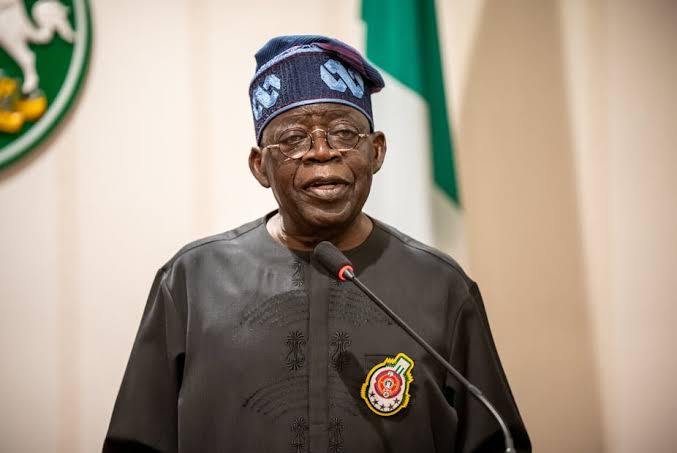
President Bola Tinubu on Thursday marked Nigeria’s Democracy Day by celebrating 27 uninterrupted years of civilian rule, describing the country’s democratic journey as a testament to the resilience and determination of Nigerians.
In his nationwide address, the President noted that since the return to democratic governance on May 29, 1999, Nigerians have consistently elected their leaders through the ballot box, witnessed peaceful transfers of power, and resolved political disputes through legal and democratic institutions rather than violence.
He urged the Independent National Electoral Commission (INEC), security agencies, and political parties to ensure that forthcoming elections in Ekiti and Osun states are conducted peacefully and credibly, stressing that public trust is vital to the survival of democracy.
Addressing the youth, Tinubu encouraged them to remain committed to Nigeria’s future by investing their talents, ideas, and energy in the country’s development.
The President also paid tribute to members of the armed forces, police, intelligence agencies, traditional rulers, religious leaders, and community stakeholders for their contributions to national stability and peacebuilding.
Honouring Democracy Heroes
Tinubu honoured the sacrifices of pro-democracy activists, journalists, labour leaders, students, politicians, and others who fought for democratic governance, particularly the heroes of the June 12 struggle.
He paid special tribute to Chief MKO Abiola, the presumed winner of the annulled June 12, 1993 presidential election, as well as Kudirat Abiola, Gani Fawehinmi, Bola Ige, Alfred Rewane, Abraham Adesanya, Anthony Enahoro, Balarabe Musa, Beko Ransome-Kuti, Frank Kokori, Shehu Musa Yar’Adua, and several other democracy advocates.
According to him, the greatest way to honour their sacrifices is to build a Nigeria where justice, accountability, opportunity, and freedom flourish.
Security and Counter-Terrorism Efforts
While expressing concern over the abduction of children in Oyo and Borno states, Tinubu reaffirmed his administration’s commitment to improving national security.
He disclosed that the government had declared a security emergency, approved the recruitment of more than 50,000 police officers and thousands of military personnel, and allocated a record N5.41 trillion to defence and security in the 2026 budget.
The President highlighted recent gains in the fight against terrorism, including the destruction of an ISWAP command centre in Arege, Borno State. He said terror-related deaths had declined significantly since 2015 and that more than 13,000 terrorists had been neutralised in the past year.
Tinubu also revealed that over 124,000 insurgents and their dependents had surrendered through Operation Safe Corridor since 2023.
He warned bandits, kidnappers, and terror financiers to surrender or face the full force of the law.
Economic Reforms and Recovery
The President defended the economic reforms introduced by his administration since 2023, describing them as necessary steps to stabilise public finances and restore investor confidence.
According to him, the reforms have increased federation revenues, improved fiscal transparency, reduced leakages, and attracted investments across sectors such as agriculture, energy, manufacturing, mining, transportation, technology, and the creative industry.
Tinubu also noted improvements in domestic refining capacity, which he said had strengthened Nigeria’s energy security and reduced dependence on imported petroleum products.
Power Sector Reforms
On electricity, Tinubu said his administration inherited a sector plagued by inadequate generation, poor transmission infrastructure, mounting debts, and a huge metering deficit.
To address the challenges, he cited the implementation of the Electricity Act, which grants states greater powers in electricity generation, transmission, and distribution.
He added that the Presidential Power Sector Task Force had been authorised to raise a N4 trillion bond to clear verified legacy debts, while rural electrification projects supported by the World Bank and African Development Bank were expanding power access in underserved communities.
“Electricity is a democratic dividend we owe every Nigerian,” he said.
Infrastructure, Agriculture and Jobs
Tinubu highlighted ongoing infrastructure projects nationwide, saying they are improving connectivity, boosting trade, and creating employment opportunities.
He announced that the National Agricultural Development Fund would deploy 10,000 tractors over five years, while more than 1,000 small and medium-scale enterprises had been certified for export.
He also stated that non-oil exports grew by 21 per cent in the past year.
Despite the progress, the President acknowledged that many Nigerians continue to face economic hardship and assured citizens that the government remains focused on reducing inflation, increasing food production, creating jobs, and improving living standards.
Strengthening Local Governance
Tinubu reiterated his administration’s commitment to financial autonomy for Nigeria’s 774 local government councils, arguing that effective grassroots governance is critical to national development and security.
According to him, strengthening local governments forms a key part of the Renewed Hope Agenda and will help ensure that governance reaches every community.
National Honours and Institutional Recognition
The President announced plans to confer national honours on dozens of pro-democracy activists, journalists, politicians, and military officers who played significant roles in the struggle for democratic rule.
He also revealed that the completed Institute of Petroleum Studies in Kaduna would be renamed the General Shehu Musa Yar’Adua University of Geological Sciences and Engineering Technology in honour of the late military officer and democracy advocate.
A Call for Unity
Concluding his address, Tinubu urged Nigerians to reject division, pessimism, and despair, and instead embrace unity, hope, and shared purpose.
Reflecting on Nigeria’s democratic journey, he said the country’s diversity, once seen as a challenge, has become one of its greatest strengths.
“The road ahead is steep, but June 12 reminds us that Nigerians do not break. We bend, we bleed, but we do not break,” he said.
The President ended by reaffirming the nation’s commitment to democratic governance and paying tribute to the heroes whose sacrifices made it possible.
“May God bless the heroes of our democracy. May God bless the Federal Republic of Nigeria. Happy Democracy Day.”
