
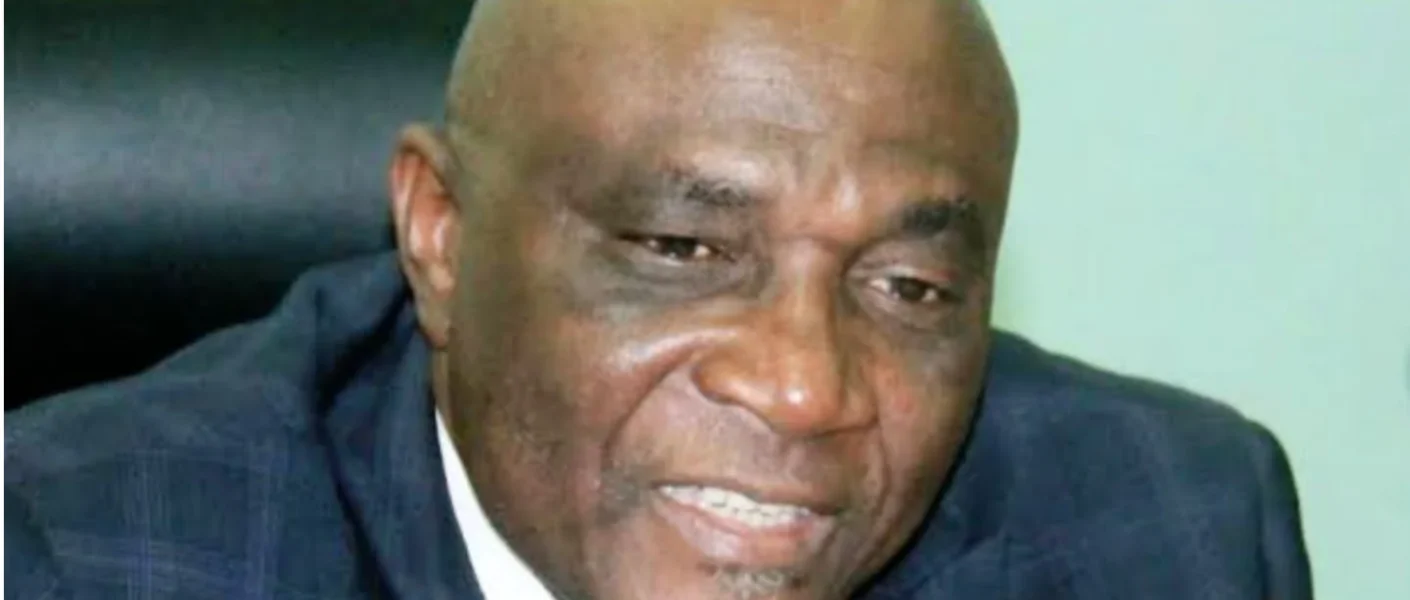
The Special Adviser to the President on Information and Strategy, Bayo Onanuga, has defended President Bola Tinubu’s economic reforms, arguing that the administration’s policies are already yielding tangible benefits for Nigerians and that he does not personally observe the level of hunger often portrayed in public discussions.
Speaking on Arise Television on Tuesday, Onanuga pointed to ongoing infrastructure projects and social intervention programmes as evidence that the government’s policies are making a positive impact.
Recalling a recent journey from Ibadan to Lagos, he said he was impressed by the quality of road infrastructure he encountered after taking an alternative route through Ijebu-Ode and Shagamu.
“While travelling from Ibadan to Lagos, Google Maps indicated heavy traffic on the approach to Lagos, so I decided to go through Ijebu-Ode via Shagamu,” he said.
“What surprised me was finding myself on a well-paved concrete road. I asked, ‘When was this built?’”
According to Onanuga, the improved road network has been well received by residents in the area.
“I noticed that people from Ijebu are no longer complaining. It became clear why—they now have a brand-new concrete road instead of the usual asphalt road,” he added.
The presidential aide also highlighted the ongoing coastal highway project, saying it has significantly reduced travel times for commuters, including himself.
“I live in Ajah. Whenever I travel into Lagos and check Google Maps for the estimated time back home, it now tells me about one hour and seven minutes. Previously, the journey could take up to two and a half hours. The difference is the new coastal road, which has shortened travel time considerably,” he said.
Questioning criticism of the government’s performance, Onanuga asked, “Is that not beneficial? What exactly are people complaining about?”
He further cited the Federal Government’s student loan scheme and access to low-interest loans for civil servants as examples of initiatives designed to ease financial burdens.
“If you have four children in university and they can access interest-free federal student loans, isn’t that a benefit?” he asked.
“If you are a civil servant and can obtain a loan at a single-digit interest rate of around seven per cent, isn’t that also beneficial?”
Onanuga argued that public discussions about the economy often fail to acknowledge some of the progress made under the current administration.
“We have become trapped in certain assumptions and conclusions,” he said.
He also referenced a viral video from the early days of the Tinubu administration in which a voice-over repeatedly said, “Ebi n pawa o” (meaning “we are hungry”), suggesting that the phrase had shaped much of the public narrative around the economy.
“I remember when the President was leaving the Central Mosque in Lagos and someone added a voice-over saying ‘Ebi n pawa o.’ Since then, many people have continued to repeat that message,” he said.
While acknowledging that many Nigerians are experiencing economic challenges, Onanuga maintained that his personal interactions do not reflect the widespread level of hardship often reported.
“I am a Nigerian, and I have people who work for me. I regularly ask them how they are coping, what challenges they face, and how they are adjusting. Personally, I do not see the level of hunger that people often talk about,” he said.