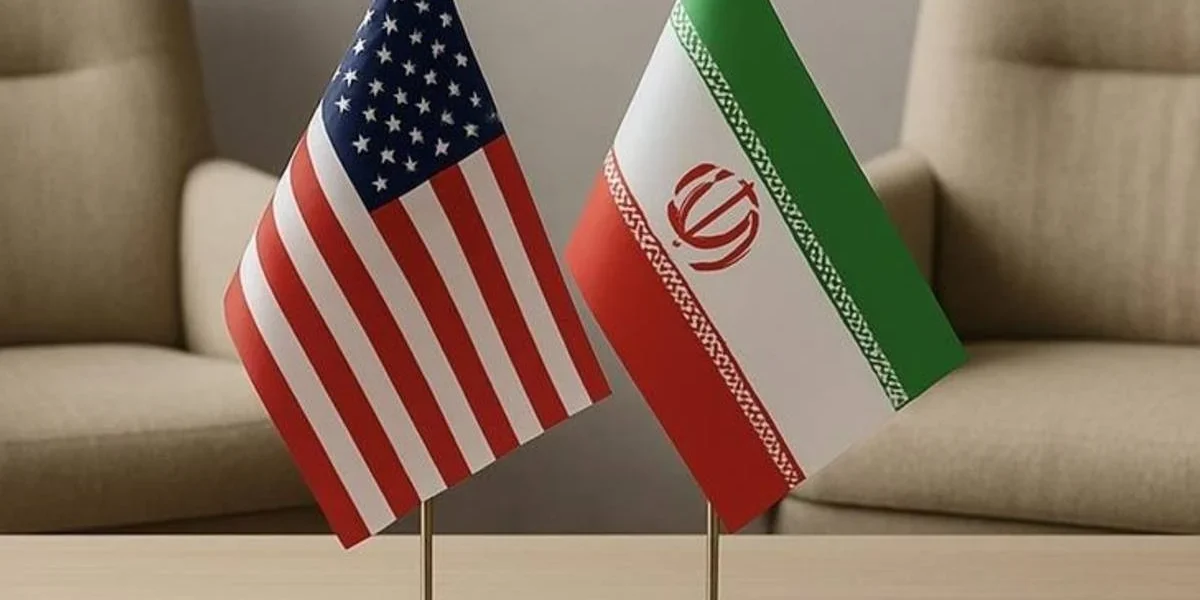
Iran on Saturday accused the United States of breaching the ceasefire that ended the recent Middle East conflict after Washington carried out fresh airstrikes on Iranian territory and Tehran retaliated by targeting US military sites in the Gulf.
The latest exchange of attacks has cast doubt on efforts to preserve the fragile truce and ensure the continued safe passage of commercial vessels through the Strait of Hormuz while negotiations continue on a broader peace agreement.
The US Central Command (CENTCOM) said American forces struck Iranian missile and drone storage facilities, as well as coastal radar installations, in response to what it described as Iran’s attack on a commercial cargo ship transiting the Strait of Hormuz earlier in the week.
According to CENTCOM, the operation was launched after Iranian forces carried out “unwarranted aggression against commercial shipping” that “clearly violated the ceasefire.”
Iran strongly rejected the US justification.
In a statement, the Iranian Foreign Ministry condemned the strikes as a “blatant violation” of the memorandum of understanding that ended the war.
“These brutal attacks targeting Iranian coastal surveillance facilities are a clear breach of the peace agreement,” the ministry said.
Iran’s Revolutionary Guards confirmed they had launched retaliatory strikes against US positions in the Gulf region and warned that any further attacks would trigger a much stronger response.
“If the aggression is repeated, our response will be broader than this,” the Guards said in a statement carried by state television.
Meanwhile, Bahrain said it had intercepted several Iranian drones early Saturday.
The country’s Foreign Ministry condemned the attack and accused Tehran of attempting to undermine ongoing peace efforts.
Iranian state television reported that an explosion was heard late Friday near a pier in the southern port city of Sirik.
A military source said the blast was caused by a projectile strike, although the Mehr news agency later reported that the port remained fully operational and had suffered no significant damage.
CENTCOM described the strikes as “a powerful response” to Iran’s alleged attack on the cargo vessel navigating the Strait of Hormuz.
Earlier, President Donald Trump accused Tehran of violating the ceasefire by targeting the commercial ship.
“This is a foolish violation of our ceasefire agreement,” Trump said.
Vice President JD Vance also warned Iran against further attacks, writing on X that “violence will be met with violence.”
Although Iran has warned ships against entering or leaving the Gulf through the Strait of Hormuz without its permission, commercial shipping has continued, with some vessels using routes not approved by Tehran.
Despite renewed tensions, global oil prices have continued to decline on expectations that maritime traffic through the strategic waterway—which handles roughly one-fifth of the world’s oil and gas exports—will remain largely uninterrupted.
Israel-Lebanon agreement
Separately, Israel and Lebanon welcomed a US-brokered agreement signed on Friday aimed at reducing tensions along their shared border.
The framework, negotiated during five rounds of talks in Washington, includes a pilot plan under which Lebanese troops would assume control of two areas currently occupied by Israeli forces, alongside efforts to disarm Hezbollah.
At the signing ceremony, US Secretary of State Marco Rubio described the agreement as the beginning of “a framework for lasting peace and security.”
Israeli Prime Minister Benjamin Netanyahu hailed the deal as a strategic victory over Iran, saying Israeli forces would remain in designated security zones until Hezbollah is fully disarmed.
Lebanese President Joseph Aoun called the agreement an important first step toward allowing displaced civilians to return home under Lebanese state authority.
However, Hezbollah rejected the framework, and supporters staged demonstrations in Beirut on Friday night, arguing that the deal would undermine efforts to resolve the wider regional conflict.
Nuclear concerns remain
The International Atomic Energy Agency (IAEA) has also stressed that any comprehensive agreement between Washington and Tehran must include strict safeguards to ensure Iran cannot develop nuclear weapons.
IAEA Director-General Rafael Grossi acknowledged that Iran insists it has no intention of building a nuclear arsenal but said international verification remains essential.
“Intentions alone are not enough,” Grossi said. “We need a very strong verification system in place as soon as practicable.”
Under the interim agreement, Iran’s stockpile of enriched uranium is expected to be diluted under IAEA supervision as part of confidence-building measures while negotiations continue toward a permanent settlement.