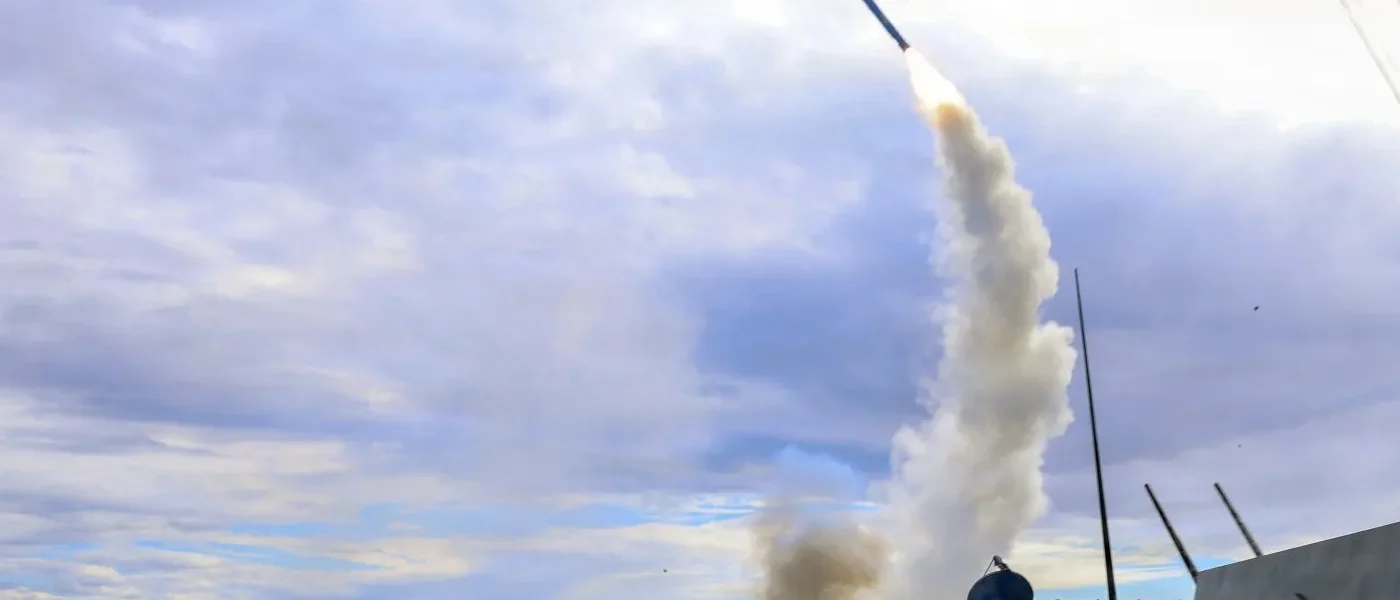
Iran says it has launched attacks on 85 US military sites in Bahrain and Kuwait in response to fresh US strikes following attacks on commercial vessels in the Strait of Hormuz.
According to Iran, the strikes targeted American military facilities after the United States carried out operations that Washington said were intended to “impose heavy costs” on Tehran for allegedly targeting commercial ships carrying civilian crews in the strategic waterway.
The United States Central Command (CENTCOM) said its military action was a response to attacks on commercial shipping, while the UK Maritime Trade Operations (UKMTO) confirmed that several oil tankers had been targeted in the latest incidents.
Iran’s Islamic Revolutionary Guard Corps (IRGC) described its strikes as retaliation, accusing the United States of violating the ceasefire agreement between the two countries.
In a statement, CENTCOM rejected the accusation, saying: “Iran’s demonstrated aggression was unwarranted, dangerous, and a clear violation of the ceasefire.”
The latest escalation came hours after Washington announced the reimposition of sanctions on Iran over alleged attacks on commercial vessels in the region.
Tensions have continued to rise despite a ceasefire reached in late June, with both Washington and Tehran accusing each other of breaching the agreement.
CENTCOM said it had given Iran an opportunity to uphold the ceasefire but alleged that Iranian forces violated the deal by launching a one-way drone attack on the Panama-flagged tanker MT Kiku.
US President Donald Trump had earlier warned that “the Islamic Republic of Iran will no longer exist” if it continued what he described as violations of the peace agreement.
Iran, however, maintains that the United States breached the ceasefire by permitting continued Israeli military operations in Lebanon, which Tehran says violated the terms of the agreement.
On June 20, Iran again declared the Strait of Hormuz “closed” and announced that vessels would require permission to transit the vital shipping route, raising the possibility of imposing charges on ships using the passage.
It remains unclear whether those restrictions played a role in the latest attacks on commercial vessels in the Strait of Hormuz.