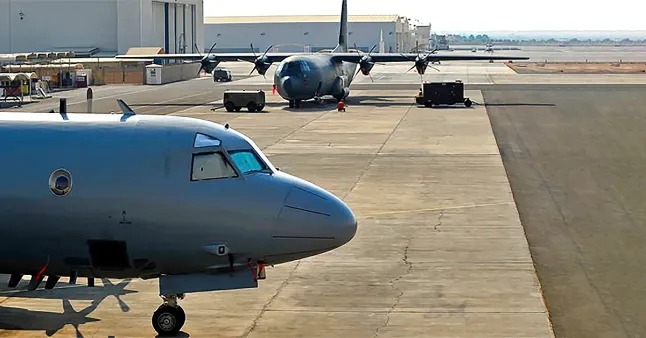
An Iranian missile has struck near Al Minhad Air Base, a major military facility in the UAE that hosts US, UK and Australian forces, as tensions continue to rise across the Gulf.
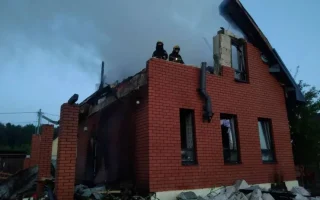
The projectile reportedly hit a road just outside the base, sparking a small fire and causing minor damage near an accommodation block and medical centre. No casualties were reported. Explosions were heard around the facility, which serves as a key transit hub for Western military operations in the Middle East.
Australian Prime Minister Anthony Albanese confirmed the incident, saying a projectile had landed close to the base.
“The Iranian regime is carrying out random attacks across the region. We are aware of that,” he said, adding that it is still unclear whether the base was the intended target.
Australia’s Defence Department said its priority remains the safety of its personnel, noting that force protection measures are being continuously reviewed as the situation evolves.
The incident comes amid a broader wave of attacks across the Gulf, with reports of strikes or attempted strikes in Saudi Arabia, Kuwait, Bahrain, Qatar and the UAE. Missile alerts were later triggered in Dubai, where air defence systems were activated and explosions were heard overhead.
Saudi Arabia said it intercepted a ballistic missile targeting Prince Sultan Air Base, which hosts US forces, as well as a drone aimed at Riyadh’s diplomatic quarter, home to several foreign embassies, including that of the United States.
The escalation follows ongoing hostilities involving Iran, the United States and Israel, with Tehran targeting military installations and energy infrastructure across the region. Iranian authorities have also asserted control over the Strait of Hormuz, a critical global shipping route through which about one-fifth of the world’s oil supply passes.
While Iran says the waterway remains open, it has indicated restrictions on access for the US and its allies, heightening concerns over global energy markets and supply chains.
The expanding conflict has already forced major energy companies to scale back operations, while oil prices have surged, raising fears of wider economic fallout, including higher consumer costs and disruptions to global trade.