
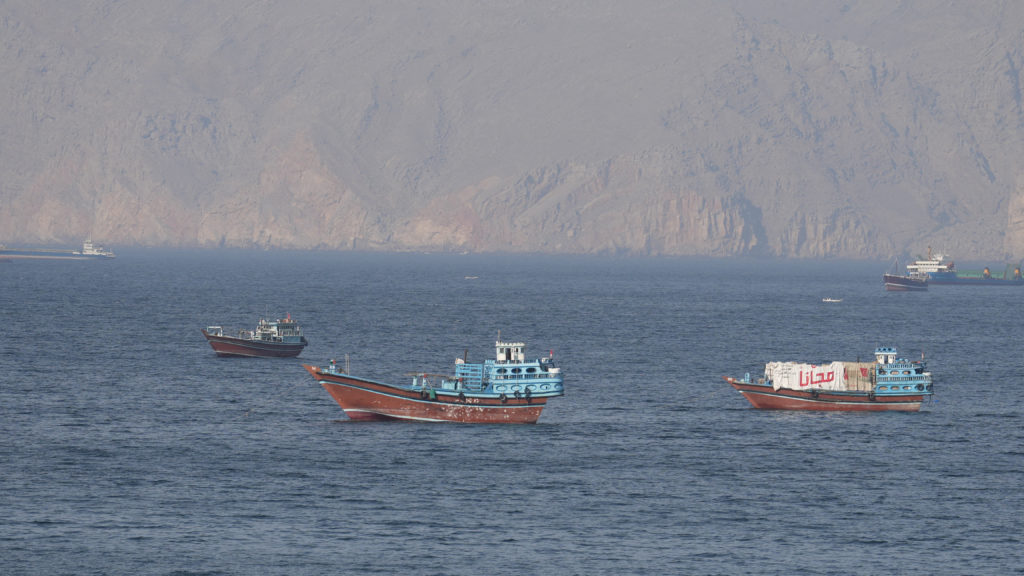
Iran has reportedly reimposed restrictions on the Strait of Hormuz, citing concerns over the continued presence of U.S. forces in the Persian Gulf and ongoing Israeli military operations in southern Lebanon despite a recently signed peace agreement between Washington and Tehran.
According to a report by the New York Post, Iran’s Islamic Revolutionary Guard Corps (IRGC) said key conditions outlined in the memorandum of understanding (MoU) signed by U.S. President Donald Trump and Iranian President Masoud Pezeshkian on June 17 had not yet been fully met.
The IRGC stated that the agreement included provisions related to Israel’s withdrawal from southern Lebanon, the complete removal of naval restrictions, and the withdrawal of American forces from the Persian Gulf and surrounding region.
“Since these conditions have not been fully implemented, the Strait of Hormuz will remain closed until they are met,” the IRGC said in a statement.
The group also warned vessels against approaching the strategic waterway, saying ships that ignored the directive could face security risks.
The Strait of Hormuz is one of the world’s most important shipping routes, carrying a significant portion of global oil and gas exports.
Meanwhile, U.S. Central Command announced on Thursday that it had formally lifted its two-month blockade on Iranian ports. However, it remains unclear why Iranian officials maintain that the removal of restrictions has not been fully completed.
The latest development comes amid conflicting reports regarding the situation in Lebanon.
A U.S. official reportedly claimed that Israel and Hezbollah had reached a ceasefire agreement. However, Israeli Prime Minister Benjamin Netanyahu indicated that Israeli forces would continue military operations aimed at combating militant groups in the region.
“We will restore security and prosperity to northern towns,” Netanyahu said. “That requires maintaining the security zone in southern Lebanon.”
The Israel Defense Forces also released an updated map showing an expanded military presence beyond the Lebanese border, including areas north of the Litani River.
The memorandum signed between the United States and Iran reportedly included commitments by both sides and their allies to respect Lebanon’s sovereignty and work toward ending hostilities in the country.
Simcha Brodsky, president of open-source intelligence group OSINT613, told The Post that Iran may be using the phased implementation of the agreement as justification for maintaining restrictions.
According to Brodsky, the deal allows for the gradual lifting of U.S. measures over a 30-day period, giving Iran grounds to argue that obligations have not yet been fully satisfied.
He also suggested that Tehran is linking developments in Lebanon to the broader agreement, potentially complicating efforts to implement the deal and ease regional tensions.
The situation remains fluid as international observers monitor developments in the Gulf and Middle East following the signing of the agreement.