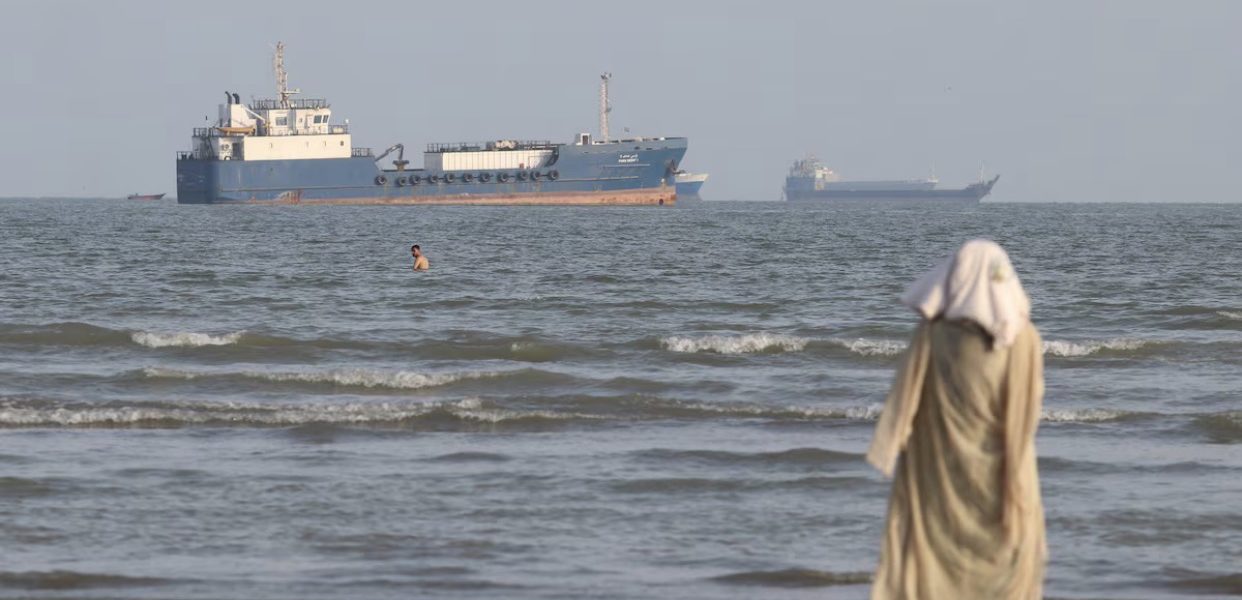
Iran is adopting new tactics to target commercial shipping in and beyond the Strait of Hormuz in an apparent effort to keep global oil prices high and influence the upcoming United States midterm elections, according to senior Iranian officials.
Tehran has sought to tighten its control over the strategic waterway since US and Israeli strikes on Iranian infrastructure began on February 28.
Before the conflict, the Strait of Hormuz handled roughly one-fifth of global oil and liquefied natural gas trade. However, the ongoing hostilities have severely disrupted maritime traffic, increased shipping insurance costs and driven up energy prices.
Two senior Iranian officials told Reuters that Tehran introduced a revised operational strategy about 10 days ago. Although they declined to provide specific details, they said the changes involved adjustments to the frequency and nature of attacks against vessels considered to have violated Iran’s maritime restrictions.
“The aim is to frustrate efforts by the United States and its allies to bring down global oil prices,” one of the officials said, adding that the strategy was developed at the highest levels of Iran’s leadership.
A second official described the confrontation as a strategic contest, saying Tehran intended to prevent US leaders from stabilising or lowering oil prices ahead of the November midterm elections.
“Such vessels would be safe nowhere, even outside the Strait of Hormuz,” the official warned.
Iranian sources also indicated that the country’s operations were moving towards an almost complete closure of the waterway to vessels not authorised to pass through it.
According to Reuters, a US military official, speaking on condition of anonymity, confirmed that Iranian forces had modified their tactics following extensive damage to the country’s coastal radar infrastructure.
The Islamic Revolutionary Guard Corps (IRGC) has increasingly relied on unarmed spotters aboard small boats to relay target coordinates to strike units. The approach reportedly includes the use of traditional vessels such as dhows, with one recently intercepted by US forces.
Despite the tactical adjustments, the US military said the destruction of much of Iran’s naval capability had limited Tehran’s ability to halt the growing volume of oil exports passing through the strait.
Meanwhile, independent maritime security data and incident reports submitted to the United Kingdom Maritime Trade Operations (UKMTO) indicate a recent increase in attacks on commercial vessels.
Reports of drone strikes and targeted harassment involving tankers operating near the Strait of Hormuz have returned to levels last recorded in early October, signalling a renewed escalation in maritime hostilities.
Security analysts monitoring the region have also reported that the operations are spreading beyond the immediate strait into the Gulf of Oman and nearby waters off the coasts of the United Arab Emirates and Qatar.
The continuing naval confrontation has heightened concerns over global energy supplies, leaving international oil markets vulnerable to further disruption. Maritime authorities continue to maintain a severe threat assessment for commercial shipping across the Persian Gulf.