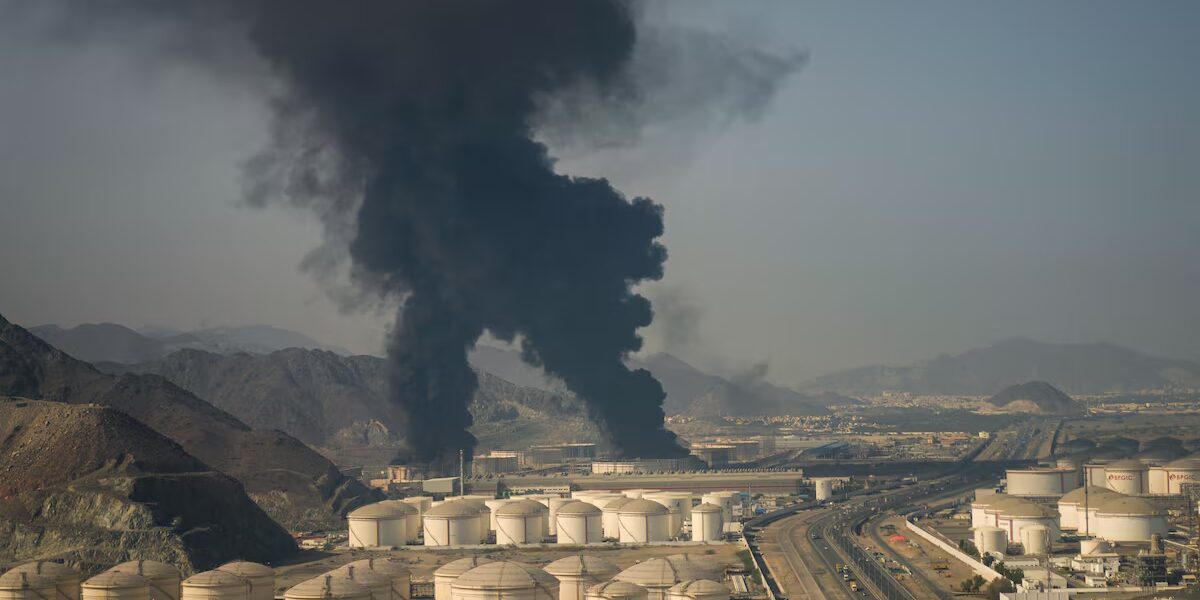
Iran has issued a strong warning that it will target key infrastructure across the Middle East if the United States follows through on threats to destroy its power plants.
The warning comes after U.S. President Donald Trump gave Tehran a 48-hour ultimatum to reopen the Strait of Hormuz — a critical global oil route — or face devastating strikes on its major power facilities.
In response, Iran’s military leadership stated that any attack on its infrastructure would trigger large-scale retaliation against U.S. interests and allied assets in the region. Potential targets include energy systems, IT networks, and desalination facilities across multiple countries.
The situation follows a series of escalating military exchanges. Iran recently launched missile strikes into southern Israel, hitting areas near Dimona and Arad, with more than 100 people reported injured after some missiles penetrated air defence systems. Israel responded swiftly with fresh airstrikes on Tehran.
Global concerns are mounting as the conflict intensifies, particularly over its impact on energy markets. Oil prices have surged, with Brent crude climbing above $105 per barrel amid fears of prolonged disruption to supply routes tied to the Strait of Hormuz, through which roughly a fifth of the world’s oil passes.
International reactions have also grown stronger. Countries including the United Kingdom, France, and Germany have condemned Iran’s actions, particularly the effective restriction of access to the strait. Meanwhile, Trump has criticised NATO allies for what he described as insufficient support in securing the vital shipping lane.
U.S. military activity in the region has increased significantly, with additional Marines deployed and targeted strikes aimed at weakening Iran’s coastal capabilities.
Beyond Israel, Iran has expanded its retaliatory actions to Gulf states, including Saudi Arabia and the United Arab Emirates, using both missiles and drones. Reports also indicate an attempted long-range strike on the joint U.S.-UK base at Diego Garcia, though it was unsuccessful.
Despite sustained attacks, analysts suggest Iran’s military capabilities remain largely intact, with its ability to launch strikes continuing weeks into the conflict.
With both sides signalling further escalation, the situation remains highly volatile — and the strategic importance of the Strait of Hormuz continues to keep global markets and governments on edge.