
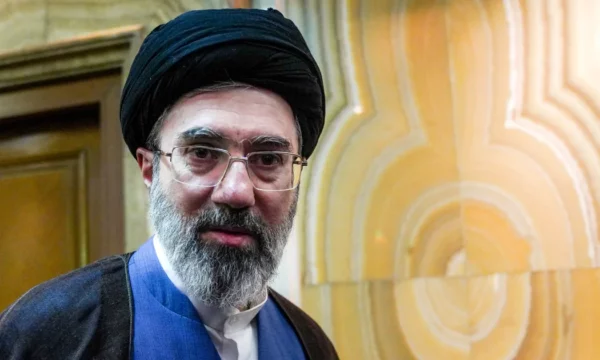
Iran’s Supreme Leader, Mojtaba Khamenei, has issued a warning to the United States and Israel against launching fresh military strikes on Iran, declaring that Tehran would determine when and how any renewed conflict would end.
The warning was contained in a written statement attributed to Khamenei and published on his official website on Saturday, October 31, amid continuing tensions in the Middle East.
According to the statement, Iran would respond decisively if either country resumed military operations against the Islamic Republic.
“If the enemies once again launch military or terrorist attacks, it is the armed forces of the Islamic Republic and the Iranian nation that will determine the time and conditions for ending them,” the statement read.
The remarks were reportedly issued following a meeting involving senior Iranian military officials, including Armed Forces Chief of Staff Ali Abdollahi, Army Chief Amir Hatami and Revolutionary Guards Commander Ahmad Vahidi.
Iranian military ordered to prepare for fresh threats
Khamenei reportedly instructed the country’s military leadership to remain prepared for any renewed attacks and ensure that Iran could respond immediately to threats against its territory and national interests.
“Any level or type of threat must be met with an immediate, impactful and geographically unrestricted response,” the statement said.
The Iranian leader also reportedly directed military commanders to expand their list of potential targets to include various American and Israeli assets.
According to the statement, the revised list should cover “all types of tangible and intangible assets belonging to the American-Zionist enemy”.
The warning signals Tehran’s stated determination to respond forcefully to any further military action by Washington or Israel.
First reported meeting with military commanders since taking office
The gathering was described as Khamenei’s first reported meeting with senior military commanders since becoming Iran’s supreme leader.
Mojtaba Khamenei succeeded his father, Ayatollah Ali Khamenei, who was killed during US-Israeli strikes at the beginning of the Middle East conflict in February 2026.
According to the report, the new supreme leader has not made a public appearance since assuming office, making the written statement particularly significant.
The latest warning follows months of regional instability that began on February 28, when the United States and Israel launched military strikes against Iran.
Tehran subsequently retaliated with attacks targeting locations across the region, raising concerns about a wider Middle East conflict.
Diplomatic efforts continue amid rising tensions
Despite the latest exchange of warnings, diplomatic efforts are reportedly continuing to prevent another round of fighting.
A delegation from Qatar arrived in Tehran on Friday, October 30, for discussions with Iranian officials as regional governments explored possible ways to ease tensions.
The visit followed reports that Iran had received a letter from US Vice President JD Vance.
Iranian media indicated that Tehran had not yet responded to the correspondence.
Qatar has played a diplomatic role in regional disputes, and the latest reported visit comes as efforts continue to prevent further military escalation.
While Iran has warned of a strong response to any renewed attacks, the diplomatic contacts suggest that channels of communication remain active.
The situation has renewed concerns about regional security, with attention focused on whether negotiations can prevent another confrontation involving Iran, Israel and the United States.