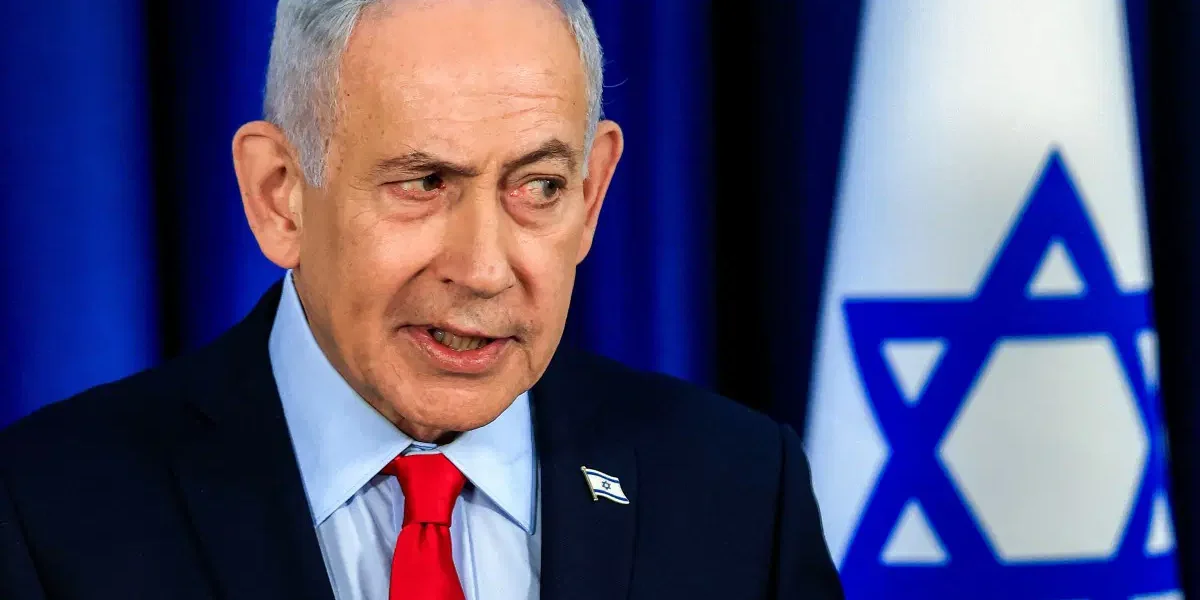
Israeli Prime Minister Benjamin Netanyahu declared on Thursday that Israel will continue its military strikes against Hezbollah “wherever necessary,” even as a fragile two-week ceasefire between the United States and Iran comes into effect.
His remarks followed an intense wave of Israeli airstrikes on Wednesday. According to Lebanon’s health ministry, the attacks killed at least 254 people and left more than 1,100 wounded, marking one of the deadliest escalations in recent weeks.
Netanyahu stated that Israel’s primary objective remains restoring security for northern communities by weakening Hezbollah’s operational capabilities and resolve.
The Israeli military reported carrying out what it described as its most powerful offensive of the conflict so far, striking more than 100 targets across Lebanon within just 10 minutes. The operation, referred to as “Operation Eternal Darkness,” represents a significant escalation in hostilities.
During the strikes, the Israel Defense Forces said it killed Ali Yusuf Harshi, a close aide to Hezbollah leader Naim Qassem. Additional targets included key infrastructure such as crossings along the Litani River, as well as weapons depots, command centers, and rocket launch sites.
In response to the mounting casualties, Lebanon declared a national day of mourning on Thursday, with government offices closed and flags lowered in tribute to those killed.
The escalation has cast doubt over the so-called Islamabad Accords—a two-week truce mediated by Pakistan aimed at easing tensions between the United States and Iran. Pakistani Prime Minister Shehbaz Sharif said the ceasefire was intended to apply broadly, including Lebanon. However, both Israeli officials and U.S. President Donald Trump have indicated that Lebanon is not covered by the agreement.
Hezbollah responded on Thursday by launching rockets into northern Israel, triggering air raid sirens in several communities. The group described the attack as retaliation for what it called violations of the ceasefire.
As the two-week negotiation window begins, the conflict in Lebanon continues to threaten wider regional stability. Amnesty International and other groups have urged all parties to prioritize civilian protection, noting that the death toll in Lebanon has now exceeded 1,500 since intensified military operations began in early March.