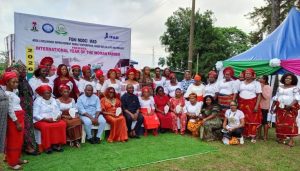
More than 6,000 youths and women in Delta State have benefited from the Livelihood Improvement Family Enterprises–Niger Delta (LIFE-ND) project through various agribusiness initiatives across 10 participating local government areas.
The Delta State Coordinator of the LIFE-ND project, Mr Collins Ashoro, disclosed this on Wednesday in Asaba during a media roundtable organised to review the programme’s achievements and challenges.
Ashoro said the project adopted an agribusiness incubation model, under which beneficiaries are trained through an apprentice, incubator and incubatee system.
According to him, the first phase of the programme, which ran from February 2019 to March 2025, produced 4,373 beneficiaries in Delta State.
He explained that under the additional financing phase, which commenced in April 2025, 630 beneficiaries had already been profiled, while another 1,020 were scheduled to be inaugurated, bringing the total number of beneficiaries in the state to 6,020.“This will bring the total beneficiaries, comprising youths and women, of the project to 6,020 incubatees from inception of the project in 2019 to date in Delta State,” Ashoro said.
The LIFE-ND programme operates across nine Niger Delta states, namely Delta, Edo, Cross River, Akwa Ibom, Bayelsa, Imo, Abia, Ondo and Rivers.
Ashoro said the programme targets youths between 18 and 35 years, as well as women-headed households, who are trained in priority agricultural value chains, including oil palm processing, fisheries, poultry, and cassava production and processing.
In Delta State, beneficiaries were drawn from Bomadi, Burutu, Ethiope East, Ika North East, Ika South, Ndokwa West, Ndokwa East, Okpe, Sapele and Ughelli North Local Government Areas.
LIFE-ND Seeks More Funding
Ashoro commended Governor Sheriff Oborevwori for the prompt payment of the state’s counterpart funding, which he said had helped sustain the agricultural transformation programme.
He, however, appealed for additional funding to enable the project expand to other local government areas that are currently outside the programme.
He explained that the overall goal of LIFE-ND was to transform rural economies by creating opportunities through which rural communities could achieve sustainable prosperity and equitable benefits.
According to him, the programme is designed to improve income, food security and employment opportunities for rural youths and women through sustainable agribusiness development.
Ashoro disclosed that the additional financing phase would run from March 2025 to March 2028, with a financial plan of $32 million to empower 10,805 beneficiaries in Delta State.
He said the new phase would place greater emphasis on sustainability, gender inclusion, persons with disabilities, climate-smart agriculture, nutrition and digital agribusiness solutions targeted at young people.
Despite its achievements, the coordinator identified several challenges affecting the programme, including low literacy levels among some beneficiaries, banking bureaucracies, inadequate loan amounts, poor savings and record-keeping practices, high input costs and limited participation by persons with disabilities.
He also cited inadequate funding as a major obstacle to expanding the programme to additional local government areas.
Ashoro called on the state government and other stakeholders to provide alternative funding to beneficiaries to address shortfalls in asset acquisition caused by inflation.
He also urged the government to adopt the incubation model and provide additional funding to extend the programme to non-participating local government areas.
Government Pledges Support
The Delta State Commissioner for Agriculture and Natural Resources, Mr Val Arenyeka, represented by the Permanent Secretary in the ministry, Dr Edmond Orioko, commended the LIFE-ND project for its achievements in the state.
Arenyeka assured the project coordinator of the ministry’s continued support towards sustaining the various agricultural initiatives and ensuring that beneficiaries derive lasting benefits from the programme.
The LIFE-ND project is funded by the Federal and state governments, with financing support from the International Fund for Agricultural Development (IFAD) and the Niger Delta Development Commission (NDDC).