The life of a happily married man was turned upside down after he stumbled upon a website listing missing children and discovered that he had allegedly been abducted as a baby more than three decades earlier.
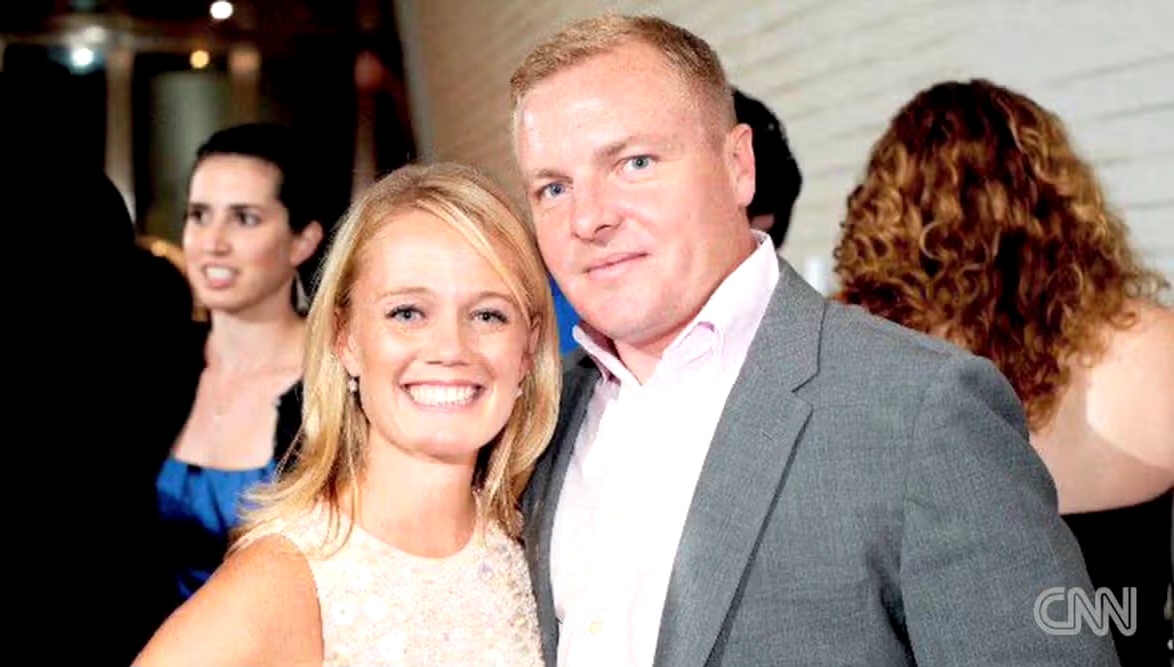
Steve Carter, 33, was adopted as an infant and raised by two parents he described as “phenomenal”.
After getting married and considering starting a family of his own, Steve began thinking more about his ancestry, particularly his medical history. However, he had no initial intention of searching for his biological parents, and life continued as usual.
That changed one day while he was preparing to leave for work. He came across a report about a woman who had been abducted as a baby and discovered that her details had been submitted to the National Centre for Missing and Exploited Children (NCMEC).
Although he initially ignored the story, it kept appearing before him, and the coincidence eventually prompted him to search the organisation’s website.
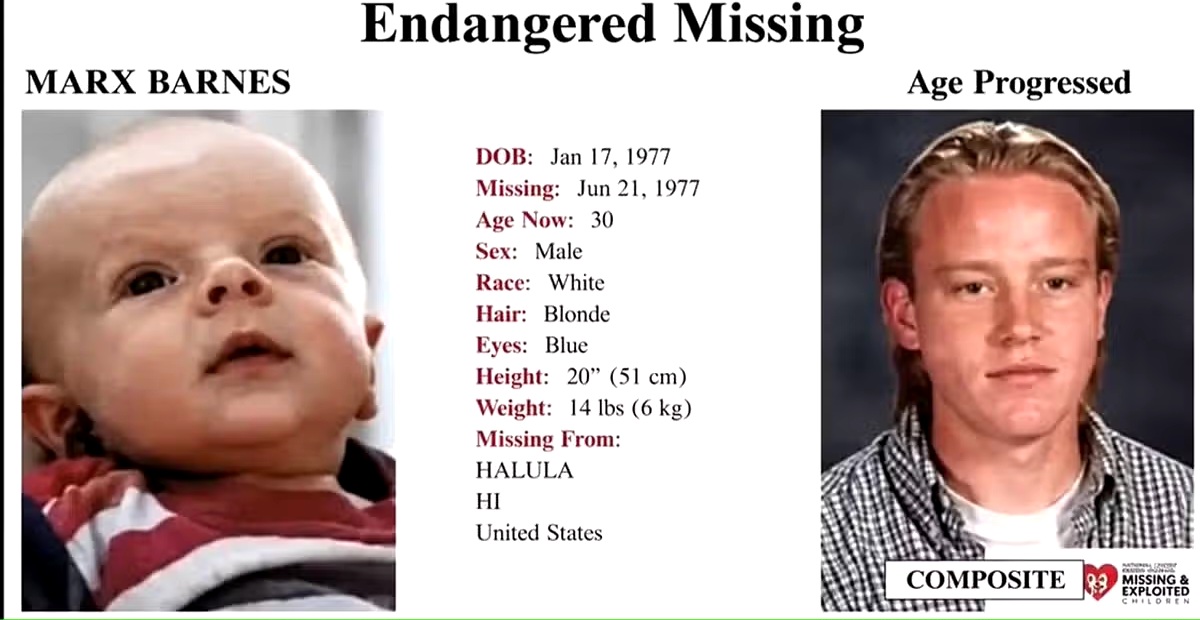
After entering his details, Steve discovered the profile of a missing infant named Marx Panama Moriarty Barnes, who had disappeared 33 years earlier. The child’s date of birth was just one day different from his own.
What caught his attention most, however, was an age-progressed photograph showing what the missing child might look like as an adult.
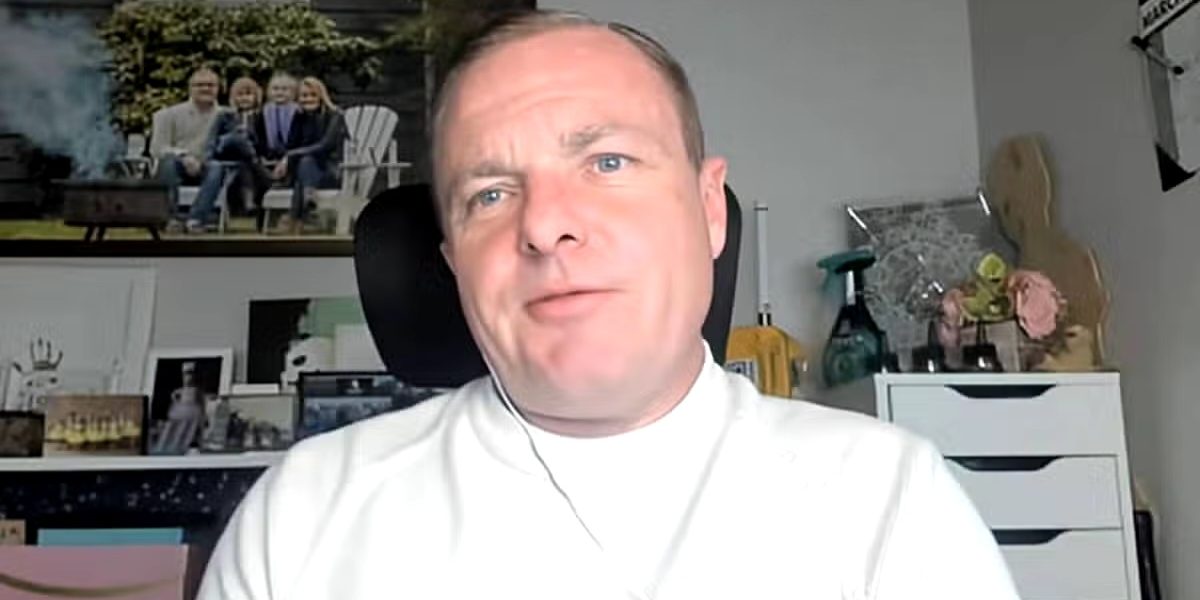
“When I tell you he looked like me, it was, I would say, 90% spot-on,” Steve recalled while sharing his experience on the What It Was Like YouTube channel. “It was the face that really caught me.”
According to the website, the child had disappeared at six months old while out walking with his mother. His pushchair was reportedly left behind at a bus stop.
Steve’s wife, adoptive mother and friends encouraged him to contact the authorities, although he was initially reluctant.
Months later, Hawaii police contacted him to confirm whether he was indeed Marx, the missing child.
Following the revelation, Steve’s first call was to Jenny, his biological mother’s eldest child, who was eight years older than him.
During their hour-long conversation, they discovered shared interests and similarities while discussing their biological mother, Charlotte, whom Jenny had known while growing up.
Steve’s second call was to his biological father, Mark, but the conversation was less encouraging.
The first thing Mark asked was how Charlotte was doing, apparently believing that Steve had been raised by his biological mother.
“I thought she kidnapped you and raised you,” Mark told him.
During their conversation, Steve learned that his biological parents had met on a beach in Hawaii in the 1970s and had shared a turbulent relationship.
Charlotte was reportedly a free-spirited woman who sometimes disappeared for days without explanation.
Consequently, when she disappeared with baby Steve, Mark assumed she had travelled to New Mexico, where her former husband lived.
He eventually reported his son missing two weeks later.
However, official records later revealed a different account of what happened.
Steve discovered that a woman had been found at a property in Honolulu with a malnourished child. The baby was subsequently placed in an orphanage, while the woman was taken into psychiatric care.
Steve was later adopted by the family that raised him.
His maternal aunt also helped him piece together the mystery by sharing letters Charlotte had written in the year before her disappearance.
In one of the letters, Charlotte reportedly admitted that she had no desire to become a mother and suggested that shaving her head would make her unrecognisable.
Steve remains uncertain about his biological mother’s whereabouts but believes she may have travelled to East Asia, where she possibly died two to three decades ago.
Following the discovery, Steve reunited with his half-sister in person and maintained contact with his biological father, Mark, speaking with him once or twice a month.
He has also since partnered with the National Centre for Missing and Exploited Children to support missing-child awareness and advocacy.
Addressing families still searching for missing loved ones, Steve encouraged them never to give up hope.
“Always have hope, and there is a chance that that person is doing well,” he said.