
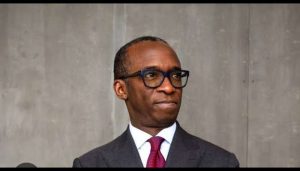
The Federal Government of Nigeria has officially nominated Judge Dr. Taoheed Elias as its candidate for election to the International Court of Justice (ICJ), appealing to the international community for support to restore West Africa’s long-absent presence on the bench of the world’s highest judicial body.
The nomination was formally presented on Thursday in Abuja during a ceremony attended by members of the diplomatic corps and senior government officials. Minister of Foreign Affairs, Ambassador Yusuf Tuggar, led the endorsement, describing the moment as both historic and symbolic for the region.
Ambassador Tuggar highlighted that West Africa has not had a representative on the ICJ since 2011, while Nigeria itself has been absent for over three decades.
“This prolonged absence is not a point of pride but a matter of perspective,” Tuggar stated. “It underscores the urgent need for equitable geographical representation and the return of West African voices to the ICJ, where global legal norms are shaped.”
He described Dr. Elias as more than a national nominee — “a candidate for the international community” — whose integrity and expertise embody the values enshrined in Article 2 of the ICJ Statute, which emphasizes “high moral character” and “recognized competence in international law.”
“Dr. Elias is a Nigerian jurist, a distinguished scholar, a seasoned international civil servant, and a respected judge,” Tuggar said. “His candidacy reflects the shared values of our diplomatic community — integrity, competence, and unwavering commitment to justice.”
In his remarks, Dr. Elias expressed deep gratitude for the nomination, reaffirming his lifelong commitment to advancing international law and justice. He emphasized that the ICJ remains “the cornerstone of the United Nations architecture,” dedicated to the peaceful settlement of disputes between states.
Outlining the three pillars of his candidacy, Elias cited:
Academic and intellectual expertise in international law,
Extensive institutional knowledge of the United Nations system, and
Over two decades of judicial and legal experience in international organizations.
Currently serving as a judge ad hoc at the ICJ — appointed by Equatorial Guinea in an ongoing case — Dr. Elias noted that this appointment, made by a non-Nigerian state, underscores his impartiality and international reputation.
He also paid tribute to Judge Abdulqawi Yusuf of Somalia, whose forthcoming departure creates the vacancy he seeks to fill. If elected in the November 12, 2025 ICJ elections, Dr. Elias would become the fourth Nigerian — and the first in over 30 years — to serve on the Court, following in the footsteps of Charles Onyeama, Bola Ajibola, and his father, the late Judge Taslim Elias.
Dr. Elias’s distinguished career spans numerous international institutions. He has served as Legal Adviser and Director at the Organisation for the Prohibition of Chemical Weapons (OPCW) in The Hague, President of the Administrative Tribunal of the OPEC Fund for International Development, Chairman of the Islamic Development Bank Administrative Tribunal, and former President of the OPEC Appeals Committee. He is also a member of the Institut de Droit International, reflecting his standing in the global legal community.
Established in 1945 and based in The Hague, the ICJ serves as the principal judicial organ of the United Nations, settling legal disputes between sovereign states and issuing advisory opinions on questions of international law.
Nigeria’s campaign for Dr. Elias’s election is being framed not merely as a national pursuit but as a regional call to action — to ensure that Africa, particularly West Africa, continues to contribute to the evolution of international law and global justice.