
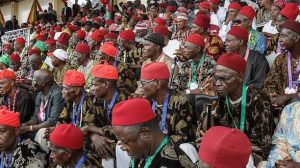
The Edo State chapter of Ohanaeze Ndigbo Worldwide has directed members of the Igbo community to refrain from using unauthorized traditional titles such as Eze Ndigbo, Ezeigbo, Ezendigbo, Igwe, and other monarchical designations outside recognized traditional institutions in Igboland.
The directive was announced during a press conference in Benin City by the State Secretary of the organisation, Mr. Emmanuel Ofodu, who said the decision followed a resolution reached at the group’s General Assembly meeting held on April 9, 2026.
According to Ofodu, the directive applies to Igbo communities in Edo State, across Nigeria, and in the diaspora. He explained that the establishment of parallel traditional leadership structures outside Igboland lacks cultural legitimacy and is allegedly inconsistent with an earlier court ruling referenced as Suit No. B/290/2015.
He maintained that only constitutionally and traditionally recognized authorities within Igboland possess the authority to confer such titles. Consequently, any individual or group involved in unauthorized installations or coronations would be acting contrary to established cultural directives and legal pronouncements.
The organisation also reaffirmed its respect for existing traditional institutions in Edo State, including allegiance to Oba Ewuare II and other recognized traditional rulers across the state.
Ofodu called on security agencies, government authorities, and members of the public to regard the unauthorized use of such titles as invalid, stressing that enforcement of the directive is necessary to preserve cultural order and prevent potential inter-community disputes.
He further urged Igbo residents in Edo State to operate through recognized community structures such as town unions and the state chapter of the Igbo Community Union, under the broader coordination of Ohanaeze Ndigbo Worldwide.
Group Launches Voter Registration Mobilisation
In addition to the directive on traditional titles, the organisation announced the commencement of a statewide civic mobilisation campaign aimed at encouraging participation in the ongoing voter registration exercise being conducted by the Independent National Electoral Commission.
According to the group, the registration exercise, scheduled to close in July 2026, provides eligible citizens with an opportunity to register, update their voter records, obtain Permanent Voter Cards (PVCs), and strengthen their participation in future elections.
Ofodu appealed to all eligible Igbo residents aged 18 years and above to take advantage of the registration exercise and actively participate in the democratic process.
He emphasized that voter participation remains essential to effective representation, noting that electoral influence is largely determined by the level of civic engagement within communities.
The organisation stated that its initiatives on traditional title regulation and voter mobilisation are intended to promote unity, encourage lawful cultural practices, and enhance political participation among Igbo residents in Edo State.
It also reaffirmed its commitment to peaceful coexistence with host communities and continued respect for established traditional and administrative institutions within the state.
Concerns Over Misuse of Traditional Titles Abroad
Speaking at the briefing, the State Legal Adviser of the organisation, Mr. George Igbokwe, said the decision to prohibit the use of the titles was influenced by incidents involving some Igbo individuals in foreign countries who assumed traditional designations without authorization.
According to him, the issue has generated challenges in countries including Ghana, South Africa, and the Netherlands, prompting concerns among Igbo traditional institutions.
Igbokwe explained that the directive was communicated to state chapters following deliberations by the organisation’s leadership and consultations with the Council of Traditional Rulers in Igboland.
He stated that the use of titles such as Eze Ndigbo or Eze Igbo, as well as the performance of functions associated with those positions outside recognized traditional frameworks, has now been formally prohibited.
The legal adviser noted that the decision is aimed at protecting the integrity of Igbo traditional institutions and preventing actions capable of creating misunderstandings or conflicts within host communities.
