
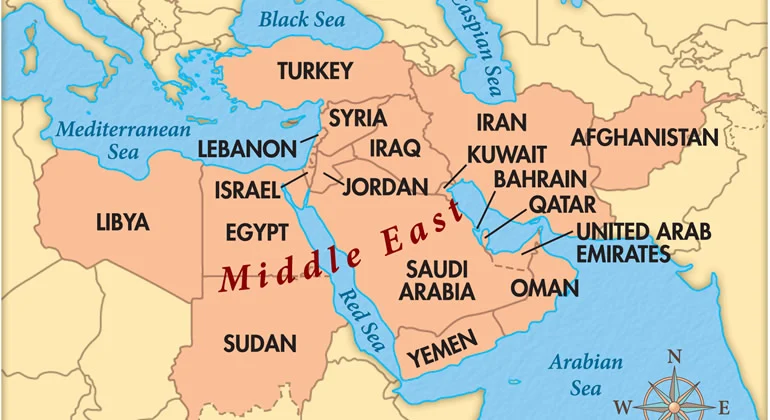
Oil prices remained above $100 on Friday while global stock markets declined after Iran’s new leader called for the potential closure of the Strait of Hormuz and threatened to expand the conflict with the United States and Israel.
As the war approaches its third week with no clear end in sight, investors are growing increasingly concerned that a prolonged conflict could fuel inflation and weaken the global economy.
In recent days, Iran has targeted energy infrastructure across the Gulf region, including ships near Iraq, fuel storage facilities in Bahrain, and oil fields in Saudi Arabia reportedly struck by drones. Tehran has also warned that it could “set the region’s oil and gas on fire” if its own energy facilities and ports come under attack.
In his first public remarks since succeeding his father four days ago, Iran’s new Supreme Leader Ayatollah Mojtaba Khamenei suggested that the Strait of Hormuz, a key global shipping route through which about 20% of the world’s oil and gas passes, should remain effectively blocked.
“The lever of blocking the Strait of Hormuz must definitely be used,” Khamenei said in a statement broadcast on state television.
He also warned that Iran had explored opening additional fronts in the conflict, targeting areas where adversaries might be more vulnerable if the war continues.
Oil prices surged more than 9% on Thursday, pushing Brent crude above $100 per barrel for the first time since 2022, when Russia invaded Ukraine. Brent has climbed around 40% since the Middle East conflict began on February 28.
Prices remained elevated early Friday, despite the International Energy Agency (IEA) releasing a record 400 million barrels from global stockpiles in an attempt to stabilize markets. The IEA warned that the war could lead to “the largest supply disruption in the history of the global oil market.”
Meanwhile, U.S. President Donald Trump has faced mounting political pressure over the economic impact of the crisis. In a social media post on Thursday, he argued that higher oil prices could benefit the United States.
“The United States is the largest oil producer in the world, by far, so when oil prices go up, we make a lot of money,” Trump wrote, adding that his priority remains preventing Iran from obtaining nuclear weapons.
Market analysts say investors are increasingly preparing for a prolonged conflict. Chris Weston of Pepperstone said the sustained rise in crude prices suggests markets are factoring in the possibility that the Strait of Hormuz could remain disrupted for an extended period.
He noted that if the United States moves to escort vessels through the strait, markets could see a temporary rally, but for now higher energy prices and extreme market volatility remain the dominant trend.
Concerns over the economic impact have pushed global equity markets lower, particularly in Asia, where many economies rely heavily on energy imports.
Major stock indexes in Tokyo, Hong Kong, Shanghai, Singapore, Seoul, Mumbai, Bangkok, Wellington, Manila, and Jakarta all declined.
The U.S. dollar strengthened against major currencies, supported by its safe-haven status, rising inflation concerns, and expectations that interest rates could remain higher for longer.
Matt Weller, head of market research at City Index, warned that markets could face continued turbulence after years of relatively strong stock performance, low energy prices, and historically low interest rates.
“Those trends have reversed,” he said, adding that stocks may remain under pressure while oil prices climb and borrowing costs increase as long as the Strait of Hormuz remains effectively closed.
Analysts say that unless meaningful progress toward a ceasefire emerges in the Middle East, global markets may face sustained volatility in the coming weeks and months.
Key market figures (around 07:00 GMT):
- West Texas Intermediate: down 0.2% at $95.50 per barrel
- Brent crude: up 0.1% at $100.56 per barrel
- Tokyo (Nikkei 225): down 1.2%
- Hong Kong (Hang Seng): down 0.9%
- Shanghai Composite: down 0.8%
Other global markets also ended lower, including New York’s Dow Jones (down 1.6%) and London’s FTSE 100 (down 0.5%), reflecting investor concerns over the widening geopolitical crisis.