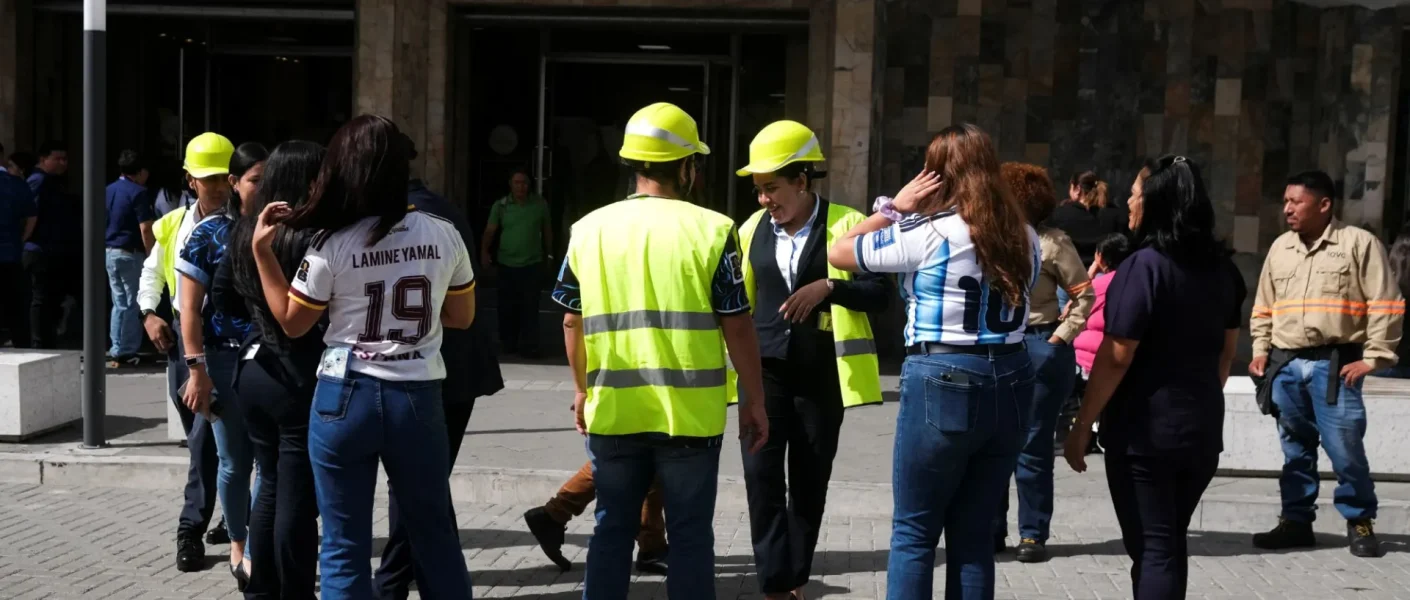
A powerful 7.3-magnitude earthquake struck southern Mexico on Friday, triggering a tsunami alert along parts of the Pacific coast and sending residents fleeing from buildings across the region.
According to the United States Geological Survey (USGS), the earthquake occurred about 48 kilometres off the coast of Aquiles Serdán at a depth of 18 kilometres.
Mexico’s National Seismological Service reported more than 30 aftershocks, with the strongest measuring 6.8 magnitude.
Following the quake, the US National Oceanic and Atmospheric Administration (NOAA) issued a tsunami threat alert, prompting authorities to advise residents in coastal areas to move away from beaches as a precaution.
The earthquake was strongly felt in the Mexican states of Chiapas and Oaxaca, as well as in neighbouring Guatemala and El Salvador.
There were no immediate reports of deaths or serious injuries.
In Tuxtla Gutiérrez, the capital of Chiapas State, residents rushed out of homes and office buildings as the ground shook.
Mexican President Claudia Sheinbaum said she had spoken with governors in the affected states, while Navy Secretary Raymundo Morales said there had been no reports of major damage or significant impacts.
In neighbouring Guatemala, authorities evacuated several buildings and suspended classes in communities near the Mexican border as a precaution.
Although Mexico City, located more than 800 kilometres from the earthquake’s epicentre, was far from the affected area, some residents reported feeling the tremor, prompting precautionary evacuations in several high-rise buildings.
Mexico and much of Central America sit along active tectonic plate boundaries, making the region one of the most seismically active areas in the world.