
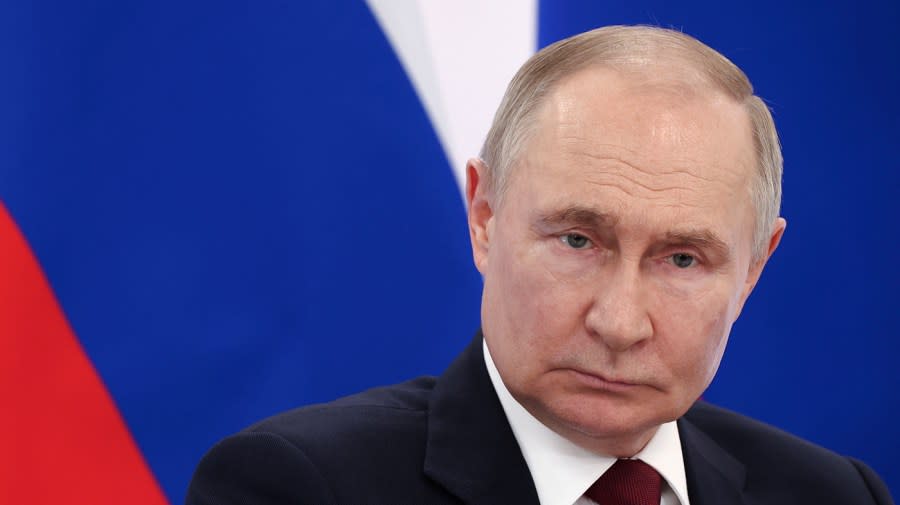
Russian President Vladimir Putin could be preparing for a decisive new phase in his war strategy in 2026, with Western analysts warning that Moscow’s ambitions may stretch far beyond Ukraine as global diplomacy continues to shift.
Experts fear the Kremlin believes the conditions are gradually tipping in its favour — creating an opening for a major escalation that could pressure NATO, weaken European unity, and deliver a legacy-defining victory for Putin.
Former diplomat Tim Wilsey of King’s College London said Moscow appears better positioned than it has been in years, with Ukraine under mounting strain and Europe struggling to sustain long-term military and financial support.
“I expect Vladimir Putin to have a good year in 2026,” Wilsey said, arguing that the Russian leader knows how to turn battlefield momentum into political leverage.
He warned that the current direction of the war could lead to a peace agreement shaped to benefit the Kremlin. Wilsey said Putin could sell any deal as a domestic triumph, even as Russians remain aware of the heavy human cost.
Analysts caution, however, that such an agreement may only freeze the conflict rather than end it — giving Russia time to rebuild and potentially restart aggression later.
Wilsey added that the Russian military has suffered serious losses and would need time to recover. In his view, a lull in full-scale fighting could open the door to a more covert period of confrontation, including sabotage, cyber attacks, political manipulation and targeted killings.
He also pointed to growing Russian influence in parts of the former Soviet sphere, saying Moldova remains vulnerable and that Ukraine could still face renewed pressure, with Russia potentially “nibbling away” to test how strong Western security guarantees really are.
One of the biggest concerns raised by analysts is Narva, an Estonian border city with a largely Russian-speaking population and symbolic value for Moscow.
“The one I’ve always thought is very dangerous is Narva, which has an 80 per cent Russian population,” Wilsey warned. “Do we really believe that the United States is going to go to war for one town in Estonia? I’m not sure I do anymore.”
Putin has previously questioned Narva’s status and hinted it is historically Russian, raising fears the city could become a flashpoint designed to probe NATO’s willingness to respond.
Meanwhile, foreign policy analyst Alan Mendoza of the Henry Jackson Society said much of what happens next may depend on the decisions made in Washington rather than Moscow.
He argued that former U.S. President Donald Trump could either strengthen Ukraine’s position by backing it fully, or step away from the conflict entirely — giving Putin far greater freedom to shape events.
“There could be an outcome where Trump does the right thing,” Mendoza said. “But there could also be the worst outcome of all… that he withdraws his interest in the whole process and allows Putin carte blanche.”
As diplomatic talks reportedly gather pace, Putin has projected growing confidence, declaring that Russian forces hold the “strategic initiative.” He has also framed Ukraine as the obstacle to peace while insisting Russia is ready to end the conflict — but only on terms that critics say reward aggression.
Negotiations over a potential settlement have reportedly advanced, with discussions including a European-led peacekeeping mission to secure any ceasefire line. Ukrainian President Volodymyr Zelensky has suggested Kyiv may be willing to drop its NATO ambitions in exchange for “NATO-like guarantees,” while acknowledging that territorial issues remain the hardest part of any deal.
Analysts warn that any agreement which gives Russia major concessions could create the appearance of stability while leaving the door open for future escalation.
Wilsey said Europe is moving too slowly at a critical moment, warning that 2026 could become a turning point if Western unity weakens and Putin emerges emboldened by battlefield and diplomatic gains.
Ultimately, experts say the biggest question may not be what Putin does next — but how the West responds.
