
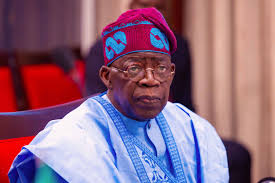
The House of Representatives has approved President Bola Tinubu’s request to borrow $2.35 billion to finance part of Nigeria’s 2025 budget deficit.
The approval was granted during plenary on Tuesday, October 29, after lawmakers considered the report of the Committee on Aids, Loans, and Debt Management.
The lower chamber also endorsed the President’s proposal to issue a $500 million debut sovereign sukuk in the international capital market to fund infrastructure projects and diversify the nation’s financing sources.
According to the approved plan, the House authorised the implementation of a new external borrowing of ₦1.84 trillion (equivalent to $1.23 billion at an exchange rate of ₦1,500 per dollar) as part of the 2025 Appropriation Act, to help finance the ₦9.27 trillion budget deficit.
Earlier this month, President Tinubu sought legislative approval in line with sections 21(1) and 27(1) of the Debt Management Office (Establishment) Act, 2003, which mandates National Assembly consent for all new loans and refinancing arrangements.
Tinubu explained that the $2.35 billion would be raised through one or a combination of financial instruments such as eurobonds, loan syndications, or bridge financing, depending on global market conditions. He added that pricing for the eurobonds would reflect current yields on Nigeria’s existing international bonds, estimated between 6.8% and 9.3%, depending on maturity.
On the $500 million sovereign sukuk, the President stated that the move aims to diversify Nigeria’s investor base, strengthen foreign confidence, and fund major infrastructure projects across the country.
He noted that the federal government had previously raised over ₦1.39 trillion through domestic sukuk issuances between 2017 and 2025, financing key road and infrastructure projects. The new external sukuk, he said, would complement those domestic efforts.
Tinubu added that up to 25% of proceeds from the sukuk may be used to repay high-cost existing debt, while the remaining funds would be channelled into infrastructure development.
The approval marks another step in the Tinubu administration’s broader strategy to stabilise public finances, expand infrastructure funding, and reduce pressure on domestic borrowing sources.