
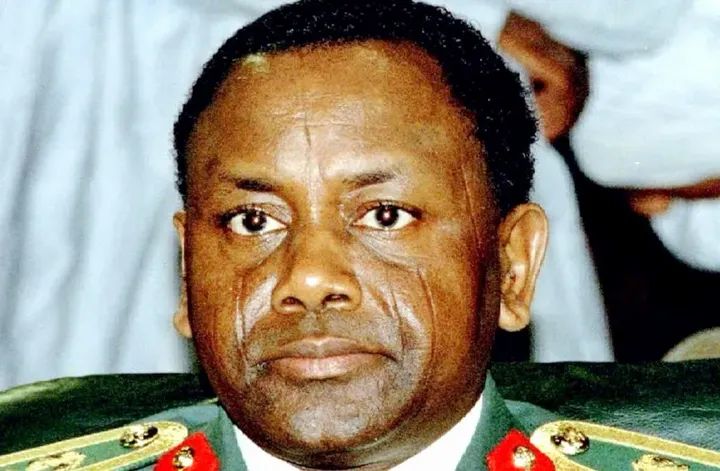
A retired senior operative of Nigeria’s Department of State Services (DSS), Dennis Amachree, has claimed that the woman who was with former Head of State General Sani Abacha at the time of his death insisted she was not responsible for his passing.
In his newly released book, DSS @40: My Journey Behind the Shield, Amachree recounts what he says was his interrogation of the woman, whom he describes as a pharmacist. According to him, her first words were:
“I did not kill him. He died on top of me.”
Amachree, who served as Assistant Director of Operations and Intelligence at the Lagos State DSS Command in 1998, said he was directed to locate and question the woman shortly after Abacha’s death on June 8, 1998.
According to his account, Abacha died at about 4:05 a.m. at the Aso Rock Presidential Villa during an intimate encounter. Amachree argues that the former military ruler suffered a cardiac event and maintains that this explanation is the most accurate account of the circumstances surrounding his death.
Abacha, who ruled Nigeria from November 1993 until his death in June 1998 at the age of 54, died suddenly, prompting years of speculation and numerous conspiracy theories.
In the book, Amachree rejects several popular narratives, including claims that Abacha was poisoned through a handshake, a poisoned apple, or by foreign intelligence agencies.
He also disputes accounts attributed to several public figures, including former Chief Security Officer Major Hamza Al-Mustapha, former Minister Jeremiah Useni, former US National Security Adviser Susan Rice, journalist David Orr, retired military doctor Brigadier General Oviemo Ovadje, and former Aviation Minister Femi Fani-Kayode, arguing that none provides a complete or verifiable explanation of the events.
Amachree claims that after interviewing the woman in Lagos, he reported his findings to DSS headquarters in Abuja before she was flown back to the Federal Capital Territory.
He further argues that the widespread circulation of conflicting accounts over the years has distorted the historical record surrounding Abacha’s death.
According to the retired intelligence officer, he wrote the book to provide what he believes is a factual account based on his direct involvement in the investigation.
He also reflected on the broader lessons from the episode, saying it demonstrates the importance of accountability, transparency and accurate historical documentation.
General Sani Abacha’s death remains one of the most discussed events in Nigeria’s political history. While Amachree’s account offers a fresh perspective based on his personal recollections, it represents his version of events and contributes to the ongoing debate over the circumstances surrounding the former military ruler’s final hours.