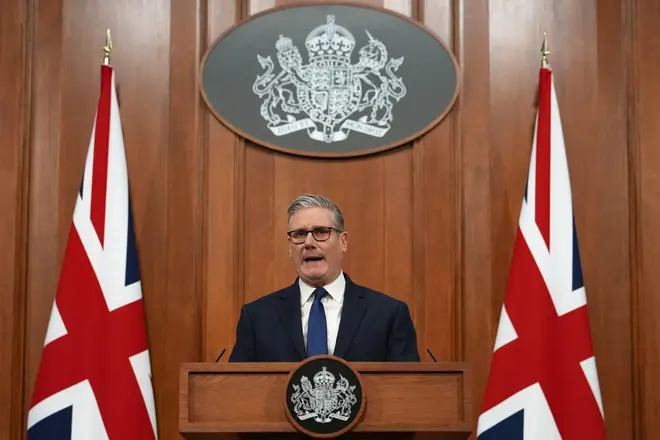
UK Prime Minister Keir Starmer has warned that Britain’s response to the Iran crisis “will define us for a generation,” as he outlined the government’s position on the conflict and its economic implications.
Speaking at a Downing Street press conference, Starmer made it clear the UK would not be drawn into the war. “This is not our war, we will not be drawn into the conflict. That is not in our national interest,” he said.
However, he подчеркed that Britain would play a leading diplomatic role, particularly in efforts to reopen the Strait of Hormuz, a key global shipping route disrupted by the conflict. He described restoring access as “the most effective way we can support the cost of living in Britain.”
Starmer also announced that Foreign Secretary Yvette Cooper will host talks with representatives from 35 countries later this week to explore diplomatic and political options for restoring freedom of navigation.
Highlighting domestic developments, the Prime Minister noted a recent drop in household energy costs, with the Ofgem price cap falling to £1,641 for an average dual-fuel household until June 30—a 6.6% decrease from the previous quarter. The briefing marked his third update on the crisis, which has driven up global energy prices and raised concerns about economic stability.
Meanwhile, US President Donald Trump criticised the UK for not joining military action in the Middle East, suggesting countries affected by supply disruptions should “build up some delayed courage” and take control of the Strait of Hormuz.
In response, Starmer reaffirmed the UK’s commitment to NATO, describing it as “the single most effective military alliance the world has ever seen,” and stressed that his decisions would remain guided by Britain’s national interest.
The conflict is already impacting UK consumers, with fuel prices rising sharply. Data from the RAC shows diesel prices have climbed by 40p to 182.8p per litre, while petrol has increased by 20p to 152p per litre.
Chancellor Rachel Reeves also cautioned against broad tax cuts on fuel, warning they could drive inflation higher. She said any government support would be carefully targeted, adding that past measures had disproportionately benefited wealthier households.