
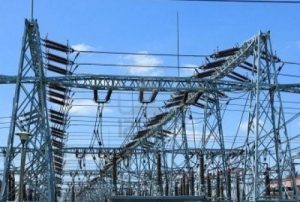
ABUJA – As Nigeria continues to grapple with recurring national grid failures, energy experts and electricity consumers say efforts to secure a stable power supply remain hampered by entrenched structural, financial and policy problems, even as households and businesses shoulder the daily burden of prolonged outages.
Although business shutdowns and lost productivity often dominate public debate, the social consequences are proving equally severe, with families facing disrupted routines, rising living costs and growing anxiety as they resort to expensive alternatives to meet basic needs.
In Maraba, a suburb of Abuja, Mary Auka, a civil servant and mother of three, said unreliable electricity has forced her to constantly revise her family’s weekly budget.
“We spend more on fuel than on food some weeks,” she said. “When there is no light, everything stops—water pumping, cooking, even charging phones.”
Children struggle to read at night without lamps, while health facilities depend heavily on diesel generators to power lifesaving equipment, and the steady hum of generators has become a permanent feature in many neighbourhoods.
Energy analysts say such daily experiences reflect deeper systemic weaknesses within the country’s electricity value chain.
Nigeria’s power grid will continue to collapse until obsolete infrastructure is upgraded, generation is aligned with transmission capacity and consumers begin paying cost-reflective tariffs, according to Gideon Agbedo, a prominent energy lawyer.
In a recent interview, Agbedo identified ageing and inadequate facilities as the core drivers of repeated failures, noting that the system lacks the balance required to manage fluctuating power flows.
“Feed too much or too little, and you get a mismatch leading to collapse,” he explained.
Generation companies recently blamed the latest incident on excessively low output, further illustrating the fragile equilibrium that defines the network.
Agbedo said restoring stability would require urgent and coordinated reforms across the sector.
He urged authorities to first strengthen and modernise the grid and then deploy advanced monitoring technologies such as Supervisory Control and Data Acquisition systems to better regulate supply and demand.
According to him, long-running discussions about installing such systems have yielded little progress, leaving the network exposed to preventable disruptions.
He added that while the privatisation of distribution companies is often criticised, the problems predate private ownership and stem partly from inefficiencies that characterised the former public system.
The private DisCos were expected to inject fresh capital, yet many have struggled because tariffs do not cover production and operating costs, limiting their ability to invest in upgrades.
“Nigerians, even primary consumers, aren’t paying cost-reflective rates,” he said, stressing that inadequate revenue leaves the sector without the funds needed for maintenance and expansion.
He warned that reversing privatisation entirely would send negative signals to investors and could create legal and financial complications for government.
Such a move, he said, would suggest policy inconsistency, raise compensation disputes and undermine recent decentralisation efforts that grant states greater roles in electricity management.
Instead, he recommended targeted intervention focused on operators that consistently fail to meet performance standards.
Regulators, he said, could revoke the licences of non-performing DisCos, take over their assets and compensate them based only on proven value.
“Some DisCos are doing well; limit takeovers to the laggards,” he advised, adding that this would help channel scarce resources where they are most needed.
He noted that several smaller African countries have achieved more reliable supply by enforcing discipline and ensuring tariffs reflect actual costs, while protecting only the poorest consumers with subsidies.
Sunday Oduntan, Executive Director of Research and Advocacy at the Association of Nigerian Electricity Distributors, echoed similar concerns about financial pressures facing operators.
He said the electricity business is capital intensive and recovery of investment remains difficult because revenue collection is weak across the market.
According to him, widespread energy theft, illegal connections and chronic non-payment continue to erode the financial base of the sector.
He added that such practices are not limited to low-income households but cut across social classes.
“It is not just the poor; wealthy people also bypass meters, so cost recovery remains a big problem, which is why many states are hesitant to jump in,” he said.
Other stakeholders have expressed comparable worries about the underlying condition of the infrastructure.
Dr. Fatima Lawal, a power systems researcher at the University of Abuja, said the ageing nature of transmission assets remains a significant obstacle.
She explained that many transmission lines and substations have exceeded their design lifespan and are increasingly prone to faults.
“You cannot run a 21st-century economy on a grid built decadesago without significant upgrades,” she said. “Even minordistur bancescan cascade into total collapse because there is little redundancy in the system.”
For small businesses, the effects of these shortcomings are immediate and financially draining.
At Wuse Market in Abuja, tailor Emmanuel Okoro, said he spends nearly half of his earnings on petrol to keep his sewing machines running.
“When power goes off, my machines stop. If I don’t use a generator, I lose customers,” he said. “But fuel prices keep rising. It’s like we are working just to buy fuel.”
Industry groups say such stories reflect broader financial bottlenecks across the value chain.
Distribution companies struggle with low revenue collection and energy losses, while generation firms complain of unpaid invoices that limit their ability to expand capacity.
Analysts caution that unless these liquidity constraints are resolved, improvements in service delivery will remain slow and uncertain.
Government officials have repeatedly promised reforms, including fresh investments in transmission infrastructure and support for decentralised and embedded power solutions.
The Nigerian Independent System Operator has also sought to clarify the technical causes of the latest disruption.
In a recent statement to journalists, the agency attributed the incident to a voltage disturbance originating from the Gombe Transmission Substation.
The disturbance, it said, quickly spread across the network, affecting Jebba, Kainji and Ayede substations.
“The event was accompanied by the tripping of some transmission lines and generating units, resulting in a partial system collapse. Appropriate corrective actions were immediately implemented to stabilise the system and restore normal operations. Restoration, which began at about 11:11a.m has since been completed,” the statement read.
Despite such explanations, many Nigerians say repeated assurances have done little to rebuild public trust.
For them, each blackout represents not just a technical glitch but another reminder of unmet promises.
The darkness that follows every collapse therefore carries both practical and symbolic weight, reinforcing uncertainty about when lasting relief will arrive.
As 2026 unfolds, experts maintain that only sustained funding, firm regulation and strong political will can stabilise the grid, warning that until then millions will continue to depend on generators—and hope—for electricity.
