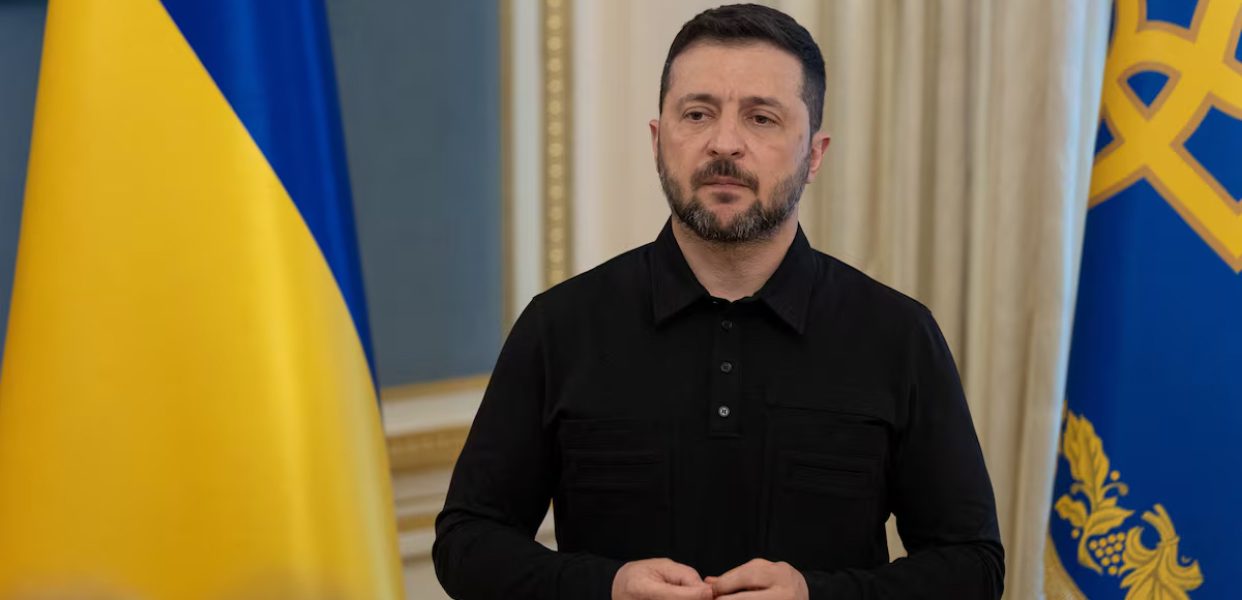
The United States has proposed the creation of a “free economic zone” in parts of eastern Ukraine’s Donbas region as part of a possible peace agreement with Russia — an idea that would require Ukrainian forces to pull back from some contested areas, President Volodymyr Zelensky revealed on Thursday, December 11.
Speaking to reporters, Zelensky confirmed that Washington is reviewing an updated and highly detailed peace plan submitted by Kyiv. The Trump administration, he said, wants a “full understanding” of Ukraine’s position by Christmas as diplomatic talks intensify.
But the biggest obstacle remains territorial control. Russia continues to demand the entirety of the Donbas, while Ukraine insists on keeping its current defensive line. The U.S. economic-zone proposal, framed as a compromise, would apply to areas Russia calls a “demilitarized zone.”
Zelensky made it clear that Ukraine has not accepted the idea, calling it “serious” and fraught with unanswered questions. He argued that any troop pullback must be mutual, asking why Ukraine alone should be required to withdraw without Russia doing the same.
What would stop Russian forces from entering disguised as civilians.
Zelensky stressed that any territorial compromise must be fair and ultimately approved by the Ukrainian people — potentially through elections or a referendum.
The Ukrainian leader described recent talks with the U.S. negotiating team — including Secretary of State Marco Rubio, Defense Secretary Pete Hegseth, special envoy Steve Witkoff, and Jared Kushner — as “constructive.” NATO Secretary-General Mark Rutte also participated. Further negotiations between U.S., European, and Ukrainian officials are planned this weekend in Paris.
However, White House press secretary Karoline Leavitt signaled frustration with both sides, saying it is still uncertain whether the U.S. will send a representative to the Paris meetings.
Zelensky reiterated that strong security guarantees remain essential, stressing the failure of the 1994 Budapest Memorandum, under which Ukraine surrendered its nuclear weapons in exchange for Russia’s promise to respect its sovereignty — a promise repeatedly broken.
Ukraine, he said, needs a new security framework that gives “specific answers” about what its allies will do if Russia resumes aggression.
He also acknowledged that a ceasefire would only follow a signed political framework, as Moscow has refused to agree to one beforehand.