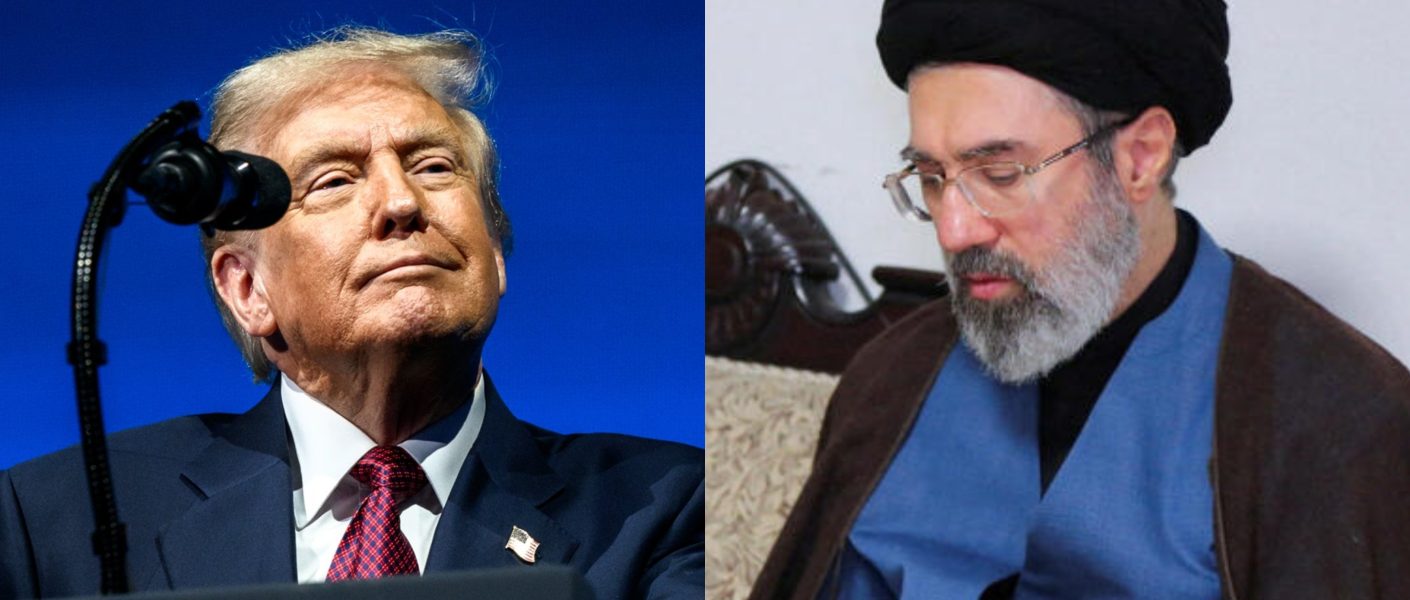
U.S. President Donald Trump has announced that Washington and Tehran have “largely negotiated” a memorandum of understanding for a peace agreement that would lead to the reopening of the Strait of Hormuz.
The development has fueled global hopes of a breakthrough that could bring an end to the three-month conflict in the Middle East. Trump said the proposed agreement, reportedly being mediated by Pakistan, would fully restore access to the crucial shipping route.
The Strait of Hormuz has remained blockaded since the United States and Israel launched military operations against Iran in February, sparking a major global energy crisis.
“Final aspects and details of the Deal are currently being discussed, and will be announced shortly,” Trump wrote on Truth Social.
Reports from U.S. and Iranian media suggest the draft agreement sets out a phased roadmap designed to stop the fighting and stabilize international markets.
Under the first stage, all sides would work toward an immediate ceasefire, the lifting of the U.S. maritime blockade on Iranian ports, and the reopening of the Strait of Hormuz.
The second phase would reportedly involve the release of about $25 billion in Iranian assets frozen abroad under international sanctions. A final stage would establish a strict 30-to-60-day negotiation period focused on Iran’s stockpile of highly enriched uranium and its broader nuclear programme.
Speaking during a visit to India, U.S. Secretary of State Marco Rubio confirmed progress toward an arrangement that would reopen the waterway “without tolls,” although he stressed that the plan depends on full compliance from Iran.
Despite Trump’s optimistic tone, major disagreements remain, especially over control of the strategic waterway. While Washington wants unrestricted, toll-free access, Iran’s semi-official Fars News Agency insisted that shipping operations and permissions in the strait would remain under Tehran’s authority.
Fars dismissed Trump’s claims of an imminent finalized agreement as “inconsistent with reality.”
Iranian Foreign Ministry spokesman Esmail Baghaei also said Tehran’s key demands include guarantees against future U.S. military strikes and an end to hostilities in Lebanon.
The conflict has significantly impacted the global economy, with Brent crude oil climbing to $103.50 per barrel — a 43 per cent increase since the war began in February.
The Abu Dhabi National Oil Company warned that shipping operations may not fully recover until 2027, even if a truce is reached soon. Meanwhile, fighting has expanded into Lebanon, where Israeli forces are battling the Iranian-backed Hezbollah group.
The proposed deal has also triggered criticism in Israel. Opposition leader Benny Gantz described any ceasefire arrangement involving Lebanon as a “strategic mistake.”
Israeli media reported that Prime Minister Benjamin Netanyahu told Trump that Israel must retain full freedom to respond independently to security threats in Lebanon, regardless of any U.S.-Iran agreement — a condition his aides claim Trump accepted.
The crisis has also created political pressure for Trump at home, as rising fuel, food, and fertilizer prices continue to affect American consumers.
According to reports, Trump skipped his son’s wedding over the weekend to remain in Washington and oversee diplomatic efforts, holding talks with leaders from Saudi Arabia, Qatar, the United Arab Emirates, Egypt, Jordan, Turkey, and Pakistan.
Pakistani security officials said that if the memorandum is finalized and approved by Iranian Supreme Leader Ayatollah Mojtaba Khamenei, direct implementation talks could begin immediately after the Eid holiday.