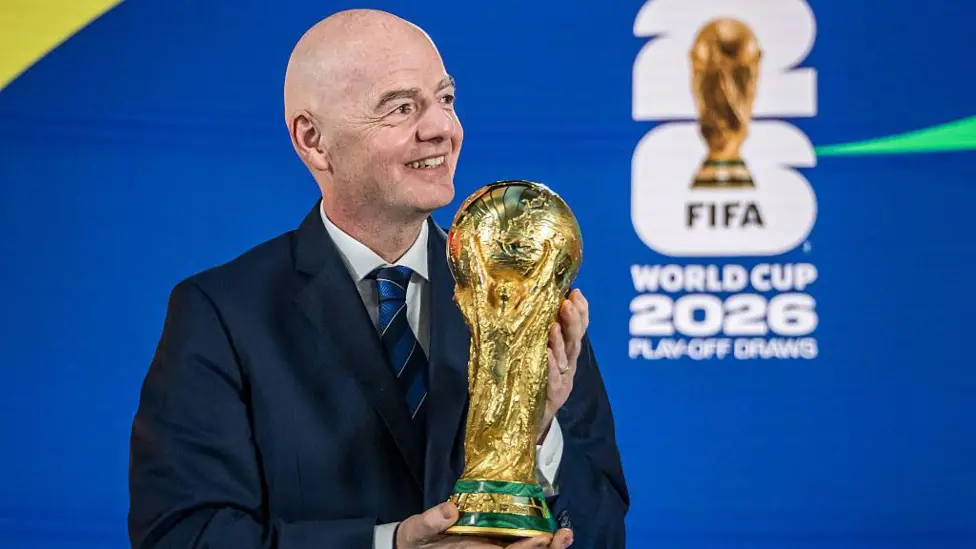
UEFA, Concacaf and the Asian Football Confederation (AFC) have accused FIFA of a “fundamental breach of trust” and “deception” over its handling of a proposal to sell a stake in the FIFA World Cup.
In a strongly worded “open letter to the football family” released on Monday, the three confederations criticised FIFA’s leadership and said the controversy had raised serious concerns about the integrity and governance of world football.
The joint statement, signed by the presidents of UEFA, Concacaf and AFC, described the process as a “profound failure of judgment” and criticised what it called an attempt to concentrate power within FIFA’s leadership.
“This is about something more fundamental: the integrity of the game, and the integrity of those elected to lead it,” the statement said.
“Leadership in football is not a possession. It is not about holding – or demanding – power to be held. It is a duty of service to the football family that entrusts it.
“When trust is broken through deception, when an individual places himself above the collective that entrusted him with authority, that duty has been abandoned.”
The three confederations have reportedly also held preliminary discussions about organising competitions independently amid the growing backlash against FIFA president Gianni Infantino.
UEFA has previously threatened to boycott FIFA competitions, while sources said its initial discussions with the AFC and Concacaf are aimed at ensuring players under their jurisdictions continue to have meaningful international competitions.
UEFA governs football in Europe, Concacaf oversees the sport across North and Central America and the Caribbean, while the AFC is responsible for football in Asia.
The dispute centres on Infantino’s proposal to establish FIFA Forward Enterprise (FFE), a company that would oversee the commercial and operational aspects of FIFA tournaments, with plans to sell approximately 20 percent of the company to private investors.
Infantino subsequently apologised for the proposal following widespread criticism.
However, the three confederations have called for an independent investigation into the process, arguing that FIFA should not be responsible for reviewing its own actions.
“A proposal advanced on a compressed timeline, without meaningful consultation, and pushed toward a deadline before member associations could properly review its terms is not the product of an oversight – it is the product of a design intended to limit scrutiny,” the letter stated.
The confederations said FIFA had failed to acknowledge that the proposal to sell an interest in the World Cup represented more than a procedural error.
“There remains no recognition that attempting to sell an interest in the FIFA World Cup was a profound failure of judgment – not just a procedural misstep, but a fundamental breach of trust with the very institutions FIFA exists to serve,” they said.
They also criticised FIFA’s plan to submit a report on the controversy to the FIFA Council, arguing that the review should instead be conducted by a fully independent third party with no involvement from FIFA officials, staff or other football stakeholders.
“The FIFA administration should play no role in conducting the review,” the statement said.
“There is silence where there should be accountability, distance where there should be openness. These are not the qualities football deserves in its leadership.”
The three confederations said their position was intended to defend the principles of accountability, transparency and collective leadership in football.
“Football’s strength has always been its unity. We call for that unity to be honoured now, for leadership that serves football, not seeks to command it,” they concluded.