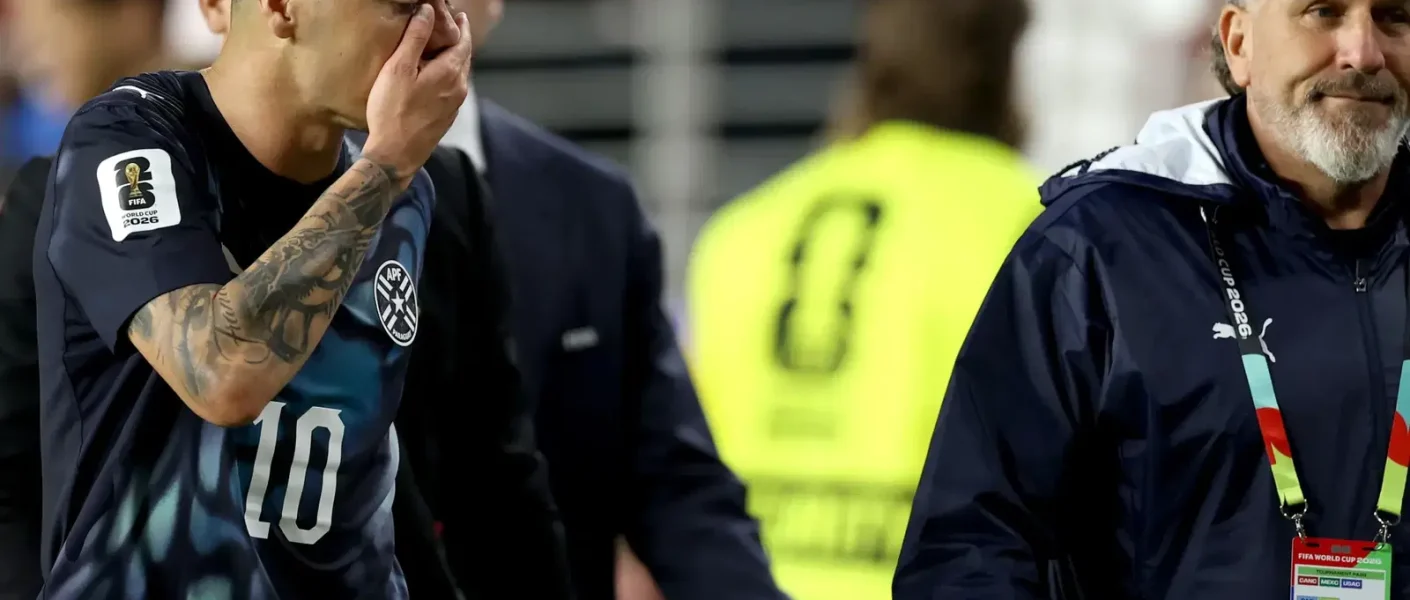
UEFA has confirmed that players who cover their mouths while speaking to opponents will not automatically receive a red card in its competitions, choosing not to adopt the controversial law introduced by the International Football Association Board (IFAB) earlier this year.
The rule, which has been used at the 2026 FIFA World Cup, allows referees to send off players who deliberately conceal their speech during confrontations. However, Europe’s governing body has decided that the measure will not apply in the UEFA Champions League, Europa League, or Conference League.
The debate over the rule intensified after a Champions League clash between Benfica and Real Madrid in February. During the match, Benfica winger Gianluca Prestianni covered his mouth with his shirt while speaking to Real Madrid forward Vinicius Jr. Initially accused of making racist remarks, Prestianni was provisionally suspended before a UEFA investigation concluded that he had engaged in homophobic conduct. He was eventually handed a six-match suspension, with three of those matches suspended.
FIFA President Gianni Infantino strongly backed the new law, arguing it would discourage abusive behaviour by preventing players from hiding offensive comments. IFAB approved the proposal in April, and Paraguay’s Miguel Almiron became the first player sent off under the rule during a World Cup group-stage match against Turkey. Ecuador defender Piero Hincapie was later dismissed under the same regulation after a VAR review in his team’s Round of 16 defeat to Mexico.
Despite the high-profile incidents, UEFA has decided against making the offence an automatic dismissal. Instead, referees will continue to assess each situation individually and may issue a yellow card if they believe a player covered their mouth to conceal communication in an act of unsporting behaviour.
UEFA also stressed that disciplinary investigations can still be launched after matches if a player’s conduct warrants further action, regardless of whether a card was shown during the game.
The rule has divided opinion across the football world, with critics warning it could create a presumption of guilt and encourage players to pressure referees into sending off opponents without clear evidence of abusive language. Questions over its consistency have also emerged after England midfielder Jude Bellingham avoided a red card despite covering his mouth while speaking to Ghana captain Jordan Ayew during a World Cup group-stage match.
While rejecting the automatic red-card rule, UEFA confirmed it will introduce another optional IFAB amendment allowing VAR to review wrongly awarded corner kicks. The technology has already corrected numerous corner-kick decisions during the World Cup. However, UEFA also announced it will not adopt another optional law that allows referees to send off players who leave the field in protest of an official’s decision.