
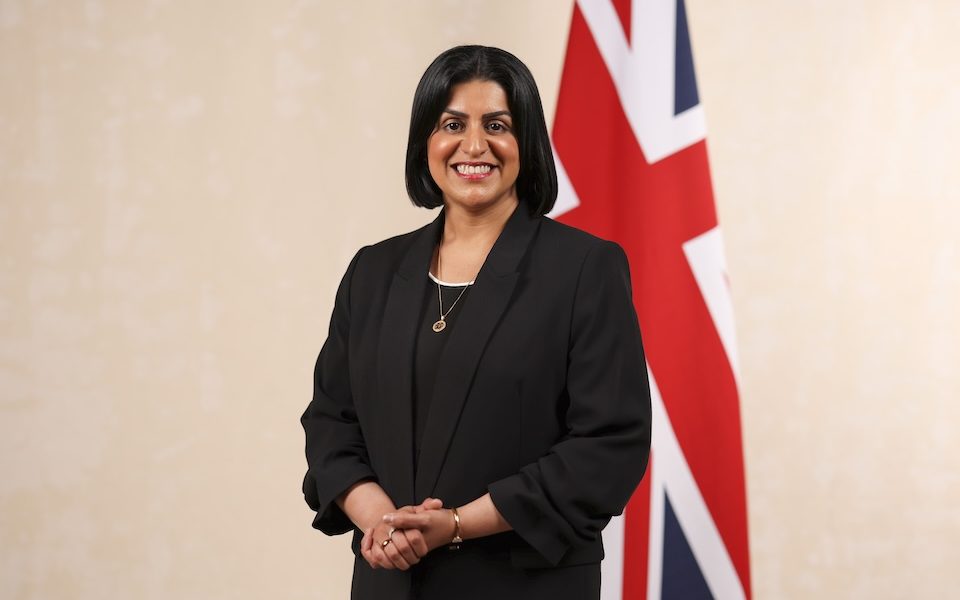
UK Home Secretary Shabana Mahmood has dropped a controversial proposal that would have required some migrant care workers already living in Britain to wait 15 years before qualifying for permanent settlement.
Under revised plans presented to the House of Commons, eligible care workers who entered the social care route before May 2025 and earn at least £25,000 annually in the sector will retain their existing five-year pathway to indefinite leave to remain (ILR).
Mahmood also scrapped the proposed 15-year waiting period for other lower-income migrants, replacing it with a 10-year settlement route.
The changes followed opposition from Labour politicians, trade unions and migrant groups, who argued that extending settlement requirements to people already living in the UK would unfairly alter the conditions under which they entered the country.
Indefinite leave to remain, commonly known as settlement, allows migrants to live, work and study in the UK without time restrictions and access public benefits where eligible.
Addressing lawmakers, Mahmood said the revised settlement system would place greater emphasis on migrants’ contributions to the country.
“The right to live in this country must now be earned, it will no longer be automatic,” she said.
The home secretary explained that a five-year settlement route would remain available to migrants earning more than £50,000 annually, as well as qualifying workers in healthcare and education.
A faster three-year pathway would be available to those earning above £125,000, whom she described as making an exceptional contribution through taxation.
Mahmood argued that higher earners contribute significantly to public revenue, which helps fund services used by people across the country, including low-income earners.
Other migrants outside the exemptions would generally face a 10-year settlement route, including those earning below £50,000. She said they could renew their temporary visas while demonstrating sustained contributions to the UK.
She also outlined factors that could affect eligibility for settlement, including criminal convictions, inadequate English-language skills, unpaid debts and failure to make National Insurance contributions.
According to Mahmood, immigration violations could extend the settlement waiting period to 20 years.
However, existing arrangements would remain in place for certain groups, including Hong Kong British National (Overseas) migrants, members of the armed forces, people with British connections and those on legacy routes such as the Windrush scheme.
Explaining the exemption for care workers, Mahmood said approximately 250,000 people and their dependants had entered or switched to the social care visa route between 2022 and 2025.
She acknowledged the pressure faced by the sector after the Covid-19 pandemic but alleged that the route had also been abused under the previous Conservative government.
Care workers who entered the route before May 2025, earn at least £25,000 in the sector and meet the relevant conditions will remain eligible for settlement after five years.
Mahmood said another category of care workers who had failed to meet their visa conditions would be given an additional opportunity through an application for a further five-year visa.
“Everyone will have a fair shot to make a contribution and no one will be punished for the sins of their employer,” she said.
She added that the social care sector still had tens of thousands of genuine vacancies, arguing that workers with the necessary skills should be able to secure alternative employment.
The same transitional arrangements would apply to qualifying public-sector workers in healthcare and education who arrived in the UK before May 2025.
“But we will preserve the critical element of this reform that settlement must be linked to contribution,” Mahmood said.
The home secretary also announced different settlement pathways for refugees, depending on how they entered the country.
Under the proposed arrangements, refugees who arrive through safe and legal routes would qualify for a five-year settlement pathway.
However, those who enter through irregular routes would face a 20-year wait, even if they subsequently secure employment or enrol in education.
An additional 10 years would apply to people who arrive by small boats but do not enter employment or education, potentially extending their settlement pathway to 30 years.
Mahmood said a full impact assessment would be conducted as the reforms were implemented.
Documents released alongside her statement revealed widespread opposition to the original proposals.
The government received 204,667 online responses and 904 submissions by email during the consultation. Of the responses, 202,241 came from individuals, with current visa holders accounting for 73 per cent and British citizens representing 18 per cent.
Government analysis showed that 84 per cent of individual respondents and 79 per cent of organisations opposed the proposed settlement changes.
Opposition was particularly high among respondents with refugee status or humanitarian protection, at 89 per cent. Some 86 per cent of current visa holders and 77 per cent of British citizens also disagreed with the proposals.
A major concern raised during the consultation was that changing settlement requirements for people already working towards permanent residency would be unfair.
Meanwhile, Shadow Home Secretary Chris Philp criticised the concessions, particularly the decision to exempt social care workers.
Philp accused Mahmood of spending a year building a reputation for being tough on immigration before abandoning her position in “12 short minutes”.
He also claimed she had lost support within the Labour Party, referring to challenges from Housing Secretary Angela Rayner and Energy Secretary Miatta Fahnbulleh.
The Conservative politician said his party would have supported Mahmood’s original proposals and intended to go further.
Rather than relying on what he described as “mass low-skilled immigration”, Philp urged the government to focus on getting young people who were neither in education nor employment into work through welfare reforms.
“If she capitulates to the open borders Left, her credibility as home secretary will not recover,” he said.
Rayner had earlier described the proposed changes affecting migrants already in Britain as “un-British”, arguing that they had entered the country in good faith under the existing rules.
Trade unions also opposed the plans, with delegates at the Trades Union Congress backing a motion calling for changes affecting workers already in the UK to be withdrawn.
Prime Minister Andy Burnham had previously said the reforms needed to “strike the right balance” and take into account the range of opinions submitted during the consultation.
Speaking separately to ITV, Burnham said it was difficult to determine whether legal migration was too high or too low without considering the needs of the economy.
“I think when you have planned migration it’s difficult to say whether it’s too high or too low because it’s got to be, if you like, following gaps in the economy,” he said.
The report cited Office for National Statistics figures showing that net migration stood at 171,000 in 2025, almost half the figure recorded in the previous year.
It also reported that 93,525 asylum claims were recorded in the year to March 2026, representing a 12 per cent decline from the previous year but remaining more than twice the pre-pandemic level.
Burnham further disclosed that 22,128 people had arrived in the UK by small boats as of October 31, a 40 per cent reduction compared with the same period a year earlier.
Restrictions introduced in 2024, including limits on most overseas students bringing dependants to the UK, were identified as possible factors behind the decline in migration.
The Labour government has retained those restrictions and proposed additional measures, including ending overseas recruitment into care roles.
