
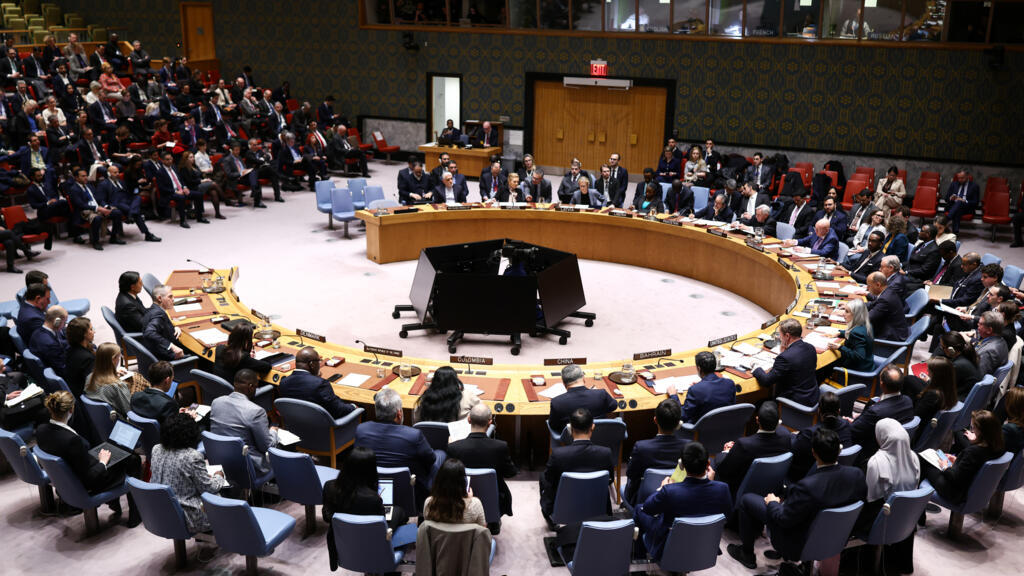
The United Nations Security Council is preparing to vote on a revised resolution addressing the ongoing blockade of the Strait of Hormuz, though uncertainty remains over whether the measure will pass following substantial changes to its original language.
The vote is scheduled for 11:00 a.m. (1500 GMT), just hours before a deadline set by Donald Trump, who has warned that Iran must reach an agreement or risk potential military action targeting key infrastructure.
The latest draft of the resolution has been significantly softened. Unlike earlier versions, it does not authorize the use of force—even for defensive purposes—reflecting an effort to avoid a veto from permanent council members.
The proposal was initially led by Bahrain, with backing from the United States and other Gulf nations. It originally sought approval for possible military intervention to reopen the vital shipping route. However, resistance from key powers including France, Russia, and China led to multiple revisions and delays.
In its current form, the resolution encourages coordinated defensive measures by states to safeguard maritime navigation—such as escorting commercial vessels—without explicitly endorsing military force.
It also calls on Iran to immediately cease attacks on merchant ships and stop any actions obstructing transit through the strait. Additionally, it urges an end to strikes on civilian infrastructure, including water, oil, and gas facilities.
The vote comes amid rising tensions after Iran blockaded the strait following military actions by the United States and Israel on February 28, a move that has disrupted global energy markets. Jérôme Bonnafont has expressed support for a “defensive response” approach, while analysts view the resolution as a compromise between competing global interests.
According to Daniel Forti of the International Crisis Group, the resolution could still serve as a diplomatic rebuke of Iran’s actions, even without authorizing military force.
However, the risk of a veto from Russia or China remains, given their alignment with Iran and concerns about further escalation. Historically, Security Council authorizations for force have been rare, with notable examples including the Gulf War and NATO intervention in Libya.