
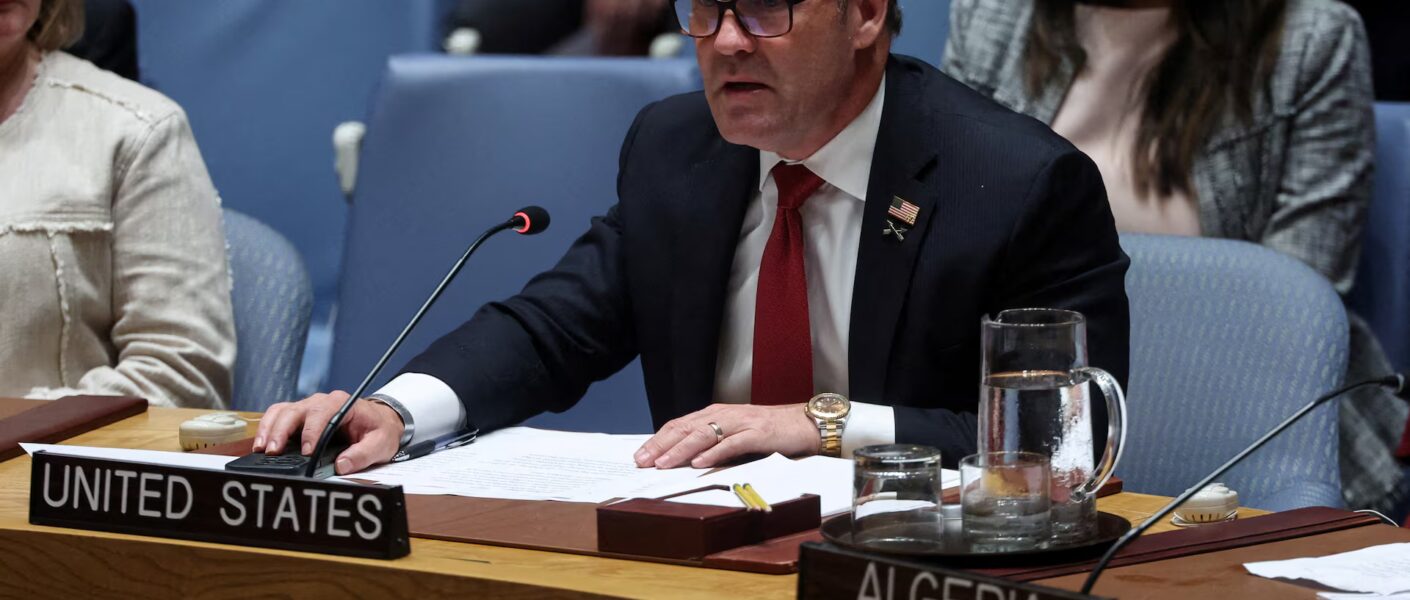
The United States has accused Rwanda of fuelling instability and prolonging violence in eastern Democratic Republic of Congo (DRC), warning that the renewed fighting could undermine efforts to secure peace in the region.
Speaking at the United Nations Security Council on Friday, December 12, US ambassador Mike Waltz said Rwanda’s alleged support for the M23 rebel group was driving the region towards deeper conflict. “Rwanda is leading the region towards increased instability and war,” Waltz told council members, adding that Washington would “use the tools at our disposal to hold to account spoilers to peace.”
The escalation in violence has raised fears of a wider regional crisis, with fighting edging closer to Burundi’s border. Burundi has stationed troops in eastern DRC for years, and the latest clashes have heightened concerns of spillover violence. Since January, the conflict has reportedly killed thousands and displaced hundreds of thousands of civilians.
During the same Security Council session, Burundi issued a strong warning, saying its restraint was nearing its limit. “Let me be clear: restraint has its limits. Should these irresponsible attacks continue, it would become extremely difficult to avoid a direct escalation between our two countries,” Burundi’s UN ambassador, Zephyrin Maniratanga, said.
Rwanda strongly rejected the accusations. Its UN ambassador, Martin Ngoga, denied that Kigali was backing M23 or seeking confrontation with Burundi, instead accusing Burundi of attacking Rwandan territory. He insisted Rwanda remained committed to regional peace initiatives.
“Rwanda is not waging war against the Republic of Burundi and has no intention of doing so,” Ngoga said, while also accusing the DRC of breaching the ceasefire and reaffirming Rwanda’s commitment to the Washington peace agreement.
The Democratic Republic of Congo, however, urged the international community to take decisive action. Foreign Minister Thérèse Kayikwamba Wagner told the council that years of inaction had allowed impunity to persist.
“We have reached a moment of truth — either the international order accepts being openly defied, namely by Rwanda, or this council assumes its responsibility. Impunity has gone on for far too long,” she said.
The latest advance by M23 comes just a week after Congolese President Félix Tshisekedi and Rwandan President Paul Kagame met with US President Donald Trump in Washington, where both leaders reiterated their commitment to a US-brokered peace deal.
M23 claims it is fighting to protect ethnic Tutsi communities in eastern DRC — a justification Kigali has previously echoed while denying direct support for the group.
Waltz told the 15-member council that Rwanda has exercised strategic control over M23 and its political wing, the Congo River Alliance (AFC), since the group’s resurgence in 2021. He added that Washington was actively engaging all parties to prevent further escalation.
“The United States is profoundly concerned and deeply disappointed by the renewed outbreak of violence in eastern DRC,” Waltz said.
According to the US envoy, Rwanda has played a central role in directing the conflict. He alleged that Rwandan defence forces have provided military equipment, logistics and training to M23, and have also fought alongside the group in Congolese territory with an estimated 5,000 to 7,000 troops as of early December.
Rwanda continues to deny backing the rebels, instead blaming Congolese and Burundian forces for the renewed fighting.
While the Washington-mediated talks involve regional governments, M23 is not a participant in those negotiations. The rebel group is instead engaged in a separate, parallel dialogue with the Congolese government under Qatari mediation.
