The United States and Iran exchanged fresh military strikes on Thursday, marking a second consecutive day of hostilities as tensions escalated over control of the strategic Strait of Hormuz.
The crucial waterway, a key route for global oil shipments, has become a major flashpoint in the ongoing Middle East conflict. Iran has continued to assert authority over the strait, despite international calls for unrestricted navigation and free passage.
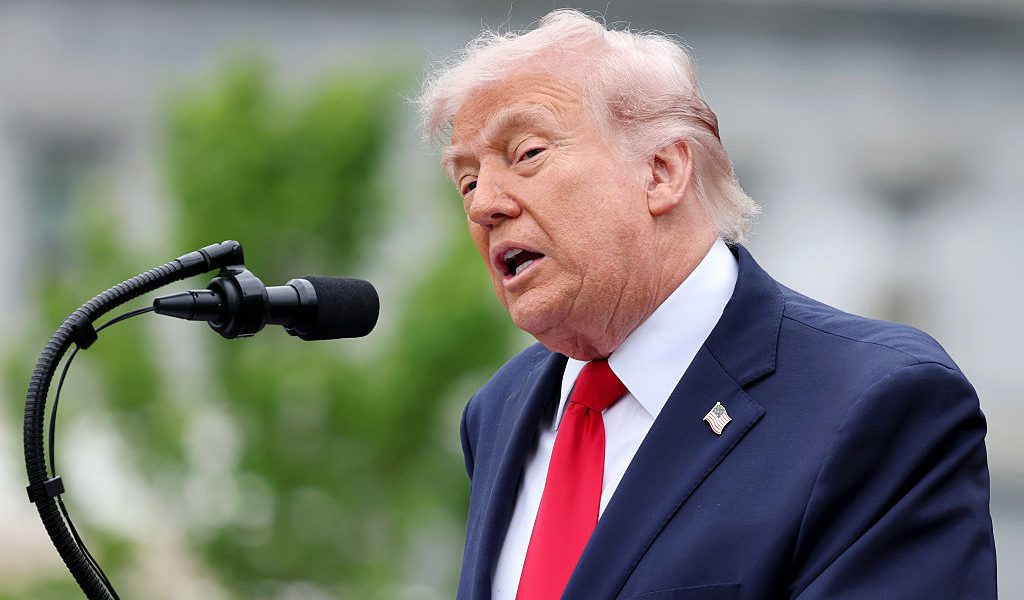
The renewed attacks followed exchanges on Wednesday, after which US President Donald Trump declared that the ceasefire with Iran was effectively over. However, he indicated that diplomacy remained possible, saying any further military action would be swift and limited.
According to the US Central Command (CENTCOM), American forces targeted Iran’s capability to threaten maritime traffic in the Strait of Hormuz. The military said approximately 90 sites were struck, including missile and drone storage facilities as well as logistics hubs along Iran’s coastline.
Iran responded quickly. The Islamic Revolutionary Guard Corps (IRGC) announced strikes on what it described as key infrastructure and facilities at US military bases in Kuwait and Bahrain, including Arifjan, Ali Al Salem, Juffair and Sheikh Isa bases.
Explosions were reported in Bahrain’s capital, Manama, while Kuwaiti authorities said they intercepted hostile missiles and drones.
In Iran, state media reported that US strikes hit a railway bridge in the northeast and a military facility in Bushehr, home to the country’s only civilian nuclear power plant. Additional explosions were reported in Kish Island and the southern port cities of Bandar Abbas, Konarak and Chabahar, where parts of the area reportedly experienced power outages.
Trump said the latest US action was retaliation for Iranian attacks on commercial vessels in the region.
“This is in retribution for yesterday’s bombing of ships by Iran,” he wrote on Truth Social, warning that any further attacks would trigger a stronger response.
Speaking later aboard Air Force One, Trump revealed that Iranian officials had reached out seeking renewed negotiations, though he offered no details about the communication and questioned Tehran’s reliability.
Iranian officials maintained a defiant stance. Parliament Speaker Mohammad Bagher Ghalibaf said the Strait of Hormuz would remain open only under conditions determined by Tehran.
“The United States still has not learned that bullying and breaking its promises no longer come without consequences,” Ghalibaf wrote on X. “Let me be clear: If you strike, you will be struck.”
Since the outbreak of war in February following US-Israeli strikes, Iran has repeatedly insisted on controlling access to the strait, proposing transit fees and threatening action against vessels that fail to follow routes authorised by Tehran.
Iranian forces have reportedly attacked at least three commercial ships in recent days, prompting a series of US retaliatory strikes.
The latest escalation comes as Iran prepares for the burial of former Supreme Leader Ali Khamenei, who was killed at the start of the conflict on February 28.
Amid growing concerns, United Nations Secretary-General Antonio Guterres urged all sides to exercise maximum restraint. Pakistan, which has played a mediating role between Washington and Tehran, also called for calm.
Iran said Foreign Minister Abbas Araghchi and Qatar’s Prime Minister held discussions on Wednesday, emphasizing the importance of diplomacy in resolving regional tensions.
Both countries reported significant military operations earlier this week. Iranian state television said the initial wave of attacks killed eight Iranian military personnel, while CENTCOM said more than 80 Iranian targets were struck on Tuesday. The IRGC claimed it targeted dozens of US military facilities in Kuwait and Bahrain.
A US military official said Iran’s most recent strikes caused no American casualties and resulted in only limited damage.
Oman, which lies across the Strait of Hormuz from Iran, condemned attacks on Bahrain, Kuwait and commercial shipping but stopped short of assigning blame. The Gulf nation has sought to preserve its neutral role and has been involved in discussions over maritime access through the strait.
Washington continues to push for unrestricted navigation, while Tehran insists on regulating passage and has rejected proposals allowing ships to transit through Omani waters.
The recent attacks on commercial vessels occurred near Oman’s coastline, where Muscat had proposed a temporary shipping corridor.
Although maritime traffic briefly resumed after a US-Iran agreement ended hostilities last month, security concerns remain high. According to International Maritime Organization Secretary-General Arsenio Dominguez, nearly 6,000 seafarers are still stranded in the region.