
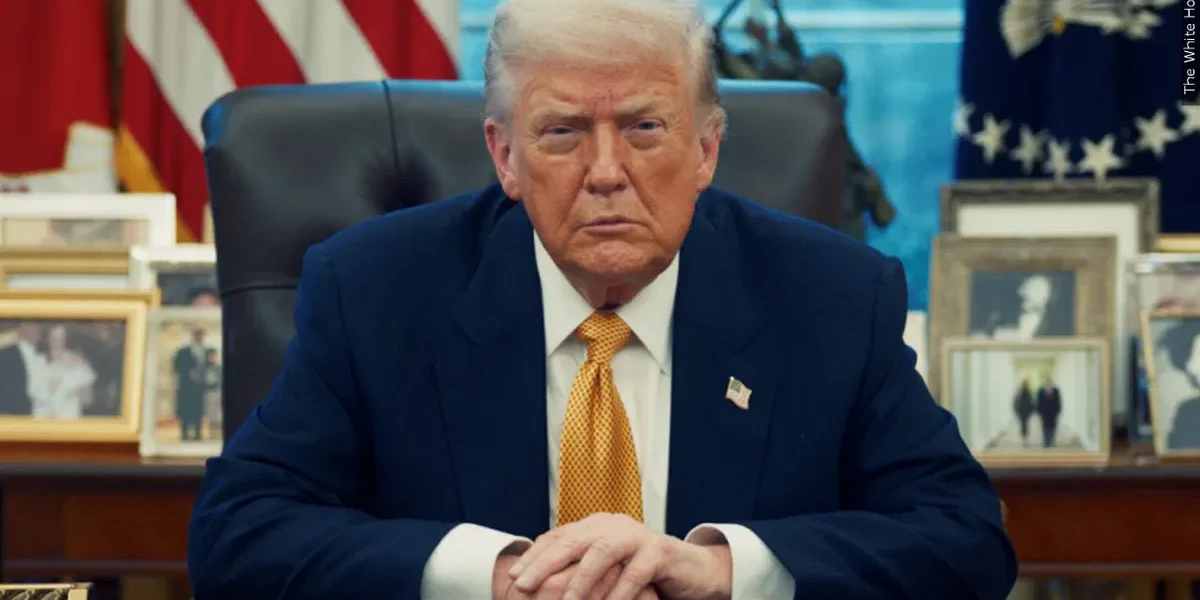
US President Donald Trump said Washington held “very good talks” with Iran following indirect negotiations in Oman and pledged another round of discussions early next week.
Iran, meanwhile, described the sessions in Muscat as conducted in a “positive atmosphere” and said it expected further talks with the United States.
The discussions, mediated by Oman on Friday, did not involve public face-to-face meetings between the delegations. Trump briefed reporters on board Air Force One en route to his Mar-a-Lago resort in Florida, saying, “We’re going to meet again early next week.”
Shortly after the talks, the US announced new sanctions targeting shipping entities and vessels in a bid to curb Iran’s oil exports. Trump also signed an executive order allowing the administration to impose tariffs on countries doing business with Iran, including China, Germany, and the United Arab Emirates. It remained unclear if these measures were directly linked to the talks.
The meetings marked the first US-Iran negotiations since the United States joined Israel’s war with Iran in June, following strikes on Iranian nuclear sites. While Tehran warned against further threats, Trump said, “If they don’t make a deal, the consequences are very steep.”
Iran’s delegation, led by Foreign Minister Abbas Araghchi, said the talks “focused exclusively” on the Iranian nuclear program, which the West suspects is aimed at developing a bomb, though Tehran insists it is peaceful.
“In a very positive atmosphere, our arguments were exchanged, and the views of the other side were shared with us,” Araghchi told Iranian state TV. He confirmed that both sides had agreed to continue negotiations and expressed hope Washington would refrain from “threats and pressure.”
The US delegation, led by Middle East envoy Steve Witkoff and Trump’s son-in-law Jared Kushner, had also intended to discuss Iran’s ballistic missile program, its backing of militant groups, and the treatment of protesters.
Admiral Brad Cooper, commander of US Central Command, was present, according to images published by the Oman News Agency. Multiple sessions saw delegations shuttle to and from the residence of Omani Foreign Minister Badr Albusaidi.
Qatar’s foreign ministry welcomed the talks, expressing hope they would “lead to a comprehensive agreement that serves the interests of both parties and enhances security and stability in the region.”
Western leaders have emphasized curbing Tehran’s nuclear ambitions. French Foreign Minister Jean-Noel Barrot called on Iran to stop being a “destabilising power” and urged restraint by Tehran-backed groups in the event of military escalation. Iran supports regional groups including Hezbollah in Lebanon, Hamas in Gaza, Houthis in Yemen, and various armed factions in Iraq.
Trump initially threatened military action over Iran’s crackdown on protesters, which rights groups say killed thousands. Regional powers, including Turkey, Saudi Arabia, and Qatar, urged both Washington and Tehran to return to dialogue.
According to the US-based Human Rights Activists News Agency (HRANA), 6,505 protesters, 214 security personnel, and 61 bystanders have been killed, with more than 51,000 arrests reported amid forced confessions and a prolonged internet shutdown.
Despite the human rights concerns, Trump has recently focused on Iran’s nuclear program, deploying a US naval group led by the aircraft carrier USS Abraham Lincoln to the region. Iran has repeatedly warned it would retaliate against US bases if attacked.
State Department spokesman Tommy Pigott said the sanctions aim to “drive down the Iranian regime’s illicit oil and petrochemical exports under the administration’s maximum pressure campaign.”