
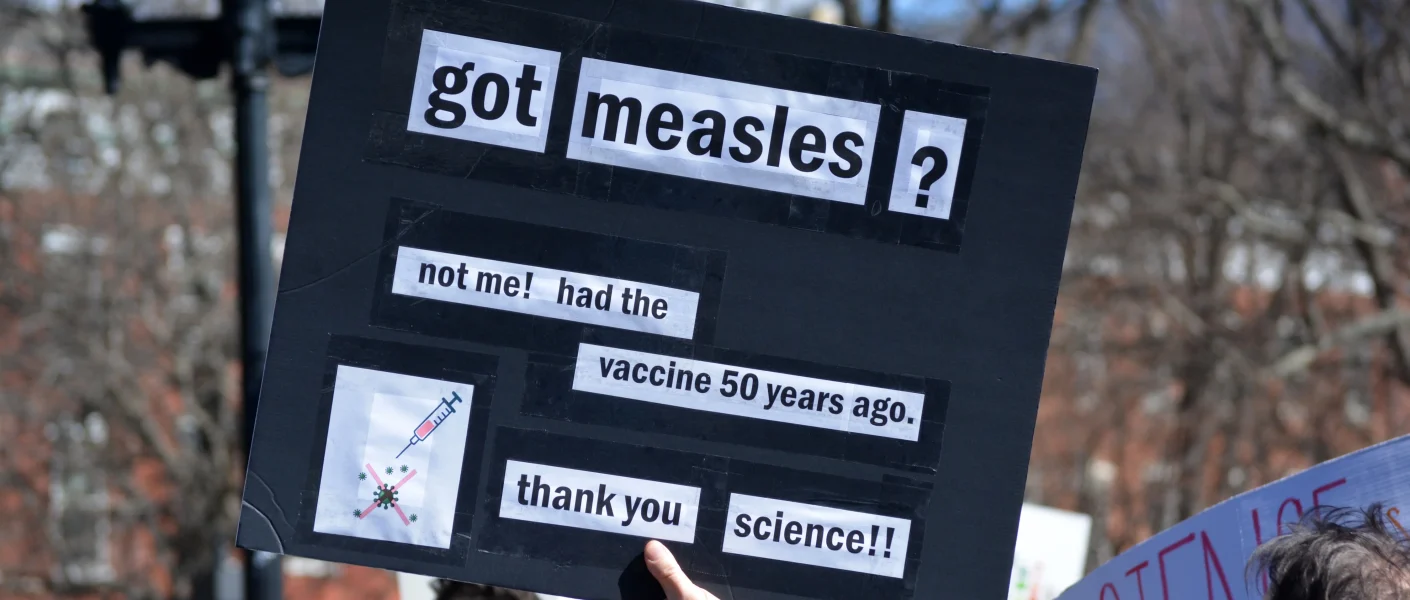
The United States has reportedly lost its measles elimination status after more than two decades, marking a major setback in the country’s efforts to control one of the world’s most contagious infectious diseases.
The Pan American Health Organization (PAHO) announced on Tuesday, November 17, 2026, that an independent commission had determined that measles had been circulating continuously in the United States for more than 12 months.
The decision reverses a public health milestone achieved in 2000, when the country was officially recognised for eliminating continuous domestic transmission of the virus.
The commission also reportedly determined that Mexico and Bolivia had lost their measles elimination status.
According to the report, the United States has recorded more than 5,400 measles cases in 2026, more than double the previous year’s total and the highest annual figure since 1991.
Health authorities have also reportedly recorded 10 deaths, including at least four infants who were too young to receive their first routine measles vaccination.
The rising number of infections has alarmed public health experts, who warn that declining vaccination coverage is leaving more communities vulnerable.
PAHO Director Dr Jarbas Barbosa explained that losing elimination status represents more than a change in classification.
He warned that prolonged transmission exposes families to a preventable disease that can cause severe illness, hospitalisation and death.
Public health officials have linked the resurgence partly to falling childhood vaccination rates.
According to the report, approximately 92% of American kindergarten pupils received measles vaccination during the 2025–2026 school year, compared with 95% in 2019–2020.
Health experts generally recommend maintaining around 95% two-dose vaccination coverage to prevent sustained measles outbreaks.
An NBC News investigation reportedly found that 75% of counties and jurisdictions with available kindergarten vaccination data had fallen below that threshold.
Some communities recorded particularly low coverage, raising concerns about the possibility of further outbreaks.
Measles is an extremely contagious viral infection that spreads through the air when an infected person breathes, coughs or sneezes.
The virus can remain infectious in the air for up to two hours after an infected person leaves an enclosed space.
According to health authorities, approximately nine out of ten susceptible people exposed to the virus may become infected.
Although many patients recover, measles can cause serious complications, including pneumonia, brain inflammation and, in severe cases, death.
Infants, unvaccinated individuals and people with weakened immune systems face particularly significant risks.
In the United States, children generally receive their first routine measles, mumps and rubella (MMR) vaccine dose between 12 and 15 months of age.
However, health authorities may recommend an earlier dose for infants aged six to 11 months during outbreaks or before certain international trips.
Medical professionals have expressed concern that misinformation about childhood vaccines has contributed to declining immunisation rates.
The COVID-19 pandemic also disrupted routine vaccination appointments, leaving some children behind on their recommended immunisation schedules.
Experts warn that misleading claims about vaccine safety have further undermined public confidence.
Extensive scientific research has established that the MMR vaccine is effective in preventing measles and does not cause autism.
Dr Richard Besser, president of the Robert Wood Johnson Foundation, described the loss of elimination status as a deeply troubling development for children and families.
Other health specialists called for stronger vaccination campaigns, improved disease surveillance and more effective public communication.
The US Centers for Disease Control and Prevention (CDC) and its healthcare partners have reportedly pledged to increase access to MMR vaccination, improve information sharing and strengthen efforts to contain outbreaks.
The Department of Health and Human Services said the CDC had already responded by providing additional resources and sending public health specialists to affected states.
According to the report, an additional $100 million was allocated in October to support measles response efforts.
CDC Director Dr Erica Schwartz emphasised that health authorities would continue working with state and local departments to identify areas experiencing transmission and protect vulnerable communities.
The resurgence of measles is not limited to the United States.
The report states that Canada previously lost its elimination status following a major outbreak involving more than 5,000 cases.
PAHO officials said Canada had since interrupted transmission but would need to maintain strong vaccination and surveillance programmes to regain its designation.
Mexico and Bolivia were also identified as countries where sustained transmission had reportedly returned.
Health experts warn that restoring elimination status can take years because countries must demonstrate that continuous domestic transmission has been interrupted.
The developments highlight the importance of maintaining high vaccination coverage, reliable disease surveillance and timely public health responses.
