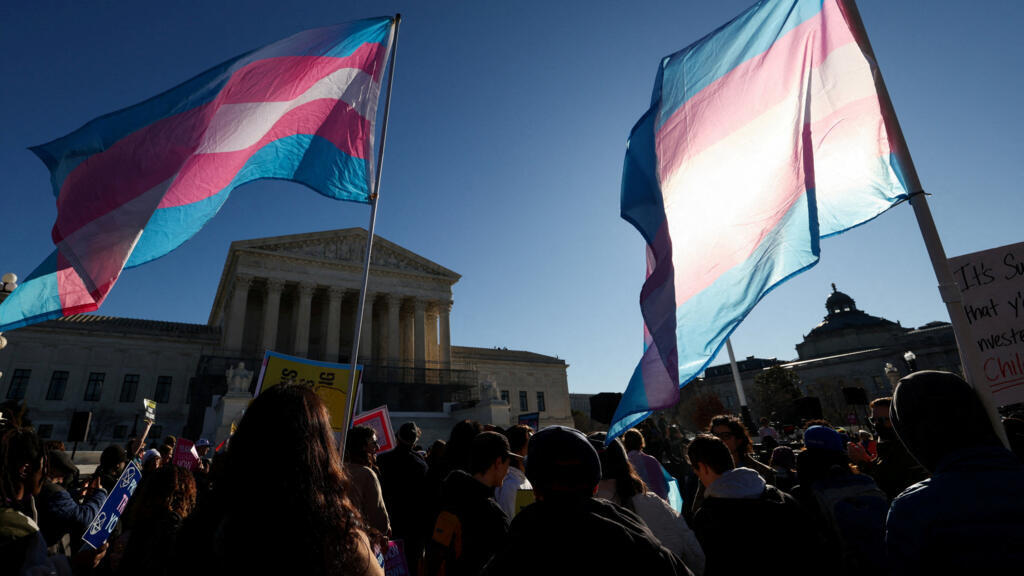
The United States Supreme Court has ruled that states can prohibit transgender women from competing in female sports at public schools and colleges, upholding laws enacted in Idaho and West Virginia.
The decision came after legal challenges were filed by transgender students who argued that the restrictions violated the U.S. Constitution’s Equal Protection Clause and federal civil rights protections under Title IX, which prohibits sex-based discrimination in educational institutions.
In a unanimous ruling on the Title IX issue, the court found that the state laws do not violate the federal statute. However, the justices were divided on the constitutional question, with the court’s six conservative justices concluding that the bans do not breach the 14th Amendment’s Equal Protection Clause, while the three liberal justices dissented.
Writing for the majority, Justice Brett Kavanaugh said the Constitution and Title IX do not require changes to the existing structure of women’s and girls’ sports in the United States.
“The Constitution and Title IX do not require an overhaul of women’s and girls’ sports throughout America,” Kavanaugh wrote.
In a partial dissent, Justice Sonia Sotomayor argued that the majority had adopted what she described as “a diminished view of equal protection.”
The Idaho case was brought by transgender athlete Lindsay Hecox, who challenged the state’s 2020 law shortly after it was passed. Lower courts had initially blocked the legislation, with an appeals court previously ruling that Idaho had not demonstrated the ban was necessary to preserve fairness in women’s sports.
Idaho lawmaker Barbara Ehardt, who sponsored the legislation, maintained that the law was designed to protect competitive opportunities for girls and women by ensuring that biological males do not compete in female sporting events.
Since Idaho introduced its law in 2020, more than two dozen U.S. states have adopted similar restrictions on transgender athletes competing in female sports.
The issue became a major topic during President Donald Trump’s 2024 election campaign. Following his return to office, Trump signed an executive order seeking to prevent transgender women from competing in female sports, a move later mirrored by the National Collegiate Athletic Association (NCAA), which introduced similar restrictions in women’s collegiate competitions.
Supporters of the bans argue that transgender women may retain physical advantages in areas such as strength, speed and endurance, potentially affecting fairness in female sporting events.
The International Olympic Committee (IOC) has also announced plans to restrict women’s Olympic events to biological females, citing scientific evidence that male puberty can provide performance advantages in sports that rely on strength, power and endurance.
Opponents of the bans argue the measures unfairly discriminate against transgender athletes and contend that scientific evidence regarding competitive advantage varies across different sports and individual circumstances.
The ruling is expected to have significant implications for school and college sports across the United States, reinforcing the authority of states to regulate eligibility for female athletic competitions.