
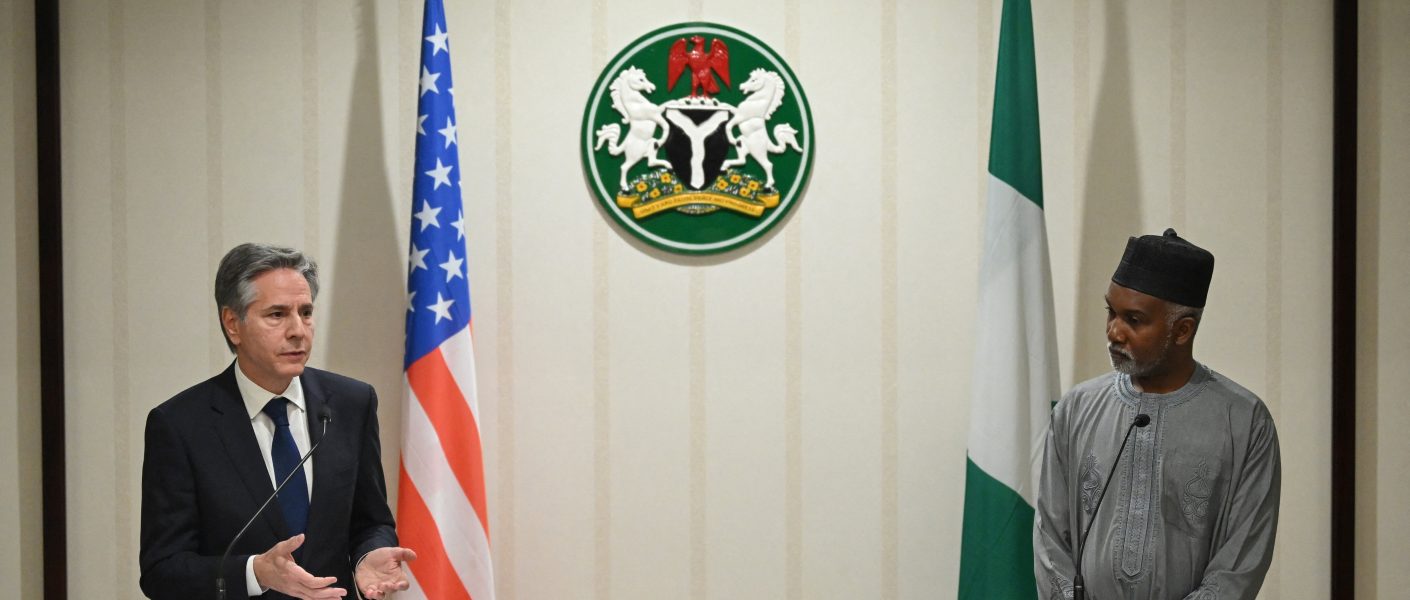
The United States Department of State has identified insecurity, corruption, port delays and regulatory uncertainty as major obstacles to investment in Nigeria, despite signs of improving macroeconomic stability.
In its 2026 Investment Climate Statements on Nigeria, the department said the country’s business environment reflected the impact of what it described as “painful but necessary” structural reforms introduced by President Bola Tinubu’s administration.
According to the report, the removal of fuel subsidies and foreign exchange liberalisation initially triggered significant economic volatility, although some indicators pointed to stabilisation in early 2026. However, security threats, administrative bottlenecks and the social costs of the reforms remained major concerns for foreign investors.
“The security environment is a primary variable which gives pause to potential investors,” the report stated.
The department noted that although attacks on oil infrastructure in the Niger Delta had declined, oil theft and illegal bunkering remained persistent problems.
“In the North, the expansion of terrorist and ‘bandit’ groups continues to degrade the climate for agribusiness and mining,” it added.
The report also expressed concern over the treatment of foreign executives during regulatory disputes, citing the nearly eight-month detention of American Binance employee Tigran Gambaryan in 2024.
“Furthermore, the use of coercive exit bans and detentions, highlighted by the high-profile nearly eight-month detention in 2024 of U.S. citizen Binance employee Tigran Gambaryan, serves as a cautionary note for foreign executives regarding the risks of aggressive regulatory friction,” the department said.
It warned that such incidents could negatively influence international perceptions of Nigeria as an investment destination.
Port delays, corruption threaten businesses
The department identified inefficiencies at Nigeria’s seaports as another major obstacle, particularly for businesses dependent on imports and exports.
“Port inefficiency remains a significant ‘hidden tax’ on investment,” the report stated.
It noted that Lekki Deep Seaport handled $9.6 billion in trade in 2025 while operating at 50 per cent capacity, helping to ease pressure on older port facilities.
However, cargo dwell times at Apapa and Tin Can Island ports continued to exceed 20 days because of manual examinations and related procedures.
To address the problem, the government launched the first phase of the National Single Window (NSW) on March 27, 2026, according to the report.
The digital platform is designed to integrate agencies, including the Nigeria Customs Service, the National Agency for Food and Drug Administration and Control, and the Standards Organisation of Nigeria, into a single workflow.
The initiative aims to reduce cargo dwell times to fewer than seven days and eliminate 80 per cent of manual paperwork by the end of 2026.
The department also described corruption as a persistent structural challenge, particularly at the ports, where customs delays continue to obstruct trade.
“Corruption remains a systemic barrier, including at seaports where customs delays impede trade,” it said.
$21bn capital inflows dominated by portfolio investments
Despite an increase in capital inflows, the report cautioned that the figures had not translated into a comparable rise in long-term investments in physical infrastructure.
“Nigeria’s capital importation reached $21 billion in October 2025, a large increase from 2024,” the department stated.
“However, 92 percent was made up of foreign portfolio investment (‘hot money’) seeking high interest rates, while actual foreign direct investment (FDI) in physical infrastructure remained modest.”
The report noted that Nigeria generally permits full foreign ownership in most sectors, subject to industry-specific restrictions and licensing requirements.
It also highlighted the Nigerian Investment Promotion Commission’s One-Stop Investment Centre, which coordinates 27 government agencies to help investors navigate administrative procedures.
According to the department, US foreign direct investment in Nigeria reached $7.9 billion by the end of 2024, representing a 25 per cent increase from the previous year. Bilateral trade between both countries stood at $14.8 billion in 2025.
Reforms come at a high social cost
The department acknowledged that Nigeria’s economic reforms had placed considerable pressure on households, particularly through higher fuel prices and the rising cost of living.
“The fiscal correction came at a high social cost,” the report stated.
It noted that petrol prices had risen to “quintuple from 2023 levels” following the removal of fuel subsidies, contributing to an estimated national poverty rate of 63 per cent in 2025.
The poverty estimate was attributed to an April 2026 report by the World Bank.
On economic growth, the department said Nigeria’s gross domestic product expanded by 3.3 per cent in 2023 and 4.1 per cent in 2024 before slowing to four per cent in 2025.
It also cited Central Bank of Nigeria figures showing that foreign exchange reserves reached $50.45 billion in February 2026, their highest level in 13 years.
Headline inflation, which peaked at 34.8 per cent in late 2024, fell to 15.15 per cent in December 2025 following the rebasing of the Consumer Price Index and subsequent methodological changes.
Food inflation stood at 10.84 per cent under the rebased index, according to the report.
Regulatory uncertainty, trade restrictions remain concerns
The department described Nigeria’s trade regime as “somewhat protectionist”, citing high tariffs and import restrictions introduced to protect domestic industries.
It noted that some businesses were required to invest in local production in exchange for permits and quotas to import the same products.
Although the government had introduced measures aimed at improving regulatory predictability, the report said implementation remained inconsistent.
“Nigeria’s regulatory environment has transitioned toward a ‘structural reset’ designed to improve predictability, though implementation remains uneven,” it stated.
The report also highlighted the replacement of the Pioneer Status Incentive scheme with the Economic Development Tax Incentive, which took effect in January 2026, as a policy change requiring administrative adjustments by foreign businesses.
Overall, the department acknowledged improvements in some economic indicators but warned that insecurity, corruption, port inefficiencies and inconsistent regulations continued to undermine Nigeria’s ability to attract sustained foreign investment.