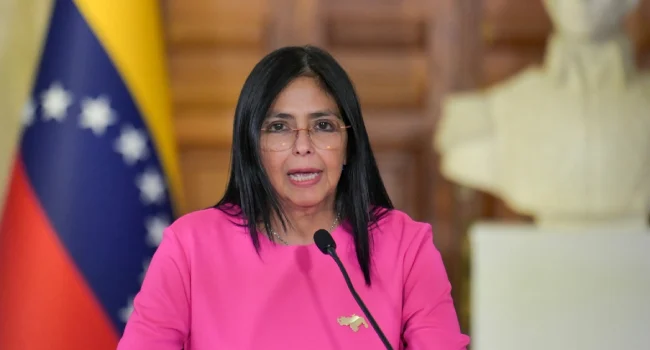
Venezuela’s acting president, Delcy Rodríguez, said on Sunday that she has had “enough” of directives from Washington, signaling growing frustration as she seeks to unify the country following the U.S. capture of former leader Nicolás Maduro.
Backed by the United States to lead Venezuela on an interim basis, Rodríguez has spent the past month navigating a delicate political balance—attempting to retain the support of Maduro loyalists at home while responding to mounting pressure from the White House, including demands to restart oil production. Her latest remarks mark her strongest public pushback yet against U.S. influence.
“Enough of Washington issuing orders to Venezuelan politicians,” Rodríguez told oil workers in Puerto La Cruz during an event broadcast on state television. “Let Venezuelan politics resolve our differences and internal conflicts. This republic has paid a very high price confronting the consequences of fascism and extremism in our country.”
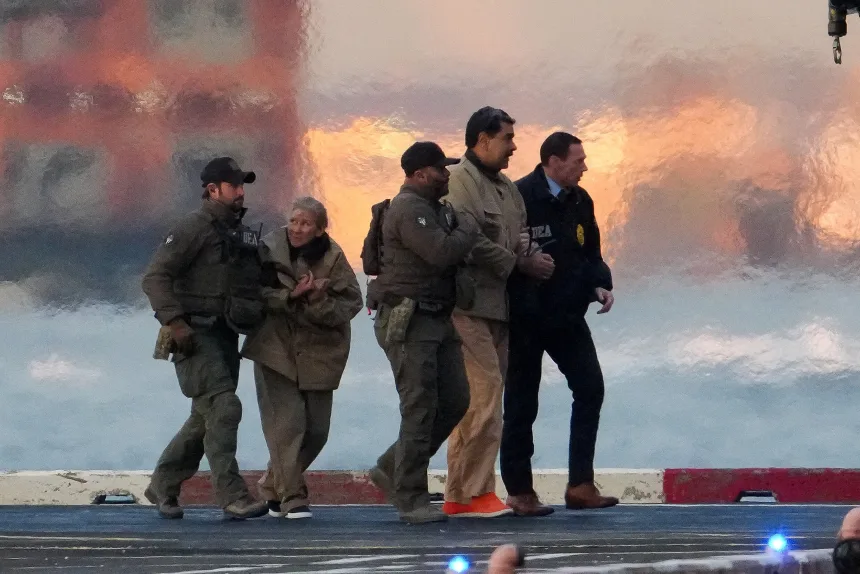
The comments come amid sustained U.S. pressure following the seizure of Maduro and his wife, Cilia Flores, during a raid in early January. Both were taken to the United States, where the former president faces criminal charges.
Although Rodríguez has repeatedly stressed that Venezuela is not governed by Washington, she has so far avoided a direct confrontation with the U.S. administration. President Donald Trump initially claimed the United States would “run” Venezuela after Maduro’s capture, before later endorsing Rodríguez as interim leader.
For more than two decades, oil-rich Venezuela has been locked in confrontation with Washington. However, following Maduro’s removal, the U.S. is now seeking to stabilize governance in Caracas while reshaping the country’s geopolitical and economic alignment.
Domestically, Venezuela remains deeply divided between Maduro loyalists, left-wing opposition groups, and so-called “Chavistas No-Maduristas”—supporters of the late Hugo Chávez who reject Maduro, accusing him of betraying the principles of 21st-century socialism.
In the days following U.S. strikes on Caracas in early January, the Trump administration reportedly issued a series of demands, including that Venezuela sever ties with China, Iran, Russia, and Cuba, and work exclusively with the United States on oil production. Rodríguez was also expected to prioritize U.S. oil companies in future energy exports.
Oil remains Venezuela’s economic lifeline. The country holds the world’s largest reserves of extra-heavy crude, a resource that requires complex refining but is well suited to U.S. refineries—making energy policy central to the evolving standoff between Caracas and Washington.