Zimbabwe has announced plans to return dozens of foreign-owned farms seized during the country’s controversial land reform programme more than two decades ago, although authorities insist the policy itself is not being reversed.
Agriculture Minister Anxious Masuka said on Friday that the government would restore 67 farms protected under bilateral investment agreements that had remained unoccupied. The farms belong to investors from Denmark, Germany, the Netherlands, and Switzerland.
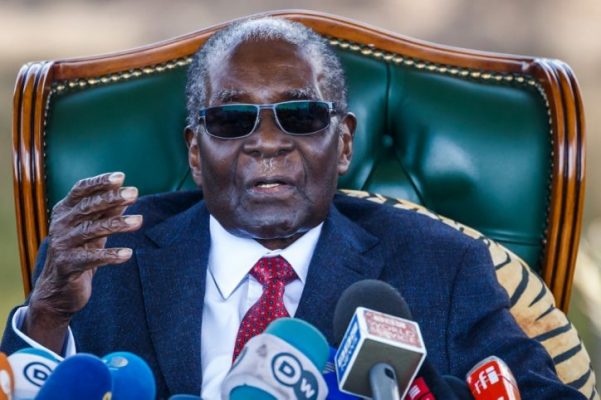
Zimbabwe’s land reform programme, introduced by former President Robert Mugabe in 2000, led to the seizure of thousands of white-owned commercial farms in a bid to address colonial-era land inequalities. The policy, however, triggered international sanctions and deep economic challenges for the country.
Under the latest arrangement, more than 400 white farmers will be allowed to repurchase all or parts of their former farms, while an additional 840 farms owned by black Zimbabweans will also be returned to their original owners.
Despite the move, Masuka stressed that the government remains committed to the broader land reform policy, describing it as central to Zimbabwe’s liberation struggle and national identity.
“Land was a core grievance against the heinous and minority settler oppressive regime,” he said, adding that the struggle was fought to “liberate ourselves from the shackles of oppression.”
“Now the people are with their land and the land with its masters. Land reform is, therefore, irreversible,” he added.
The decision has drawn mixed reactions, with some critics accusing the government of contradicting its long-standing stance on land redistribution. Social justice activist Tendai Mbofana described the policy as being “characterised by a jarring disconnect between its revolutionary rhetoric and its pragmatic concessions.”
In 2020, President Emmerson Mnangagwa agreed to a $3.5 billion compensation deal for displaced commercial farmers, but Zimbabwe’s growing debt burden — estimated at $21 billion — has complicated efforts to fulfil the agreement.
Analysts say the latest move may be part of broader efforts to rebuild ties with Western creditors and improve investor confidence as the country continues to struggle with recurring food shortages despite once being regarded as southern Africa’s breadbasket.