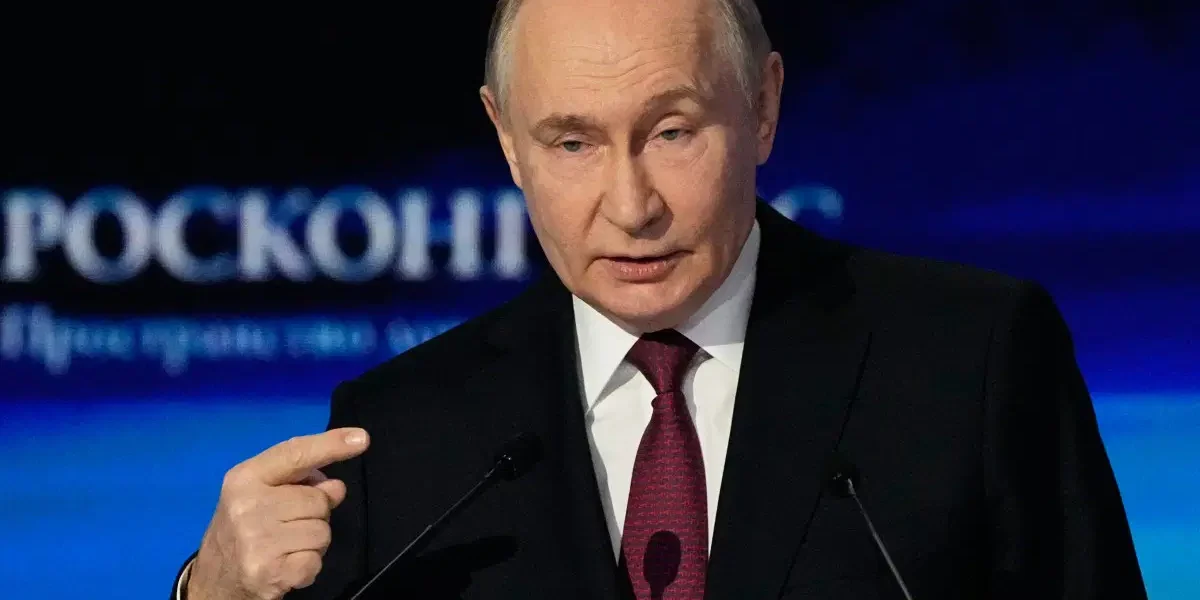
Russian President Vladimir Putin is rejecting calls for peace negotiations with Ukraine and appears determined to continue the war, according to three sources close to the Kremlin who spoke to Reuters.
The sources said Ukraine’s recent drone attacks on Russian oil refineries, ports and other infrastructure have strengthened Putin’s resolve to press ahead with military operations rather than pursue a settlement.
Two of the sources, speaking anonymously, said the Russian leader is more likely to escalate the conflict, which has entered its fifth year. One source who regularly meets with Putin described the possibility of further escalation in the coming months as “high.”
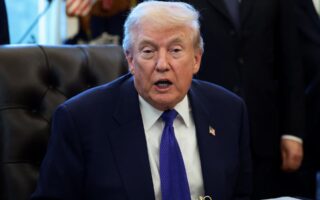
The claims come after US President Donald Trump said he believed Putin wanted to end the war and suggested that a peace agreement was “closer than people realize.” Trump recently held separate phone conversations with Putin and Ukrainian President Volodymyr Zelensky.
During a meeting with Trump at the NATO summit, Zelensky said they discussed possible steps toward ending the conflict.
However, one source familiar with Putin’s thinking said the Russian president remains focused on capturing the remaining areas of Ukraine’s eastern Donbas region, where Russian forces have made limited progress this year.
The source claimed Putin recently rejected suggestions from advisers that a compromise could involve a ceasefire along the current front line. Another source said Putin believes Russia could soon take full control of Donbas.
Putin has also publicly dismissed Zelensky’s call in June for direct talks and a ceasefire.
“Russia is ready for a peaceful resolution but has enough capability to act independently and continue the special military operation,” Kremlin spokesman Dmitry Peskov said in response to questions about the report.
A senior Ukrainian official said Kyiv’s intelligence assessments indicate that Putin is preparing for further military action rather than peace negotiations, including possible new operations in Ukraine or potential moves against other European countries.
Some Western military analysts believe Russia may require another large-scale mobilisation of troops to achieve its goal of capturing Donbas, a move Putin has avoided since the early stages of the war due to domestic opposition.
Meanwhile, Russian military commentators have increasingly discussed possible escalation, including the idea of targeting NATO-linked facilities in Eastern Europe. Analysts warn that such actions could risk a direct confrontation between Russia and the US-led alliance.
Jack Watling of the Royal United Services Institute (RUSI) said Russia could attempt limited attacks to create divisions within NATO rather than start a full-scale conflict with the alliance.
“The Russians would not be aiming for a war with NATO. But it could be used to divide NATO over how to respond,” Watling said.
Ukraine’s recent long-range drone strikes on Russian refineries, ports and storage facilities have reportedly caused fuel shortages in some areas, bringing the effects of the war closer to ordinary Russians.
Although Putin’s approval ratings remain high, recent polling showed his popularity has fallen to its lowest level since the start of the full-scale invasion in 2022.
Ukraine’s allies have argued that Kyiv has gained momentum and called for stronger economic pressure and sanctions against Moscow. However, a source close to Putin said the attacks have only increased his determination to respond.
Russia has carried out several major missile and drone attacks on Ukrainian cities, including Kyiv, in recent weeks. Moscow has claimed the strikes targeted military sites, while Ukrainian officials say civilians have been killed.
Putin said Ukraine’s attacks on Russian energy infrastructure would lead Moscow to seek additional territory beyond Donbas to create a “security zone” along the border.
Former Russian defence ministry official Andrei Ilnitsky has also called for a stronger response, suggesting that Moscow could target major Ukrainian industrial facilities, including ports and manufacturing sites.
He further suggested possible future strikes against NATO facilities in the Baltic states and Romania, as well as European sites producing weapons for Ukraine.
Kremlin spokesman Peskov said Russia must strengthen its security and cannot ignore what he described as Europe’s growing militarisation.
The discussion around escalation comes as Russian forces continue to struggle with slow battlefield gains. Estimates from the Center for Strategic and International Studies suggest around two million soldiers have been killed, wounded or gone missing since Russia launched its full-scale invasion in 2022, although neither side has released official casualty figures.
Russian troops have faced strong Ukrainian resistance, particularly from drone warfare, which has reduced the advantage of Moscow’s larger manpower resources.
Fighting remains intense in eastern Ukraine, including around Kostiantynivka in the Donetsk region. Putin has claimed Russian forces captured the city, but Ukrainian officials have denied the claim.
According to sources familiar with his views, Putin considers control of the remaining Ukrainian-held parts of Donetsk a key objective and believes he needs a significant victory to justify the continued war.