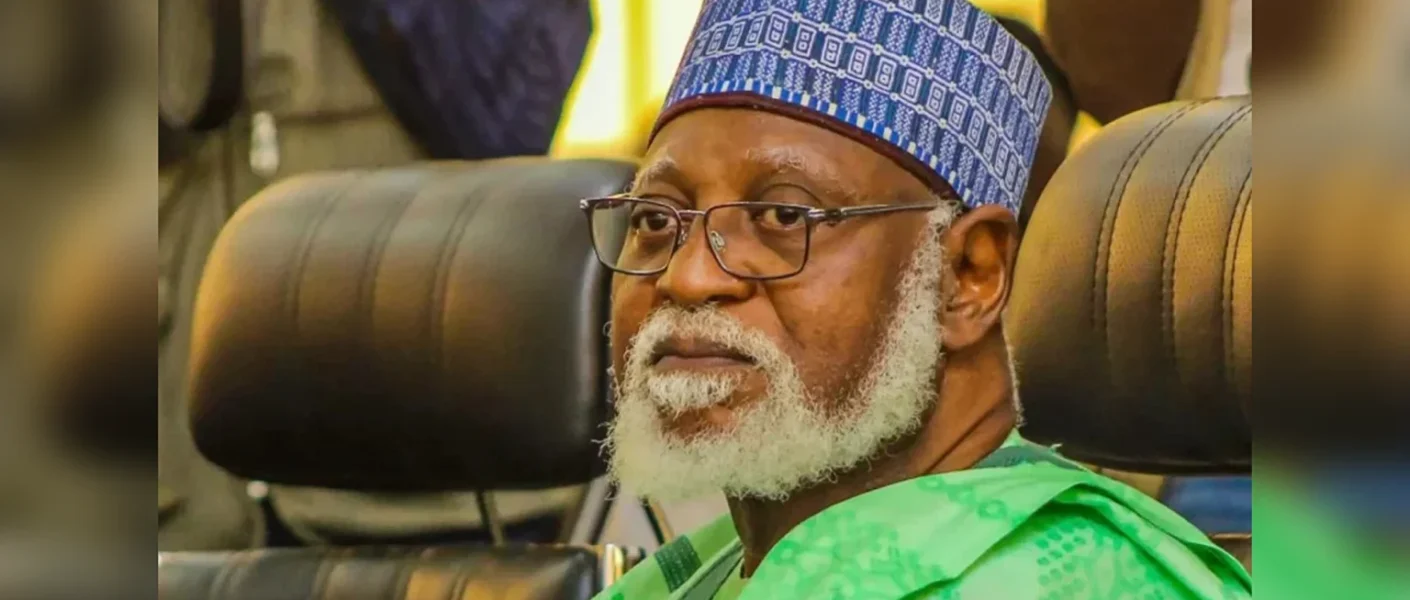
Former Head of State, Gen. Abdulsalami Abubakar (retd.), has rejected longstanding claims that Chief MKO Abiola was poisoned, stating that an international autopsy concluded the acclaimed winner of the June 12, 1993 presidential election died of natural causes.
Abubakar made the disclosure in his autobiography, Call of Duty, a 264-page book unveiled on Saturday at the Presidential Villa in Abuja as part of activities marking his 84th birthday.
The event was attended by several dignitaries, including President Bola Tinubu, who was represented by Vice President Kashim Shettima.
In the book, Abubakar recounted the circumstances surrounding Abiola’s death on July 7, 1998, during a meeting with a visiting American delegation led by then U.S. Undersecretary of State for Political Affairs, Thomas Pickering, and Assistant Secretary of State for African Affairs, Susan Rice.
“I do not believe Abiola was poisoned. At the request of his family, an autopsy was carried out by pathologists from Nigeria, the United States, Britain and Canada. Their findings showed that he died of natural causes,” Abubakar wrote.
According to him, Abiola had a history of health challenges, including hypertension and heart-related ailments, dating back to his detention in 1994.
He cited a medical report prepared by Colonel (Dr) O. Awofeso, then Chief Consultant Radiologist at the Nigerian Army Defence Hospital in Sokoto, which reportedly showed that Abiola had an enlarged heart consistent with hypertensive heart disease.
Abubakar also referenced Susan Rice’s 2019 memoir, Tough Love: My Story of the Things Worth Fighting For, in which she described Abiola developing a persistent cough shortly after their meeting began.
According to Rice’s account, the coughing intensified, and she noticed swelling around his ankles. Abiola reportedly complained of feeling unusually hot and requested that the room’s air-conditioning be increased.
A doctor was subsequently summoned and concluded that he was suffering a heart attack.
Abubakar further quoted Pickering’s recollection of the incident in a BBC interview, where the American diplomat said Abiola experienced breathing difficulties, briefly went to the restroom, and returned visibly distressed before collapsing.
A doctor arrived shortly afterward and recommended immediate medical attention. Abiola was rushed to a clinic, but efforts to revive him were unsuccessful.
Recalling how he learned of the death, Abubakar said his then Chief Security Officer, Abdulrasheed Aliyu, called him with the news.
“As soon as I answered the call, he told me there was a problem. When I asked what had happened, he said Abiola was dead. I was stunned,” he wrote.
The former military leader said informing Abiola’s family was one of the most difficult moments of his tenure, adding that one of Abiola’s daughters broke down in tears and was comforted by Susan Rice.
Abubakar argued that allowing the American delegation access to Abiola before his death helped dispel potential conspiracy theories.
“If we had denied them access and Abiola died in detention, many would have claimed he had died long before and that the government was concealing the truth,” he said.
The former Head of State also used the memoir to dismiss allegations that he received $500 million in cash following the death of General Sani Abacha, describing the claim as baseless.
“I want to state clearly that nobody gave me $500 million or any amount whatsoever. The allegation is pure fiction,” he wrote.
Abiola, who is widely regarded as the winner of the annulled 1993 presidential election, was arrested in 1994 after declaring himself president and remained in detention until his death in 1998.
His passing came just weeks after the death of General Abacha, fueling speculation at the time that he had been deliberately eliminated to prevent his release and assumption of office.
Abubakar succeeded Abacha as Head of State and later supervised Nigeria’s return to democratic rule, handing over power to President Olusegun Obasanjo on May 29, 1999.