
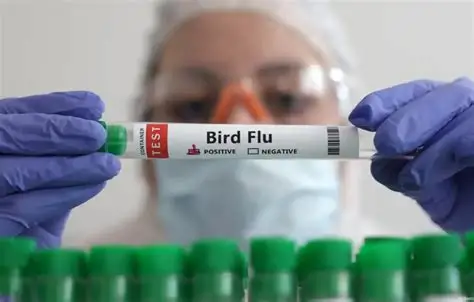
Australia has recorded its first case of the H5 strain of bird flu, marking the first time the highly contagious virus has been detected on the continent.
Agriculture Minister Julie Collins announced on Saturday that the virus was identified in a migratory brown skua found in a remote part of Western Australia. The result was later confirmed by the country’s national science agency.
Collins also revealed that samples taken from a second bird, a giant petrel, had returned a suspected positive result and were undergoing further assessment.
The discovery means the H5 strain of avian influenza has now been detected on every continent.
“While this is disappointing, it is not unexpected given the global spread of the H5 bird flu virus,” Collins told reporters in Canberra.
She stressed that authorities had not recorded any mass bird deaths linked to the outbreak and that there was currently no evidence of infection among poultry populations.
“I can confirm there is still no evidence of any mass mortalities at this time, nor is there any evidence of infection in any poultry,” she said.
In response to the detection, animal health and agriculture officials convened an emergency meeting to coordinate a national response and strengthen monitoring efforts.
“We all knew we couldn’t remain bird flu-free forever,” Collins added.
The H5 strain has caused significant outbreaks around the world, leading to high mortality rates among poultry, wild birds and several mammal species.
Australian Prime Minister Anthony Albanese described the development as concerning but said the government had been preparing for the possibility of the virus reaching the country.
“This is something that has spread through migratory birds and has occurred around the world, which is why we have been preparing for this,” Albanese said.
The virus has primarily affected waterfowl, shorebirds, seabirds and birds of prey globally. It has also been detected in marine mammals and other animals, including cats, goats, alpacas and pigs.
Earlier this week, Australian researchers reported that the H5 strain had killed more than 13,000 elephant seal pups in a breeding colony on a sub-Antarctic volcanic island that forms part of Australia’s external territories.
Authorities are continuing surveillance efforts to monitor the situation and prevent the virus from spreading to domestic bird populations.
