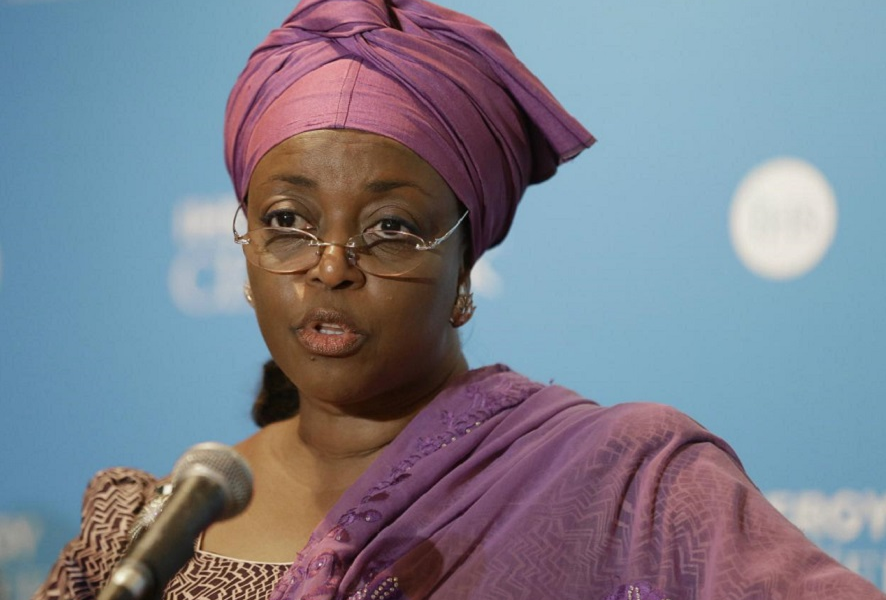
Former Minister of Petroleum Resources, Diezani Alison-Madueke, has accused British authorities of damaging her reputation through a corruption case that lasted more than a decade and ultimately ended in her acquittal.
Speaking to the BBC on Friday, two days after a jury at Southwark Crown Court in London cleared her of all charges, Alison-Madueke described the lengthy investigation and prosecution as deeply distressing.
The former minister had faced five counts relating to alleged bribery and conspiracy to commit bribery following a 13-year investigation by the United Kingdom’s National Crime Agency (NCA).
Reflecting on the experience, she said the case had severely affected her personal and professional life.
“I’ve not been allowed to travel. I’ve not been allowed to work. They destroyed my reputation and my integrity,” she told the BBC.
Alison-Madueke, who served as Nigeria’s petroleum minister from 2010 to 2015 and became the first woman to lead the Organisation of the Petroleum Exporting Countries (OPEC), said the prolonged legal battle had taken a heavy psychological toll.
“When your freedom is taken away from you, it has a very deep impact on you psychologically,” she said.
“I knew I had never done anything wrong and had never committed any of the offences I was accused of.”
Although she was first arrested in 2015, formal charges were not filed until 2023.
Prosecutors alleged that she accepted benefits from oil businessmen with government contracts, including luxury items, chauffeur-driven vehicles and access to high-value properties in the UK.
During the interview, Alison-Madueke claimed that documents which could have supported her defence disappeared after being seized from her Abuja residence in 2015.
According to her, the missing records included receipts showing that certain expenses paid on her behalf had later been reimbursed.
“Those items were taken away by our intelligence forces,” she said.
The former minister also criticised both Nigerian and British authorities over their handling of the matter.
“There’s a bit of blame everywhere,” she said, adding that Nigerian authorities should review the procedures used in such investigations.
She further argued that international law enforcement agencies should exercise greater care when dealing with cases that may have political implications.
“The long arm of the law, when operating in other countries, especially in politically sensitive cases, needs to show greater sensitivity,” she said.
Alison-Madueke suggested that her position in Nigeria’s oil sector may have contributed to the scrutiny she faced.
“I was the first woman to occupy the role of petroleum minister and to lead OPEC in what is still a very male-dominated environment,” she said.
Responding to her remarks, an NCA spokesperson told the BBC that the agency conducted a thorough and complex investigation that was subject to regular review by investigators and prosecutors.
The spokesperson said the NCA worked closely with international partners and carried out its duties impartially.
“A comprehensive file of evidence was submitted to the Crown Prosecution Service, which authorised the charges. We respect the verdict reached by the jury,” the spokesperson said.
Alison-Madueke also commented on previous asset recovery actions connected to the case.
In 2023, the US Department of Justice announced the recovery of approximately $53 million in assets linked to two oil businessmen who featured in the UK proceedings.
She argued that she was never given the opportunity to challenge those allegations because she had not been charged in relation to them.
“I was never given the chance to contest those claims because I was not even charged,” she said.
The former minister also questioned reports by Nigeria’s Economic and Financial Crimes Commission (EFCC) regarding assets allegedly linked to her.
“The assets that were forfeited were not directly traced to me,” she said.
“I don’t know what has happened with many of these matters. Now that I have my freedom, I can begin to find out exactly what transpired.”
Her brother, Doye Agamas, and oil industry executive Olatimbo Ayinde, who were also defendants in the UK case, were acquitted alongside her.