
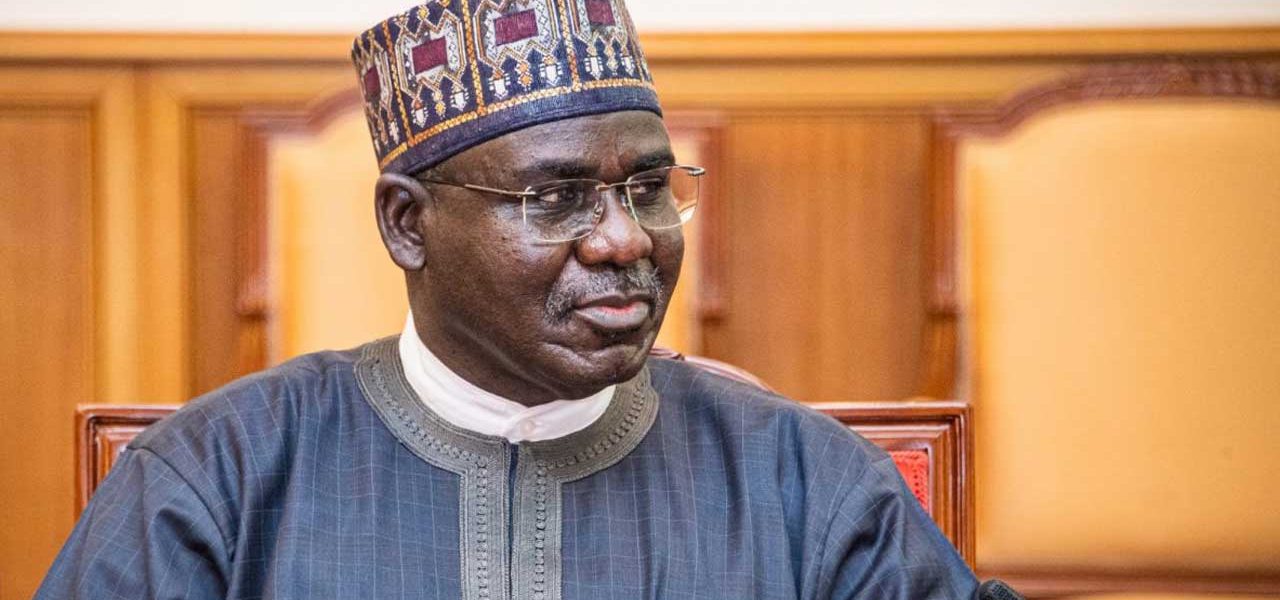
Former Chief of Army Staff, Lt. Gen. Tukur Buratai (retd.), has alleged that some politicians benefit from insecurity in Nigeria, claiming that terrorist groups, bandits and kidnappers often become more active during political transitions and election periods.
Buratai made the remarks during an interview on TVC News while reacting to the recent abduction of students and teachers in Oyo State.
According to him, some criminal groups operating across the country may have originated from networks previously recruited or sponsored for political purposes.
“Unfortunately, the plain truth is that some politicians benefit from the activities of these terrorists,” Buratai said.
The former army chief noted that insecurity tends to worsen during election seasons and transitions between administrations, when security operations may experience disruptions or funding challenges.
“You discover that these terrorists or insurgents have a particular pattern, mainly when there are political activities or when there are transitions from one administration to the other,” he stated.
Buratai explained that such periods can create security gaps that criminal groups exploit to intensify attacks, kidnappings and other violent activities.
Commenting on the recent school abduction in Oyo State, he urged Nigerians to understand the complexities involved in hostage rescue operations, stressing that the safety of victims must remain the highest priority.
He cautioned against rushed military interventions that could endanger abducted students and teachers, describing rescue missions as delicate operations that require patience, intelligence gathering and careful planning.
While acknowledging the capabilities of security agencies to track communications and gather intelligence, Buratai maintained that every effort should focus on ensuring the safe return of hostages.
The retired military officer also reiterated his opposition to the payment of ransom, warning that such payments only strengthen criminal groups and encourage further kidnappings.
“Paying ransom is very counter-productive,” he said.
To tackle the country’s security challenges, Buratai called for a comprehensive approach that includes decentralising counter-terrorism operations, strengthening security institutions and improving collaboration with local communities.
He advocated the establishment of state-level branches of the National Security Adviser’s Counter-Terrorism Centre, equipped with modern surveillance technology and operational resources.
Buratai also urged increased recruitment into the military and police, enhanced training programmes and improved welfare packages for security personnel.
According to him, defeating terrorism and banditry will require strong political will, effective intelligence gathering and decisive action against individuals who profit from insecurity.
He added that lasting peace can only be achieved when political actors stop exploiting violence for personal gain and governments at all levels work closely with communities to address the root causes of insecurity.
